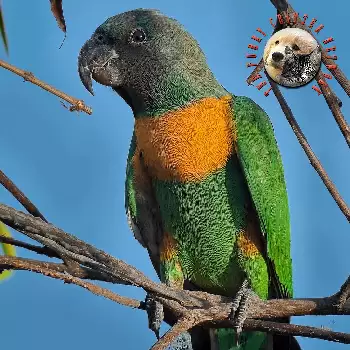

Senegal Parrots reach sexual maturity between two and three years of age, though responsible breeders generally recommend waiting until birds are at least three years old before allowing breeding to ensure full physical and behavioral maturity. Sexual maturity does not equal breeding readiness; a prospective breeding bird should be in excellent overall health, at an appropriate weight, free from chronic conditions, and temperamentally suited to the demands of reproduction and chick rearing.
Sexing Senegal Parrots visually is unreliable, as males and females are nearly identical in appearance. While some breeders note subtle differences in head shape, body size, or the extent of the yellow or orange belly patch, these characteristics overlap significantly between sexes. DNA sexing through a blood sample or feather test is the only reliable method for confirming the sex of a Senegal Parrot and should be performed before any breeding program is established.
Pair compatibility is critical to breeding success and should not be taken for granted. Simply placing a male and female together does not guarantee a compatible pair. Senegal Parrots form strong pair bonds, and the bonding process can take weeks to months. Introduce prospective mates gradually, beginning with adjacent cages that allow visual and vocal interaction without physical contact. Signs of compatibility include mutual preening attempts through the bars, synchronized feeding, soft vocalizations directed at one another, and relaxed body postures in each other's presence.
Pre-breeding veterinary screening is essential for both birds. A thorough physical examination, complete blood work, and testing for common avian diseases such as Polyomavirus, Psittacine Beak and Feather Disease, and Chlamydiosis should be completed before breeding is attempted. Any health issues identified during screening should be fully resolved before the pair is allowed to breed. Breeding places significant physiological demands on the hen in particular, and beginning the process from a position of optimal health gives both the parents and their offspring the best chance of success.