
Mynah Bird Species Guide - Furry Critter Network

Mynah Bird

Quick Facts

🔬 Scientific Name
Gracula religiosa (Hill Mynah)
🦜 Breed Group
Starling (Sturnidae)
📏 Adult Size
27-30 cm (10.5-12 inches)
🪽 Wingspan
40-45 cm (16-18 inches)
⏱️ Lifespan
12-25 years
😊 Temperament
Social, Vocal, Intelligent, Playful, Bold
🔊 Noise Level
Moderate to High
🗣️ Talking Ability
Exceptional
🍽️ Diet Type
Omnivore-frugivore (fruit, insects, softbill pellets)
🌍 Origin
South and Southeast Asia

Mynah Bird - Names & Recognition

The name Mynah Bird, also widely spelled Myna or Mina, encompasses a group of passerine birds within the starling family Sturnidae that have been celebrated for centuries for their extraordinary vocal mimicry and close association with human habitation. In avicultural and pet trade contexts, the term most commonly refers to the Hill Mynah (Gracula religiosa), the species universally regarded as the supreme vocal mimic among birds, capable of reproducing human speech with a fidelity and tonal accuracy that no parrot can consistently match. The Common Mynah (Acridotheres tristis) is the other widely recognized species bearing the name, though it occupies a very different ecological and avicultural niche as an abundant, adaptable urban commensal rather than a prized cage bird.

The etymology of the name traces to the Hindi word maina, itself derived from the Sanskrit madana, meaning joyful or delightful, a reference to the bird's spirited vocalizations and lively demeanor. The Hill Mynah's scientific name Gracula religiosa carries its own layers of meaning. Gracula derives from the Latin graculus, a jackdaw or similar corvid-like bird, while religiosa was bestowed by Linnaeus in reference to the species' perceived sacred status in parts of India, where Hill Mynahs have historically been kept in temples and associated with religious observance. The bird appears in ancient Indian literature and poetry, and its keeping as a companion and talking pet predates European contact with the species by many centuries.

Taxonomically, the Hill Mynah has been subject to considerable revision. What was once treated as a single widespread species is now generally divided into multiple species or well-differentiated subspecies. The Greater Indian Hill Mynah (Gracula religiosa peninsularis), the Lesser Indian Hill Mynah (Gracula religiosa indica), the Java Hill Mynah (Gracula religiosa religiosa), and the Nias Hill Mynah (Gracula robusta) represent the primary forms encountered in aviculture, each differing in body size, wattle configuration, and geographic origin. The Greater Indian Hill Mynah, the largest form, is the most prized in the pet trade and produces the most accomplished talkers, though all forms are capable of impressive mimicry.

Recognition by avicultural organizations reflects the Mynah's established status as a companion bird, though its classification as a softbill rather than a hookbill places it outside the psittacine-dominated mainstream of pet bird culture. The species has been kept and bred in captivity for centuries across Asia and for well over a century in Europe and North America. Import restrictions implemented in many countries since the late twentieth century, combined with the difficulty of captive breeding relative to parrots, have made domestically bred Hill Mynahs increasingly scarce and valuable in the Western pet market.

Aviculture Registry Recognition

  • American Federation of Aviculture (AFA): Recognized, Softbills
  • Avicultural Society (ACS): Recognized, Softbills and Starlings

Mynah Bird Physical Description

The Hill Mynah is a stocky, compact passerine measuring approximately 27 to 30 centimeters in length and weighing between 190 and 270 grams, with the Greater Indian Hill Mynah occupying the upper end of this range. The overall body plan is robust and somewhat heavy-set, with strong legs, broad rounded wings, and a short, squared tail that gives the bird a distinctly upright posture when perched. The silhouette is more reminiscent of a starling or thrush than a parrot, and the bird moves with the confident, hopping gait characteristic of the Sturnidae rather than the climbing, zygodactyl locomotion of psittacines.

The plumage is predominantly glossy black with a striking iridescent sheen that shifts between purple, green, and bronze depending on the angle of light. This iridescence is produced by the microstructure of the feather barbules rather than by pigmentation, and it is most prominent on the head, neck, and upper breast. The wings display a conspicuous white patch at the base of the primaries that is visible both in flight and when the wings are folded, creating a bold contrast against the otherwise dark plumage. The tail is black without markings. The overall impression is of a sleek, well-groomed bird whose plumage quality serves as a reliable indicator of health and nutritional status.

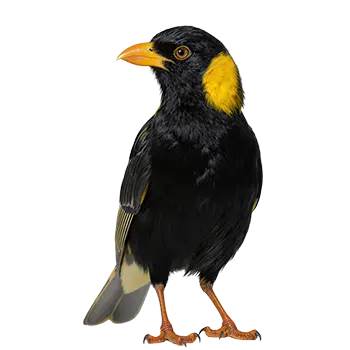
The most distinctive external feature of the Hill Mynah is the bright yellow to orange fleshy wattles that adorn the head. These bare skin flaps extend from behind the eye, across the nape, and sometimes onto the sides of the neck, varying considerably in size, shape, and configuration among subspecies and individuals. The wattles are largest and most elaborate in the Greater Indian Hill Mynah, where they form a continuous flap that wraps from the nape around to below and behind the eye. In other forms, the wattles may be divided into separate nape and facial patches. The wattles serve as visual signals in social communication and appear to intensify in color during periods of excitement or breeding condition.

The bill is stout, slightly curved, and bright orange to orange-yellow, a powerful all-purpose tool adapted for the species' omnivorous feeding habits. Unlike the hooked, crushing bill of parrots, the Mynah's bill is designed for seizing, probing, and tearing rather than cracking. The legs and feet are strong, yellow to orange, with a typical passerine toe arrangement of three forward-facing toes and one rear-facing hallux. The eye is dark brown to black, set within a ring of bare yellow skin that is contiguous with the head wattles. Sexual dimorphism is minimal, with males and females nearly identical in external appearance, though males tend to average slightly larger and may develop marginally more prominent wattles with age. Juveniles are duller in overall plumage with smaller, paler wattles and a brownish rather than bright orange bill.

Affection Level
Mynah Birds form strong bonds with their primary caretakers and actively seek social interaction throughout the day. A well-socialized Mynah will greet its owner with excited vocalizations, fly to a shoulder or hand when invited, and protest audibly when attention is withdrawn. Their affection is expressed through proximity-seeking, soft chattering directed at favored people, and a willingness to be handled that is unusual among softbill species. Unlike parrots, they do not typically enjoy head scratches, preferring instead to perch close and engage vocally.
Sociability
Mynahs are intensely social birds that suffer profoundly in isolation. In the wild, they live in pairs or small flocks and maintain constant vocal contact with their group. Captive Mynahs demand a level of daily interaction that rivals the neediest parrot species, and birds left alone for extended hours develop stress behaviors including excessive screaming, repetitive pacing, and self-directed feather damage. They are generally accepting of strangers and household visitors, showing curiosity rather than the fearful aggression common in bonded parrots.
Vocalization
The Mynah Bird's vocal abilities are legendary and represent the species' most celebrated trait. Hill Mynahs in particular are widely regarded as the finest mimics in the avian world, capable of reproducing human speech with a clarity, tonal accuracy, and inflection that surpasses even the African Grey Parrot. Their natural calls include loud, piercing whistles, melodic warbles, and harsh squawks that carry considerable distance. In captivity, they accumulate extensive vocabularies and reproduce environmental sounds with startling fidelity, often applying learned phrases in contextually appropriate situations that suggest genuine comprehension.
Intelligence
Mynahs demonstrate cognitive abilities that rank among the highest in the passerine order. Their capacity for vocal mimicry alone requires sophisticated auditory processing, memory formation, and motor control of the syrinx. Beyond speech, they show strong problem-solving abilities, quickly learn daily routines, and display a playful inventiveness with toys and household objects. Their spatial awareness is acute, and they navigate complex indoor environments with confident precision. Many owners report that their Mynahs use learned words and phrases with apparent contextual understanding, greeting specific people with individualized phrases.
Exercise Needs
Mynah Birds are active, athletic fliers that require substantially more flight space than their moderate body size might suggest. In the wild, they range across considerable distances between fruiting trees, roosting sites, and bathing locations. Captive birds need daily out-of-cage flight time in a bird-safe room, and their enclosures must be large enough to permit short flight bursts and vigorous hopping between perches. Their energy is expressed through rapid movements, enthusiastic bathing sessions, and playful object manipulation rather than the climbing and chewing behavior characteristic of parrots.
Maintenance Level
Mynah Birds are among the most demanding companion birds in terms of daily maintenance. Their soft, fruit-based diet produces copious, liquid droppings that require twice-daily cage cleaning at minimum and protective measures for surrounding walls and floors. Fresh food must be prepared and replaced multiple times daily to prevent spoilage and bacterial growth. Their bathing needs are substantial, their social demands are relentless, and their sensitivity to iron storage disease requires meticulous dietary management throughout their lives. This is emphatically not a low-maintenance pet.
Trainability
Mynahs respond well to consistent, positive training approaches, particularly when food rewards are involved. Their natural inclination to mimic makes speech training remarkably productive compared to most bird species, and many individuals begin reproducing words within weeks of focused daily training sessions. They can learn to step up, fly to a hand on cue, and perform simple behaviors on command. Their trainability is limited primarily by their short attention span and their tendency to become overexcited during sessions, which can derail focused learning.
Independence
Independence is not a defining characteristic of the Mynah Bird. These are deeply social creatures that orient their entire daily rhythm around the presence and attention of their human companions. A Mynah left alone in a quiet house will vocalize persistently, pace its enclosure, and show clear signs of distress. They can entertain themselves for short periods with toys and food enrichment, but their baseline need for social interaction is high and non-negotiable. Owners who work full-time should seriously consider housing Mynahs in pairs to prevent the psychological deterioration that accompanies chronic loneliness.

Natural Habitat & Range

The Hill Mynah occupies a broad range across South and Southeast Asia, from the hill forests of the Indian subcontinent eastward through Myanmar, Thailand, Indochina, and the Malay Peninsula to the islands of Sumatra, Borneo, Java, and the Philippines. Within this extensive distribution, the species shows a consistent preference for humid, broadleaf evergreen forest and semi-evergreen forest at elevations typically ranging from 300 to 2,000 meters above sea level, though the precise altitudinal range varies by subspecies and geographic region. The common name Hill Mynah directly references this altitudinal preference, which distinguishes the species from the lowland-dwelling Common Mynah.

Within occupied forest, Hill Mynahs favor the upper canopy and emergent layer, where they forage among fruiting trees, perch on exposed dead branches for calling, and nest in natural cavities in tall trees. They are strongly associated with intact, mature forest and show a marked decline in abundance as forest cover is reduced or degraded. Edge habitats, secondary growth, and isolated forest fragments are used to a limited extent for foraging, but breeding populations depend on continuous tracts of tall forest with adequate cavity-nesting trees. This reliance on primary forest makes the Hill Mynah a useful indicator of forest health across its range.

The Common Mynah, by contrast, is among the most successful avian colonizers of human-modified landscapes in the world. Originally native to South Asia from Afghanistan and Iran eastward through India and Sri Lanka to Bangladesh and Myanmar, the Common Mynah has been introduced, both deliberately and accidentally, to a vast range of countries across the tropics and subtropics. Established feral populations now thrive in Australia, New Zealand, South Africa, Hawaii, Fiji, and numerous other Pacific and Indian Ocean islands, where the species is frequently considered an invasive pest due to its aggressive competition with native cavity-nesting birds, its crop damage, and its prolific breeding in urban environments.

Conservation concerns for the Hill Mynah have intensified as deforestation and trapping continue to erode wild populations across much of its range. The species is listed on CITES Appendix II, and international trade is regulated, though enforcement varies considerably by country. The Nias Hill Mynah (Gracula robusta), the largest form, is critically endangered due to the near-total loss of its island forest habitat and relentless trapping for the domestic Indonesian cage bird market. Captive breeding programs in both Asian and Western zoological institutions are working to establish insurance populations, but the fundamental driver of decline remains habitat destruction compounded by unsustainable collection pressure.

Temperament

The Mynah Bird's temperament is dominated by two defining traits: an almost compulsive sociability and an irrepressible vocal energy that fills every waking moment with sound. These are not quiet, contemplative companions. A healthy, well-adjusted Mynah is in near-constant motion and vocalization during daylight hours, hopping between perches, investigating its environment, vocalizing to its owner, rehearsing its repertoire of words and sounds, bathing with abandon, and demanding interaction with a cheerful persistence that is simultaneously endearing and exhausting. They approach life with an enthusiasm that is infectious to those who appreciate avian energy and overwhelming to those who do not.

Socially, Mynahs are remarkably accepting compared to the one-person bonding pattern common in parrots. While they typically develop a clear preference for one primary caretaker, they generally extend friendly curiosity to all household members and even to visitors, approaching unfamiliar people with bold investigation rather than fearful retreat or territorial aggression. This openness makes them more suitable than many parrot species for family environments, though their exuberance and rapid movements can startle young children. They lack the jealous possessiveness that characterizes cockatoos and some Amazons, distributing their social attention more broadly across their human flock.

Playfulness is a core element of the Mynah personality. They invent games with available objects, tossing small items into the air, dunking food in water, carrying objects from one location to another, and engaging in vigorous bathing sessions that send water cascading across the room. Their play is energetic, messy, and frequently accompanied by a running commentary of whistles, words, and sound effects that reflect whatever has captured the bird's attention. This combination of physical and vocal playfulness makes them exceptionally entertaining companions, but it also means that they require consistent enrichment and tolerance for the chaos that accompanies their activities.

The emotional transparency of Mynah Birds is notable. They communicate their moods clearly through posture, vocalization intensity, feather position, and activity level. Excitement produces rapid head-bobbing, wing-fluttering, and accelerated chattering. Contentment is expressed through soft warbling, relaxed feather posture, and gentle preening. Distress manifests as persistent loud calling, pacing, and refusal to engage with food or toys. This legibility of emotion makes them relatively straightforward to read for attentive owners, reducing the risk of the sudden, seemingly unprovoked biting incidents that characterize more emotionally complex species like cockatoos and Hawk Headed Parrots.

Care Requirements

Housing a Mynah Bird requires an enclosure that prioritizes horizontal flight space over the vertical climbing space that parrot cages emphasize. The minimum recommended cage size for a single Hill Mynah is 90 centimeters long by 60 centimeters deep by 75 centimeters tall, though larger is always preferable and a flight cage of 120 centimeters or more in length significantly improves the bird's quality of life. Bar spacing should be approximately 1.5 centimeters, narrow enough to prevent the bird from inserting its head between bars. The cage should be constructed of powder-coated or stainless steel with a removable tray that allows daily cleaning without disturbing the bird's interior perching arrangement.

Cage placement and design must account for the extraordinary messiness of Mynah Bird husbandry. Their soft, fruit-based diet produces copious, liquid droppings that are ejected with considerable force, and their enthusiastic eating habits scatter fruit pulp, pellet crumbs, and water droplets across a surprising radius. Many experienced Mynah keepers position the cage inside a dedicated splash zone created by acrylic panels, washable curtains, or a tiled alcove that can be wiped down easily. The cage should be placed in a socially active area of the home where the bird can observe and participate in household life, elevated to approximately chest height, and positioned away from direct sunlight, drafts, and kitchen fumes.

Perching should consist of natural hardwood branches of varying diameters, positioned at multiple heights to accommodate the Mynah's hopping locomotion and preference for roosting at the highest available point. Rope perches and platform perches are also well accepted. Avoid sandpaper perch covers, which abrade the feet and contribute to pododermatitis, a condition to which Mynahs are already predisposed. A flat platform perch positioned high in the cage serves as an ideal sleeping perch, as Mynahs often prefer to sleep on a flat surface rather than gripping a round dowel. Food and water containers should be positioned to minimize contamination from droppings and should be heavy or securely mounted to resist the bird's energetic feeding style.

Out-of-cage time is essential for physical exercise and social fulfillment. A minimum of one to two hours daily of supervised free flight in a bird-safe room provides cardiovascular conditioning, prevents obesity, and satisfies the bird's need for environmental exploration. The room must be thoroughly bird-proofed, with windows and mirrors covered to prevent collision injuries, ceiling fans disabled, toxic plants removed, and open water sources such as toilet bowls and uncovered cooking pots eliminated. Mynahs are bold, fast fliers that investigate their surroundings with fearless curiosity, and unsecured rooms present numerous lethal hazards.

Feeding & Nutrition

Feeding a Mynah Bird correctly is simultaneously one of the most critical and most frequently mismanaged aspects of their care. The species is a softbill whose natural diet in the wild centers on ripe fruit supplemented by insects, nectar, and occasional small vertebrates. This evolutionary dietary history has produced a metabolic system that absorbs iron with exceptional efficiency, an adaptation well suited to a low-iron fruit diet in the wild but catastrophically maladaptive when captive birds are offered iron-rich commercial foods, parrot pellets, or inappropriate fruit selections. Every feeding decision for a captive Mynah must be evaluated through the lens of iron storage disease prevention.

The foundation of the captive Mynah diet should be a commercially formulated low-iron softbill pellet, constituting approximately 40 to 50 percent of total daily intake. Several manufacturers now produce pellets specifically designed for Mynahs and other iron-sensitive softbill species, with iron content held below 80 parts per million. These species-specific formulas are essential and must not be substituted with parrot pellets, generic softbill diets, or insectivore mixes that may contain iron levels many times higher than what a Mynah can safely process. The pellet selected should be checked against current avian veterinary guidelines for maximum iron content.

Fresh fruit forms the remaining 50 to 60 percent of the diet and should be offered in generous variety, rotated daily, and selected with attention to iron content. Preferred low-iron fruits include papaya, banana, melon, apple, pear, blueberries, and mango. Grapes and raisins should be avoided entirely due to their high iron content and potential contribution to iron storage disease. Citrus fruits and other vitamin C-rich foods should not be offered at the same time as pellets or other iron-containing foods, as ascorbic acid dramatically increases iron absorption from the gut. Dark leafy greens, which are typically high in iron, should be offered only sparingly if at all.

Insect protein provides essential amino acids and enrichment. Live or dried mealworms, waxworms, crickets, and commercially available insect blends can be offered in small quantities several times weekly. Insects also serve as excellent training rewards due to their high palatability. Clean, fresh water must be available at all times, changed at least twice daily, and provided in a container that is secured against tipping. Some aviculturists add brewed, cooled black tea to the drinking water as a source of tannins that bind dietary iron in the gut and reduce absorption, though this practice remains somewhat controversial and should be discussed with a veterinarian familiar with softbill medicine.

Mynah Bird Health & Lifespan

A well-managed Mynah Bird can live 15 to 25 years in captivity, with exceptional individuals occasionally surpassing this range. The Hill Mynah tends toward the upper end of this spectrum when provided with exemplary care, while Common Mynahs in captivity generally live 12 to 18 years. Wild lifespans are presumed shorter due to predation, disease, and environmental hazards. Achieving the upper end of captive longevity requires lifelong attention to the species' unique metabolic vulnerabilities, particularly iron storage disease, which remains the leading cause of premature death in captive Mynahs worldwide and is almost entirely preventable through dietary management.

Iron storage disease dominates any discussion of Mynah Bird health because it is so common, so deadly, and so directly linked to husbandry practices. The disease develops silently over months to years as iron gradually accumulates in the liver, heart, and other organs, causing progressive tissue damage that produces no obvious symptoms until organ function is significantly compromised. By the time clinical signs appear, including lethargy, abdominal distension, respiratory difficulty, and sudden collapse, the damage is often irreversible. Regular blood monitoring of serum iron and ferritin levels, combined with strict dietary iron restriction, represents the only reliable strategy for detection and prevention.

Beyond iron storage disease, Mynah Birds share many of the health vulnerabilities common to captive softbill species. Aspergillosis and bacterial gastrointestinal infections pose ongoing risks that are directly tied to the quality of cage hygiene and air circulation. Pododermatitis is a frequent finding in captive Mynahs housed on inappropriate perch surfaces or carrying excess body weight, and it requires prompt treatment to prevent progression to deep infection. Obesity is rampant in pet Mynahs, driven by excessive fruit portions, sugar-rich foods, and insufficient exercise, and it compounds nearly every other health risk the species faces.

Reproductive health considerations are relevant primarily for breeding pairs, as Mynahs in captivity will attempt to breed when provided with a nest box, appropriate nutrition, and compatible mate. Egg binding can occur in females, particularly those with calcium deficiency or obesity, and represents a medical emergency requiring immediate veterinary intervention. The species' high metabolic rate and compact body size mean that health deterioration progresses rapidly once clinical signs become apparent, making same-day veterinary access essential. An established relationship with an avian veterinarian experienced in softbill medicine is a non-negotiable component of responsible Mynah ownership.

Common Health Issues

  • Iron Storage Disease (Hemochromatosis) - The single most significant health threat to captive Mynah Birds is iron storage disease, a condition in which excessive dietary iron accumulates in the liver, heart, and other organs, causing progressive organ damage and eventual failure. Mynahs and other members of the Sturnidae family are exceptionally efficient at absorbing dietary iron, an adaptation to their natural fruit-based diet which is inherently low in iron. Captive diets that include iron-fortified pellets, iron-rich fruits like grapes and raisins, or commercial foods designed for parrots can deliver catastrophic iron loads over time. Symptoms include lethargy, abdominal distension, respiratory difficulty, and sudden death.
  • Aspergillosis - Mynah Birds are susceptible to this fungal respiratory infection caused by Aspergillus fumigatus, particularly when housed in environments with poor ventilation, high humidity, and organic substrates that harbor fungal spores. The species' preference for warm, humid conditions and its messy feeding habits create favorable conditions for fungal proliferation if hygiene is not rigorously maintained. Symptoms include open-mouth breathing, tail-bobbing, voice changes, lethargy, and progressive weight loss. Treatment is prolonged and not always successful.
  • Bacterial enteritis - The soft, fruit-based diet of Mynah Birds spoils rapidly at room temperature, creating ideal conditions for bacterial proliferation in food dishes and the surrounding cage environment. Gram-negative bacteria including E. coli, Salmonella, and Klebsiella species can cause acute gastrointestinal disease with symptoms including watery droppings, appetite loss, lethargy, and dehydration. Young birds and those with compromised immune systems from concurrent iron overload are particularly vulnerable. Strict food hygiene is the primary defense.
  • Pododermatitis (Bumblefoot) - Mynah Birds are prone to pressure sores and infections on the plantar surface of their feet, a condition commonly known as bumblefoot. Their hopping, perching locomotion places sustained pressure on the feet, and inappropriate perch surfaces, obesity, inactivity, or vitamin A deficiency can predispose them to breakdown of the foot skin. The condition progresses from redness and swelling to open ulceration and deep infection that can involve bone and tendon structures if left untreated. Proper perching variety and weight management are essential preventive measures.
  • Candidiasis - The warm, moist oral environment created by a fruit-based diet predisposes Mynah Birds to overgrowth of Candida albicans, particularly in birds that are immunocompromised, have been treated with antibiotics, or are housed in poorly ventilated conditions. Candidiasis manifests as white plaques in the mouth and crop, difficulty swallowing, regurgitation, and a generally unthrifty appearance. Treatment involves antifungal medication and correction of predisposing husbandry factors.
  • Obesity - Captive Mynah Birds are highly prone to obesity, particularly when offered excessive quantities of high-sugar fruits, commercial softbill diets with added sugars, or insufficient opportunities for flight exercise. Obesity in Mynahs contributes directly to fatty liver disease, exacerbates iron storage disease progression, increases the risk of pododermatitis, and reduces overall lifespan. Weight management through careful portion control, diet composition monitoring, and daily exercise is a lifelong commitment for Mynah owners.

Preventive Care & Health Monitoring

  • Low-iron dietary management - The cornerstone of Mynah Bird preventive health is rigorous iron restriction in the diet. All commercial foods should be specifically formulated for softbills or Mynahs with controlled iron content, never parrot pellets or generic bird food. Citrus fruits and other vitamin C-rich foods should not be offered alongside iron-containing foods, as ascorbic acid dramatically increases iron absorption. Tea tannins in the drinking water have been used by some aviculturists to bind dietary iron, though this practice should be discussed with an avian veterinarian. Regular blood panels monitoring serum iron and ferritin levels allow early detection of iron accumulation before clinical disease develops.
  • Rigorous cage and food hygiene - The liquid droppings and perishable diet of Mynah Birds demand a cleaning regimen that exceeds what most companion bird species require. Cage trays should be lined with disposable paper and changed at least once daily, preferably twice. Food dishes must be washed and sanitized at every change, with fresh fruit replaced every four to six hours during warm weather to prevent dangerous bacterial loads. Water dishes should be cleaned and refilled at least twice daily. Surrounding walls and floors need protection with washable surfaces or plastic sheeting, as the projectile nature of Mynah droppings extends contamination well beyond cage boundaries.
  • Annual avian veterinary wellness examinations - Every captive Mynah Bird should receive a comprehensive veterinary examination at least annually, performed by a veterinarian experienced with softbill species. The examination should include a complete blood count, biochemistry panel with particular attention to liver values and iron parameters, fecal parasite screening, crop gram stain, and physical assessment including body weight, foot condition, and feather quality. Baseline blood work established when the bird is healthy is invaluable for detecting subtle changes that precede clinical disease.
  • Daily bathing opportunities - Mynah Birds are enthusiastic and frequent bathers, and daily access to clean bathing water is essential for feather condition, skin health, and psychological wellbeing. A shallow dish of lukewarm water large enough for the bird to submerge and splash vigorously should be offered daily, or the bird can be misted with a plant sprayer if it prefers. Bathing helps maintain the waterproofing and structural integrity of the plumage, supports natural preening behavior, and provides significant enrichment. The bathing dish should be removed after use to prevent contamination from droppings.
  • Weight monitoring and exercise management - Weekly weighing on a gram scale provides the most reliable early warning of both weight gain and weight loss, either of which can indicate developing health problems. Adult Hill Mynahs should maintain a stable weight between 200 and 260 grams depending on subspecies, with fluctuations of more than ten percent warranting veterinary investigation. Daily out-of-cage flight time of at least one to two hours in a bird-safe room provides essential cardiovascular exercise and helps prevent the obesity that contributes to so many Mynah health problems.
  • Environmental enrichment program - Preventing the psychological deterioration that accompanies boredom and social deprivation requires a structured enrichment program tailored to the Mynah's behavioral repertoire. Unlike parrots, Mynahs do not chew and destroy toys, but they engage enthusiastically with objects they can toss, carry, dip in water, and manipulate with their feet and bills. Small balls, bells, mirror toys, and shallow dishes of water containing floating food items provide excellent stimulation. Novel safe objects should be introduced regularly, and foraging opportunities that require the bird to search for hidden food items replicate natural behavior patterns.

Training & Vocalization

The vocal abilities of the Mynah Bird are the species' defining claim to fame and the primary reason most people seek them as companions. The Hill Mynah is widely and justifiably regarded as the single most accomplished vocal mimic in the avian world, surpassing even the African Grey Parrot in the clarity, tonal fidelity, and emotional expressiveness of its speech reproduction. Where a Grey typically reproduces words in a consistent, somewhat robotic rendition, a skilled Mynah reproduces not just the words but the exact pitch, timbre, inflection, and emotional quality of the speaker's voice, often to a degree that listeners cannot distinguish the bird from the human being mimicked.

This extraordinary mimicry is rooted in the structure of the Mynah's syrinx, the vocal organ located at the junction of the trachea and bronchi that is homologous but not identical to the mammalian larynx. The Mynah's syrinx possesses an unusually large number of independently controllable muscle pairs that allow fine modulation of airflow, tension, and membrane vibration across a wide frequency range. Combined with sophisticated auditory processing in the brain that allows precise template matching between heard and produced sounds, this anatomical endowment produces a vocal instrument of remarkable precision and range.

Speech training a Mynah Bird is most productive when begun during the juvenile period, ideally between three and nine months of age when the bird is in the peak phase of vocal learning. Short, focused sessions of five to fifteen minutes conducted several times daily produce better results than longer, less frequent sessions. The trainer should repeat target words and phrases in a clear, consistent voice with exaggerated intonation, as Mynahs preferentially learn sounds that are delivered with emotional emphasis. Many Mynahs learn their first recognizable words within two to four weeks of focused training, and vocabulary accumulates rapidly thereafter, with accomplished individuals eventually commanding repertoires of fifty or more distinct words, phrases, and environmental sounds.

Beyond speech, the natural vocal repertoire of the Mynah Bird includes an impressive array of loud, carrying whistles, melodic warbles, harsh squawks, and a distinctive metallic ringing call that functions as a territorial proclamation in the wild. These natural calls are delivered with considerable volume, particularly at dawn and dusk, and represent the primary noise concern for prospective owners. The species is not as continuously loud as the larger parrots, but individual calling bouts can reach surprising intensity. Mynahs also prove adept at reproducing environmental sounds including telephones, doorbells, microwave timers, running water, and the calls of other household pets, occasionally creating humorous confusion when visitors cannot determine the source of a ringing phone or barking dog.

Children & Other Pets

Mynah Birds are generally more compatible with family households than many companion bird species, owing to their relatively accepting social nature, their lack of a powerful crushing bite, and their willingness to interact with multiple family members rather than bonding rigidly to a single person. Their passerine bill, while capable of delivering a sharp pinch, lacks the shearing force of a parrot's hooked beak, making bite injuries far less serious. This reduced bite risk, combined with the bird's entertaining vocal performances and playful personality, makes the Mynah an appealing choice for families with children who are interested in a highly interactive avian companion.

That said, all bird-child interactions require supervision and education. Mynah Birds are fast-moving, somewhat fragile animals that can be injured by rough handling, squeezing, or drops. Children should be taught to allow the bird to approach them rather than grabbing at it, to recognize signs of stress or displeasure, and to respect the bird's need for rest and personal space. The bird's cage should be treated as its private territory and never accessed by unsupervised children. Older children and teenagers who demonstrate consistent, calm behavior can develop wonderful interactive relationships with a household Mynah, and the educational value of caring for such an intelligent, vocal animal is considerable.

Cohabitation with other household pets requires the same vigilance applied to any small companion bird. Cats represent an absolute threat regardless of temperament, as their predatory instincts are unreliable around fast-moving, brightly colored avian targets, and cat saliva contains Pasteurella bacteria that can cause fatal septicemia in birds within hours of even a superficial wound. Dogs present variable risk depending on breed and individual prey drive, and no dog should be left unsupervised with a free-flying Mynah. The bird's own boldness can contribute to dangerous encounters, as Mynahs frequently show more curiosity than fear toward larger animals and may approach rather than flee from potential threats.

Relationships with other bird species vary. Mynah Birds can coexist with other softbill species of similar size in a large, well-designed aviary with adequate space and multiple feeding stations, though individual compatibility must be assessed on a case-by-case basis. They should not be housed with parrots, whose powerful beaks can inflict devastating injuries on the Mynah's unprotected feet and legs. A second Mynah of compatible temperament provides ideal companionship and is strongly recommended for owners who cannot provide all-day social interaction, though introductions must be managed carefully and each bird must have sufficient space to establish its own territory within the shared enclosure.