
Growth & Physical Development

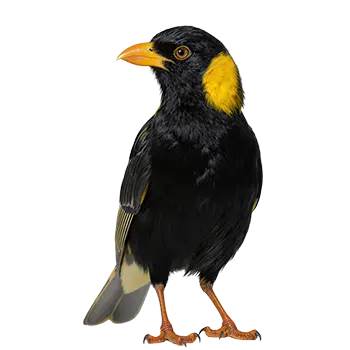
The juvenile stage in mynah birds begins around the time of fledging, typically between four and six weeks of age, and extends through the first year of life. During this period, the young mynah undergoes a dramatic transformation from a clumsy, partially feathered fledgling into a sleek, confident young bird. Physical growth is rapid in the early weeks after fledging, with the bird gaining coordination, muscle strength, and full feather coverage in a relatively short span of time.

One of the most noticeable changes during the juvenile period is the development of the mynah's distinctive plumage. Juvenile mynah birds often display duller coloring than adults, with less glossy feathers and smaller, less prominent yellow wattles around the eyes and nape. The beak may also appear lighter or less vibrant than the deep orange or yellow seen in mature birds. These features develop gradually over the first year, and the first full molt—during which juvenile feathers are replaced by adult plumage—typically occurs between six and twelve months of age.

Weight stabilization is an important milestone during this stage. After the rapid weight gain of the nestling period, the young mynah's growth rate slows and eventually plateaus as the bird reaches its adult size. Regular weighing remains important, as unexpected weight loss can signal illness, stress, or nutritional deficiency. A healthy juvenile mynah should maintain a consistent weight once it has reached its full size, with minor fluctuations being normal.

Flight development is a critical component of physical maturation. Fledgling mynah birds make their first flight attempts around four to five weeks of age, and these early efforts are often awkward and poorly controlled. The bird may crash-land, flutter to the ground, or misjudge distances. This is entirely normal. Providing a safe, enclosed space for flight practice—free of ceiling fans, open windows, hot surfaces, and other hazards—is essential. Flight strength and precision improve rapidly with practice, and within a few weeks, the young mynah will be navigating its environment with increasing skill.

Weaning & Diet Transition

Weaning is one of the most important and sometimes challenging transitions in a young mynah bird's life. The process of moving from hand-feeding formula to independent eating of solid foods should be gradual, patient, and guided by the bird's readiness rather than forced by a strict timeline. Most mynah chicks begin showing interest in solid foods between five and eight weeks of age, though the complete weaning process may take several additional weeks.

Introduce solid foods by offering a variety of soft, easily consumed items alongside the regular hand-feeding schedule. Diced soft fruits such as papaya, banana, grapes, and blueberries are excellent first foods for juvenile mynahs. Softened, low-iron mynah pellets can be moistened and placed in a shallow dish for the bird to explore. The chick may initially play with the food more than eat it, picking it up, mashing it, and dropping it. This exploratory behavior is a normal and necessary part of learning to eat independently.

As the juvenile begins consuming more solid food, hand-feedings can be gradually reduced in frequency. Drop one feeding at a time, starting with the midday feeding and eventually working toward eliminating the morning and evening feedings last. Monitor the bird's weight carefully throughout the weaning process. Some weight loss during weaning is normal, but a loss exceeding ten percent of body weight is cause for concern and may indicate that the bird is not yet consuming enough solid food to sustain itself without supplemental formula.

The transition diet should be low in iron, as mynah birds are highly susceptible to iron storage disease, also known as hemochromatosis. Avoid feeding citrus fruits, tomatoes, and other foods high in vitamin C during meals that include iron-containing pellets, as vitamin C dramatically increases iron absorption. Commercial mynah pellets formulated for softbill species are designed with appropriate iron levels and should form the staple of the diet. Fresh fruits, insects, and occasional cooked egg can supplement the pellet base, but the overall dietary composition should be carefully managed to prevent iron overload from the outset.

Behavioral Development

Juvenile mynah birds are bundles of curiosity, energy, and emerging personality. This stage is characterized by bold exploration, increasing independence, and the development of the vocal abilities for which mynah birds are famous. Understanding the behavioral changes that occur during adolescence helps caregivers respond appropriately and avoid misinterpreting normal developmental behaviors as problems.

One of the most striking behavioral developments is the onset of vocal mimicry. Young mynah birds begin experimenting with sounds during the juvenile period, starting with soft, garbled vocalizations that gradually become clearer and more recognizable. This is the optimal window for speech training, as the juvenile brain is primed for auditory learning. Birds that are regularly exposed to clear, repeated words and phrases during this stage often develop impressive vocabularies. The mynah's mimicry is not limited to speech—they readily imitate whistles, laughter, doorbells, phone ringtones, and other environmental sounds.

Adolescent mynah birds may also test boundaries, much like teenagers in any species. A previously docile hand-fed bird may go through a phase of nipping, refusing to step up, or displaying skittish behavior. This is a normal part of development and does not mean the bird is becoming wild or aggressive. Consistent, gentle handling and positive reinforcement during this phase are essential. Reacting with frustration or punishment can damage the trust built during hand-feeding and create lasting behavioral problems.

Play behavior becomes increasingly sophisticated during the juvenile period. Young mynahs enjoy manipulating toys, tossing objects, splashing in water dishes, and engaging in acrobatic antics on perches and play stands. Providing a stimulating environment with a variety of toys, foraging opportunities, and interactive play sessions supports healthy cognitive development and prevents boredom-related behaviors such as feather plucking or excessive screaming.

Training & Speech Development

The juvenile period represents the golden window for training a mynah bird, both in terms of behavioral commands and vocal mimicry. Mynah birds are widely regarded as among the best talking birds in the avian world, rivaling or even surpassing many parrot species in the clarity and accuracy of their speech. Capitalizing on the juvenile learning period can result in a bird with a remarkably diverse and clear vocal repertoire.

Begin speech training by selecting a few short, simple words or phrases and repeating them clearly and consistently in the bird's presence. Words with strong consonant sounds tend to be learned more easily. Repeat the chosen words during calm, focused interaction sessions, maintaining eye contact and speaking directly to the bird. Many trainers find that morning sessions, when the bird is alert and rested, produce the best results. Patience is key—it may take days or weeks of repetition before the bird produces its first recognizable word.

Behavioral training should focus on foundational commands such as stepping up onto a hand or perch, returning to the cage on command, and accepting gentle handling. Use positive reinforcement in the form of favorite food treats, verbal praise, and attention. Mynah birds are intelligent and respond well to reward-based training, but they can become stubborn or disengaged if sessions are too long or too demanding. Keep training sessions brief—five to ten minutes at a time—and always end on a positive note.

Consistency across all household members is important. If multiple people interact with the bird, everyone should use the same commands, hand signals, and reinforcement strategies. Mixed signals confuse the bird and slow the training process. Additionally, be mindful of what the bird hears throughout the day, as mynah birds will mimic any sound they find interesting, including words or phrases you may not want repeated. Many mynah owners have been surprised to hear their bird perfectly reproduce an embarrassing phrase or an unflattering imitation of a family member's voice.

Cage Setup & Exercise

As a juvenile mynah bird grows and becomes more active, its housing needs evolve significantly from the brooder or small cage used during the hand-feeding stage. Mynah birds are active, athletic birds that require spacious enclosures to accommodate their energetic nature. The cage should be as large as space and budget allow, with a minimum recommendation of 36 inches long by 24 inches wide by 24 inches tall for a single bird. Horizontal space is more important than vertical height, as mynah birds tend to hop and fly laterally rather than climb.

Bar spacing is an important safety consideration. Bars should be spaced no more than half an inch to three-quarters of an inch apart to prevent the bird from getting its head or body caught between them. The cage should be constructed of sturdy, non-toxic metal with a powder-coated or stainless steel finish. Avoid cages with zinc, lead, or rusty components, as these materials are toxic to birds. A large access door and a removable bottom tray make daily cleaning much easier.

Perches of varying diameters and materials should be installed throughout the cage. Natural wood branches of different thicknesses are ideal, as they exercise the feet and prevent pressure sores that can develop from standing on uniform dowel perches. Avoid sandpaper perch covers, which are abrasive and can cause foot injuries. Position perches at different heights but ensure the bird has clear flight paths between them. Food and water dishes should be placed away from perches to prevent contamination from droppings.

Daily out-of-cage time is essential for a juvenile mynah's physical and mental health. Supervised free-flight time in a bird-safe room allows the young bird to build flight muscles, practice aerial maneuvers, and explore its environment. Before allowing the bird out, secure all windows and doors, turn off ceiling fans, cover mirrors and large glass surfaces the bird might fly into, remove toxic houseplants, and ensure no other pets are present. A dedicated play stand or bird tree outside the cage gives the bird a designated landing area and a sense of territory outside its enclosure.

Health Monitoring & Veterinary Care

Regular health monitoring during the juvenile stage establishes patterns that will serve as valuable baselines throughout the mynah bird's life. Schedule a comprehensive veterinary checkup after the bird has fully weaned, typically around three to four months of age. This examination should include a physical assessment, blood work to check for early signs of iron storage disease, and a fecal analysis. The veterinarian can also evaluate the bird's weight, feather condition, and overall development to ensure everything is progressing normally.

Iron storage disease remains the most significant health concern specific to mynah birds, and monitoring should begin during the juvenile period even though clinical symptoms may not appear until later in life. Blood tests measuring serum iron levels and liver function can detect elevated iron before organ damage occurs. Establishing a testing schedule with your avian veterinarian—typically annually for young birds—creates a monitoring framework that can catch problems early when dietary adjustments are most effective.

Juvenile mynah birds are also susceptible to common avian health issues including respiratory infections, gastrointestinal parasites, and fungal infections. Watch for symptoms such as changes in droppings, decreased appetite, fluffed feathers, lethargy, sneezing, or nasal discharge. Because birds instinctively hide signs of illness as a survival mechanism, subtle changes in behavior or appearance are often the earliest indicators of a health problem. A bird that is slightly less active than usual, eating slightly less, or perching with feathers puffed may already be significantly ill.

Maintain a daily observation routine that includes checking the bird's droppings, watching for normal eating and drinking behavior, and noting its activity level and vocalizations. Weekly weighing on a gram scale provides objective data that can reveal weight trends not visible to the eye. Keep a simple log or journal of these observations. If the bird ever needs veterinary attention, this record provides the clinician with a detailed history that can significantly aid in diagnosis and treatment planning.

Socialization & Environmental Enrichment

The juvenile period is when a mynah bird's social personality truly blossoms, and the experiences provided during this time have a lasting impact on the bird's temperament and adaptability. A well-socialized juvenile mynah is confident around different people, comfortable with reasonable household activity, and resilient when encountering new situations. Achieving this requires deliberate, positive exposure to a variety of stimuli.

Introduce the young mynah to different family members and trusted visitors. Each person should interact with the bird using calm, gentle approaches—offering treats, speaking softly, and allowing the bird to initiate contact at its own pace. Birds that are exposed only to a single caregiver during the juvenile period may become one-person birds, bonding exclusively to that individual and behaving fearfully or aggressively toward everyone else. Broad socialization helps prevent this by teaching the bird that humans in general are safe and interesting.

Environmental enrichment is not a luxury but a necessity for a species as intelligent as the mynah bird. Rotate toys regularly to maintain novelty and interest. Foraging toys that require the bird to work for its food stimulate natural problem-solving behaviors and prevent the boredom that can lead to destructive habits. Simple enrichment can include hiding food items in crumpled paper, offering whole fruits that require manipulation to eat, or placing treats inside bird-safe puzzle feeders.

Bathing opportunities should be provided regularly, as mynah birds are enthusiastic bathers. A shallow dish of lukewarm water or a gentle misting with a spray bottle encourages natural preening behavior and helps maintain feather health. Most mynah birds develop a preference for one bathing method over another, and some will happily bathe daily if given the opportunity. Bathing also serves as a form of enrichment and play, with many birds splashing vigorously and clearly enjoying the experience. Ensure the bird can dry in a warm, draft-free area after bathing, particularly during cooler months.

Always consult a qualified professional before making any health-related decisions. This content is provided for informational reference only and should not replace professional guidance specific to your animal.