
Origins & Natural Habitat

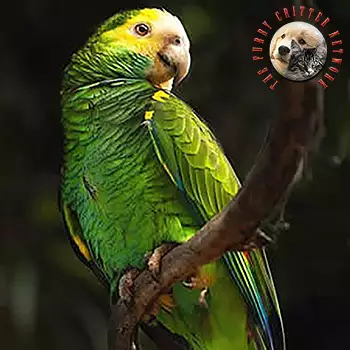
The White-Fronted Amazon (Amazona albifrons) holds the distinction of being the smallest member of the Amazona genus, a group that includes some of the most recognizable and widely kept parrots in the world. Native to a broad swath of Pacific-slope and interior dry forest stretching from northwestern Mexico through Guatemala, El Salvador, Honduras, Nicaragua, and into northwestern Costa Rica, the species has adapted to a range of semi-arid and seasonally dry habitats that set it apart from many of its more tropical Amazon relatives. Three subspecies are generally recognized: A. a. albifrons across most of the Mexican range, A. a. saltuensis in the Sonoran region of northwestern Mexico, and A. a. nana occupying the southern portion of the range into Central America.

Unlike many Amazon parrots that depend on dense humid rainforest, the White-Fronted Amazon favors deciduous and semi-deciduous woodland, thorn scrub, gallery forest along watercourses, and agricultural edges where scattered large trees provide nesting cavities. This preference for drier, more open landscapes has historically made the species more visible and accessible to human communities than forest-interior Amazons, a factor that has shaped its long relationship with people throughout Mesoamerica. The birds forage in small to medium-sized flocks on seeds, fruits, flowers, and cultivated crops, and they roost communally in large trees, sometimes gathering in groups of several hundred.

The species' evolutionary history is tied to the broader radiation of Amazona parrots across the Neotropics, a diversification that molecular studies have placed in the late Miocene to Pliocene epochs. Within this group, the White-Fronted Amazon's small size and preference for xeric habitats suggest an adaptive trajectory distinct from the larger, more humid-forest-dependent species like the Yellow-Naped Amazon or the Mealy Amazon. Its relatively modest body size, typically around 25 centimeters in length and 200 to 230 grams in weight, may represent an ecological specialization for exploiting food resources and nesting opportunities in landscapes where larger parrots face greater competition.

The species is also notable for being one of the few Amazon parrots exhibiting clear sexual dimorphism. Males display bright red feathering on the alula and primary coverts of the wing, a feature absent or greatly reduced in females. This visible difference between the sexes is unusual among Amazona species and has made the White-Fronted Amazon a subject of interest in studies of sexual selection and plumage evolution in parrots. Combined with the characteristic white forehead patch and green body plumage accented by blue on the crown and flight feathers, the bird presents a compact and visually distinctive appearance that has contributed to its appeal across cultures and centuries.

Early History with Humans

The White-Fronted Amazon's relationship with humans predates European contact in the Americas by centuries, if not millennia. Archaeological and ethnohistorical evidence indicates that indigenous peoples of Mesoamerica captured, kept, and traded parrots extensively, and the White-Fronted Amazon, abundant and accessible across much of western and southern Mexico, was almost certainly among the species involved. Parrot feathers were highly valued commodities in pre-Columbian trade networks, used in ceremonial regalia, religious offerings, and elite adornment. The brilliant green, red, and blue plumage of Amazon parrots, including the White-Fronted, contributed to a symbolic palette associated with fertility, the sky, and the feathered serpent deity Quetzalcoatl in various Mesoamerican traditions.

Spanish colonial accounts from the 16th century onward document the keeping of parrots by indigenous communities across Mexico and Central America, describing birds that were tamed, taught to speak words in Nahuatl and other local languages, and traded in regional markets. While the colonial sources rarely distinguished between Amazon species with the precision of modern ornithology, the geographic descriptions and size references in many accounts are consistent with the White-Fronted Amazon. The birds' presence in human settlements was a familiar sight to early European observers, who noted the close bond between keepers and their parrots.

As European settlement expanded, the White-Fronted Amazon entered the broader Western avicultural consciousness gradually. Unlike the larger, more vividly colored Amazon species that attracted immediate attention from European collectors and naturalists, the White-Fronted was initially overshadowed by its more imposing relatives. Ornithologist Edouard Deville and other 19th-century naturalists described the species in formal taxonomic terms, and specimens began appearing in European natural history collections. However, the bird did not achieve the same level of fashionable celebrity in European parlors as the larger Amazons or the African Grey Parrot.

By the late 19th and early 20th centuries, improvements in transportation and the growth of the organized pet trade brought increasing numbers of White-Fronted Amazons into North American and European households. Their small size, manageable temperament, and engaging personalities made them accessible to a broader range of keepers than some of the more demanding large parrots. This period marked the beginning of the species' transition from a regional companion animal and cultural presence in Mesoamerica to a globally recognized member of the avicultural community.

Cultural Symbolism & Folklore

In the indigenous cultures of Mexico and Central America, parrots occupy a prominent symbolic position, and the White-Fronted Amazon has been part of this broader cultural tapestry for generations. Among the Aztec and Maya civilizations, parrots were associated with the sun, fire, and warfare, and their feathers were integrated into the spectacular headdresses and ceremonial garments worn by priests and rulers. While the Scarlet Macaw and the Military Macaw often receive the most attention in discussions of Mesoamerican parrot symbolism, smaller Amazon parrots like the White-Fronted were woven into everyday cultural life as household companions, market goods, and subjects of local folklore.

In rural communities across western Mexico, the White-Fronted Amazon has long been regarded as a companion with almost familial status. Oral traditions in parts of Guerrero, Oaxaca, and Michoacan include stories of parrots that served as household guardians, warning their owners of approaching strangers or dangerous animals with alarm calls. The bird's tendency to bond closely with a single person or family and to vocalize with enthusiasm when excited has reinforced its reputation as a loyal and protective presence. In some communities, a talking parrot is considered a sign of good fortune, and birds that learn to repeat local proverbs or greetings are sources of particular pride.

The species also appears in the broader Latin American literary and artistic tradition, though typically as part of the general category of loros, the Spanish term encompassing parrots of various species. Mexican muralists and folk artists have depicted parrots in scenes of village life, markets, and tropical landscapes, and the White-Fronted Amazon's compact form and vivid facial markings make it a recognizable figure in these representations. The bird's image has appeared on regional postage stamps, in decorative pottery, and in the vibrant textiles produced by indigenous artisans.

In modern Mexican culture, the White-Fronted Amazon remains a familiar presence in both urban and rural settings. Street markets in cities like Oaxaca and Guadalajara have historically offered the birds for sale, though increasing regulation has curtailed open trade. The cultural attachment to keeping parrots runs deep, and conservation advocates working in the species' native range have recognized that effective protection strategies must engage with, rather than dismiss, the longstanding cultural relationship between human communities and their local parrot populations.

Scientific Study & Taxonomic Recognition

The White-Fronted Amazon was formally described by the English naturalist George Shaw in 1800, receiving the binomial name Psittacus albifrons in reference to the distinctive white feathering on its forehead. The species was subsequently transferred to the genus Amazona as taxonomic understanding of New World parrots matured during the 19th century. The three recognized subspecies, albifrons, saltuensis, and nana, were delineated based on variations in size and plumage intensity across the species' geographic range, with saltuensis being the largest and palest form and nana the smallest and most richly colored.

Scientific interest in the White-Fronted Amazon has centered on several distinctive biological features. Its clear sexual dimorphism, with males displaying red wing coverts absent in females, has made it a useful subject in comparative studies of plumage evolution and mate selection in parrots. Researchers have investigated whether the red wing patch functions as an honest signal of male quality, and behavioral studies in both wild and captive settings have explored the role of plumage differences in pair formation and social dynamics. This dimorphism is rare enough among Amazon parrots that it has contributed meaningfully to theoretical discussions about the evolution of sex-specific ornamentation in birds.

Field studies of wild White-Fronted Amazon populations have provided valuable data on the ecology and behavior of a dry-forest parrot, a niche that has received less research attention than the humid-forest habitats occupied by many other Amazona species. Investigations into the birds' nesting ecology have revealed a strong dependence on natural tree cavities, particularly in mature deciduous trees, and have documented competition for nest sites with other cavity-nesting species. Research on foraging behavior has shown that the species exploits a wide variety of plant resources, adjusting its diet seasonally in response to the pronounced wet and dry cycles that characterize its habitat.

Genetic studies using mitochondrial and nuclear DNA markers have clarified the White-Fronted Amazon's phylogenetic position within the Amazona genus, placing it in a clade of smaller-bodied species that includes the Yellow-Lored Amazon and the closely related Black-Billed Amazon. These molecular analyses have also informed conservation genetics, providing baseline data on genetic diversity across the species' range and identifying populations that may warrant particular management attention. The White-Fronted Amazon's combination of accessible habitat, visible sexual dimorphism, and relatively stable wild populations has made it a practical and productive subject for ornithological research.

The Species Today

The White-Fronted Amazon occupies a somewhat paradoxical position in modern aviculture. It is one of the most commonly available small Amazon parrots in the pet trade, bred extensively in captivity across North America and Europe, yet it often receives less public attention than its larger and more vocally accomplished relatives such as the Double Yellow-Headed Amazon or the Blue-Fronted Amazon. Experienced aviculturists, however, frequently regard the White-Fronted as an ideal introduction to Amazon parrot keeping, citing its manageable size, generally amiable disposition, and entertaining personality as virtues that make it suitable for a wider range of households than the large, often temperamental Amazona species.

In captivity, the White-Fronted Amazon is known for its playful energy, strong pair bonds, and willingness to engage with toys, foraging puzzles, and social interaction. While its talking ability is moderate compared to the vocal powerhouses of the Amazon genus, many individuals develop respectable vocabularies and are capable of contextual speech that suggests a degree of associative learning. The species' relatively compact size, typically under ten inches in length, means that it can be comfortably housed in smaller spaces than a large Amazon, though it still requires a generously sized cage and regular out-of-cage time to maintain physical and psychological health.

Breeding programs for the White-Fronted Amazon are well established, and the species reproduces reliably in captivity when provided with appropriate nesting conditions. The visible sexual dimorphism simplifies pair formation compared to monomorphic Amazon species that require DNA or surgical sexing. Clutches typically consist of three to four eggs, and both parents participate in incubation and chick rearing. Aviculturists have noted that the species can be prolific under good husbandry conditions, which has helped maintain healthy captive populations and reduce demand for wild-caught birds.

In its native range, the White-Fronted Amazon remains one of the more common Amazona species, though localized declines have been documented in areas where habitat loss and illegal trapping are concentrated. The species is currently listed as Least Concern by the International Union for Conservation of Nature, reflecting its broad distribution and relatively large overall population. However, conservationists caution that this status should not invite complacency, as the dry forests and thorn scrub habitats on which the species depends are among the most threatened ecosystems in Mesoamerica, facing ongoing pressure from agricultural expansion, cattle ranching, and urban development.

Legacy in Aviculture & Conservation

The White-Fronted Amazon's contributions to the broader story of parrot aviculture are substantial, if sometimes understated. As one of the first Amazon species to be bred consistently in captivity during the mid-20th century, it helped establish husbandry protocols that were later adapted for rarer and more challenging Amazona species. Early aviculturists who worked with White-Fronted Amazons developed techniques for cavity-style nest box design, hand-rearing protocols, and dietary formulations that informed the captive management of the entire genus. In this sense, the species served as a foundational model for Amazon parrot aviculture at a time when the discipline was still maturing.

The White-Fronted Amazon has also played a role in conservation education, particularly in Mexico, where it is one of the most familiar native parrot species. Organizations working to combat illegal parrot trapping in western and southern Mexico have used the White-Fronted Amazon as a flagship species in outreach campaigns, leveraging its cultural familiarity to build public support for habitat protection and enforcement of wildlife trade laws. Programs that combine community-based monitoring of wild nesting sites with economic alternatives to poaching have shown promising results in several regions, and the White-Fronted Amazon's accessibility and visibility have made it a practical focal point for these efforts.

Internationally, the species' inclusion in CITES Appendix II has provided a regulatory framework for managing legal trade, and the availability of captive-bred birds in established avicultural markets has reduced, though not eliminated, the economic incentive for wild capture. Reintroduction and supplementation programs remain uncommon for this species, given its relatively stable population status, but the genetic and husbandry knowledge accumulated through decades of captive breeding positions the avicultural community to support such efforts should they become necessary in the future.

The White-Fronted Amazon's legacy is one of quiet but enduring significance. It has introduced countless keepers to the rewards and responsibilities of Amazon parrot ownership, contributed to scientific understanding of parrot biology and behavior, and served as a cultural touchstone in the communities where it has lived alongside humans for centuries. While it may never command the celebrity of the African Grey or the dramatic plumage of a macaw, the White-Fronted Amazon's combination of charm, resilience, and accessibility ensures its continued importance in the intersecting worlds of aviculture, conservation, and human-animal companionship.

Always consult a qualified professional before making any health-related decisions. This content is provided for informational reference only and should not replace professional guidance specific to your animal.