Military Macaw Species Guide - Furry Critter Network

Military Macaw

Quick Facts

πŸ”¬ Scientific Name
Ara militaris
πŸ“Š Care Level
Expert
😊 Temperament
Intelligent, Reserved, Loyal
πŸ“ Adult Size
27-33 inches
⏱️ Lifespan
50-60 years
πŸ”Š Noise Level
Very Loud
πŸ—£οΈ Talking Ability
Good
🍽️ Diet Type
Pellet-based
🌍 Origin
Mexico through South America
🏠 Min Cage Size
48x36x60 inches minimum
πŸ“ Size
Large

Military Macaw - Names & Recognition

The Military Macaw (Ara militaris) derives its common name from the predominantly olive-green plumage that early naturalists thought resembled the color of military uniforms. This distinctive nomenclature sets the species apart from other large macaws and has been used consistently since the species was first described scientifically in the late 18th century. The military reference has no connection to the bird's behavior or temperament but purely reflects the plumage coloration.

Taxonomically, the Military Macaw belongs to the genus Ara within the family Psittacidae, placing it among the largest Neotropical parrots including the closely related Scarlet, Blue and Gold, and Green-winged Macaws. The species is currently divided into three recognized subspecies based on geographic distribution and subtle morphological differences. The nominal subspecies is Ara militaris militaris, found in northern South America including Colombia, Venezuela, Ecuador, Peru, and Bolivia. Ara militaris mexicana occurs in Mexico and represents a distinct northern population. Ara militaris boliviana inhabits regions of Bolivia and Argentina and shows slight size and coloration differences from the nominal subspecies.

These subspecies display minor variations in overall size, intensity of green coloration, and extent of red frontal patch, though differences are subtle and require expert observation for reliable identification. In aviculture, subspecies distinctions are rarely maintained or documented, and most captive-bred birds represent mixed ancestry from various geographic origins. Some taxonomic authorities question whether the subspecies warrant separate classification, suggesting they may represent clinal variation across the species' fragmented range rather than true evolutionary divergence.

The scientific name Ara militaris combines the genus name Ara (derived from indigenous South American languages for macaw) with the Latin adjective militaris meaning "of soldiers" or "military," directly referencing the olive-green plumage. The species has been known to Western ornithology since the late 1700s when European naturalists documented specimens from Mexico and South America. Military Macaws have appeared in natural history illustrations, scientific literature, and avicultural writings for over two centuries, though they have always been less common in captivity than the more brilliantly colored Blue and Gold or Scarlet Macaws.

In Spanish-speaking countries throughout their range, Military Macaws are known as Guacamayo Militar or Guacamaya Verde (Green Macaw). Indigenous communities across Mexico and South America have traditional names for these parrots in numerous native languages, reflecting their cultural significance and long history of interaction with human populations. In aviculture and the pet trade, the species is almost universally referred to as the Military Macaw, with the name instantly recognizable to bird enthusiasts worldwide despite the somewhat unusual origin of the common name.

Military Macaw Physical Description

The Military Macaw is a large, impressive parrot measuring 27 to 33 inches in length from head to the tip of the long tail, placing it in the medium-to-large size range among macaw species. They are notably smaller than Blue and Gold or Green-winged Macaws but larger than Severe Macaws or other mini-macaws. Their wingspan extends approximately 33 to 43 inches when fully spread, and adults typically weigh between 900 to 1,100 grams (approximately 2 to 2.4 pounds). Sexual dimorphism is minimal, with males sometimes slightly larger than females, though visual sexing is unreliable without DNA testing or surgical examination.

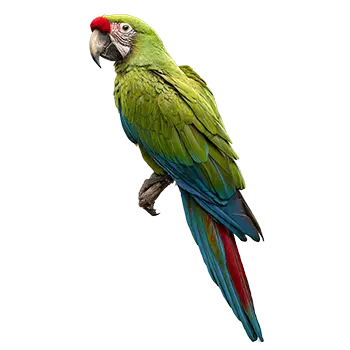
The most distinctive feature of Military Macaws is their predominantly olive-green to forest-green plumage that covers most of the body, creating a more subdued appearance compared to the brilliant blues, reds, and yellows of other large macaws. However, this green coloration should not be mistaken for drabness, as the plumage displays rich, lustrous tones that shimmer beautifully in proper lighting. The shade of green varies from bird to bird, with some individuals showing brighter, more yellowish-green tones while others display deeper, more olive-toned plumage.

The forehead features a distinctive bright red patch that varies in size among individuals but typically covers the area from just above the cere to the crown. This red frontal band is one of the species' most recognizable features and contrasts dramatically with the green body plumage. The crown and nape display slightly bluish-green tones that blend into the body coloration. Some individuals show scattered red feathers on the neck and throat, adding additional color accents.

The face is characterized by extensive areas of bare white to pinkish-white facial skin extending from the base of the massive horn-colored to dark grey beak around the eyes and down to the lower mandible. This bare facial skin features fine lines of tiny dark feathers arranged in horizontal rows, creating unique individual patterns similar to human fingerprints. The facial skin may flush pink or red when the bird is excited, stressed, or experiencing strong emotions, providing visible indicators of emotional state. The eyes are pale yellow in adults, creating a striking contrast against the facial skin and lending an intelligent, alert expression. Juveniles have darker brown to grey irises that gradually lighten to yellow during the first 1-3 years of life.

The wings display spectacular coloration despite the overall green appearance of the bird at rest. The flight feathers show brilliant blue coloration on the primaries and secondaries, creating stunning flashes of color during flight that contrast beautifully with the green body. The underwing coverts display olive-green to yellowish-green tones. The bend of the wing (alula area) may show red feathering in some individuals. When the wings are fully extended, the combination of green, blue, and subtle red creates a beautiful color palette.

The tail is extremely long and graduated, comprising roughly half to two-thirds of the bird's total length and displaying a mixture of colors. The upper tail surface shows predominantly brownish-red to maroon coloring toward the base, transitioning to blue toward the tips. The undertail displays yellow to golden tones that are visible during flight or when the tail is fanned. This long tail gives Military Macaws their elegant, impressive appearance and serves important functions in flight maneuverability and balance.

The beak is large, powerful, and horn-colored to dark grey-black, perfectly adapted for cracking extremely hard nuts and seeds found in their natural habitat. The upper mandible features the characteristic strong curve of macaws, and the bite force is formidable, capable of exerting pressure exceeding 400 pounds per square inch. The legs and feet are dark grey, powerful, and equipped with the zygodactyl toe arrangement (two forward, two back) providing exceptional climbing and grasping strength. The overall body structure is robust and athletic with strong shoulders and chest, powerful flight musculature, and an upright, dignified posture that contributes to the species' distinguished appearance.

Affection Level
Military Macaws form deep, lasting bonds with their chosen people and can be quite affectionate with trusted individuals. They tend to be more reserved and cautious than Blue and Gold Macaws initially, but become devoted companions once trust is established. They show affection through preening, gentle contact, and spending time near bonded humans.
Sociability
These macaws are social with their bonded humans but tend to be more cautious and selective with strangers compared to more outgoing species. They can be reserved or suspicious of new people, requiring patience during socialization. When properly introduced, they can adapt to multiple family members but often maintain strong preferences for certain individuals.
Vocalization
Military Macaws are extremely loud, capable of producing ear-splitting screams that carry for miles. Like all large macaws, they have powerful voices and engage in loud morning and evening calling sessions. Their vocalizations include various squawks, screams, and contact calls. They are completely unsuitable for apartments or noise-sensitive environments.
Intelligence
Highly intelligent birds with excellent problem-solving abilities and strong memory retention. Military Macaws quickly learn patterns, understand complex concepts, and can master sophisticated tricks and behaviors. Their intelligence requires constant mental stimulation through training, puzzles, and foraging activities to prevent boredom and maintain psychological wellbeing.
Exercise Needs
These large, active parrots require extensive daily exercise including 3-4 hours minimum of supervised out-of-cage time. They need space for climbing, wing-flapping, and flight when possible. Without adequate physical activity, Military Macaws develop obesity, muscle atrophy, and behavioral problems. Their powerful flight abilities benefit greatly from safe flying opportunities.
Maintenance Level
Extremely high-maintenance birds requiring substantial time, space, and financial resources. Their large size means significant food costs, extensive cage cleaning, considerable mess, and potential property damage. They need fresh food preparation twice daily, constant toy replacement, and 4-6 hours minimum of daily interaction. Veterinary costs for large macaws are considerable.
Trainability
Very trainable with positive reinforcement methods and patient, consistent handling. Military Macaws learn quickly and can master complex tricks and commands. However, their more cautious nature may require extra patience compared to bolder species. They respond best to gentle, respectful training approaches that build trust gradually.
Independence
Military Macaws require substantial daily attention and interaction, typically 4-6 hours minimum. While slightly more independent than some macaw species, they still suffer without adequate social contact and may develop behavioral problems including feather plucking. Not suitable for people with limited time. They need consistent engagement and inclusion in daily activities.

Natural Habitat & Range

The Military Macaw possesses a fragmented, disjunct distribution spanning from Mexico through parts of Central and South America, representing one of the more geographically complex ranges among large macaw species. The species occurs in three main population centers: a northern population in Mexico, a Central American/northern South American population, and a southern South American population, with vast areas of unsuitable habitat separating these regions. This discontinuous distribution pattern reflects both the species' specific habitat requirements and historical factors including climate change and habitat loss.

In Mexico, Military Macaws occur along the Pacific slope and in scattered interior valleys, historically ranging through Sonora, Chihuahua, Durango, Nayarit, Jalisco, MichoacΓ‘n, Guerrero, and Oaxaca, though populations have declined significantly and many historical locations no longer support breeding populations. The South American distribution includes Colombia, Venezuela, Ecuador, Peru, Bolivia, and northwestern Argentina, with populations concentrated in specific regions rather than occurring continuously throughout these countries.

Military Macaws inhabit subtropical montane forests, cloud forests, and humid temperate forests at elevations ranging from approximately 2,000 to 10,000 feet, with most populations concentrated between 3,000 and 8,000 feet. This elevation preference distinguishes Military Macaws from most other large macaw species that favor lowland tropical forests. They show particular affinity for rugged, mountainous terrain with steep-sided canyons, cliffs, and gorges where they nest in cavities in cliff faces or tall trees growing on canyon walls. This habitat specificity contributes to their relatively low population numbers and fragmented distribution.

These macaws favor areas with mixed pine-oak forests, cloud forests, and subtropical forests characterized by high humidity, frequent fog or mist, and complex forest structure. They require both forested areas for feeding and roosting and nearby cliff faces or large dead trees with suitable cavities for nesting. Military Macaws frequently feed in agricultural areas adjacent to forests, particularly corn fields and fruit orchards, which sometimes brings them into conflict with farmers. However, they remain dependent on intact forest habitat for nesting and roosting, unable to persist in heavily deforested landscapes.

In their natural environment, Military Macaws are social birds that typically travel in pairs or small flocks of 5-20 individuals, though larger congregations of 50+ birds may gather at particularly productive feeding sites or communal roosts. Bonded pairs remain together year-round, demonstrating strong pair bonds and mutual preening, feeding, and roosting behaviors. They are powerful fliers capable of covering extensive distances between feeding areas and roosting sites, often traveling 10-15 miles or more daily while foraging across their territory. Flight is direct and powerful with steady, deep wingbeats accompanied by loud calling.

The natural diet consists primarily of fruits, seeds, nuts, flowers, and berries from diverse plant species. They show particular preference for pine nuts in regions where pine forests occur, using their powerful beaks to extract seeds from pine cones. They also consume acorns, figs, various palm fruits, and agricultural crops including corn. Like other macaws, Military Macaws visit clay licks where they consume mineral-rich clay, believed to neutralize toxins from unripe fruits and provide essential minerals. These clay lick sites serve as important social gathering locations where multiple species of parrots congregate.

The conservation status of Military Macaws is classified as Vulnerable by the IUCN Red List, reflecting significant population declines and ongoing threats throughout their range. The species has experienced dramatic population reductions over the past century, with some populations declining by 50% or more. The fragmented distribution and specific habitat requirements make Military Macaws particularly vulnerable to additional habitat loss and disturbance.

Primary threats include habitat destruction from logging, agricultural conversion, and development, particularly in montane regions where forest clearing for agriculture and settlement has accelerated. The species' preference for moderate elevations places them in zones experiencing high human population pressure and land use conversion. Illegal capture for the pet trade historically removed thousands of Military Macaws from wild populations, though international trade restrictions have reduced this pressure. However, illegal trapping still occurs in some regions, particularly in Mexico where nest poaching remains a problem.

Conservation efforts include establishment of protected areas encompassing critical habitat, enforcement of wildlife protection laws, captive breeding programs, nest protection initiatives working with local communities, and research on population status and ecology. Successful conservation requires protecting not only forested habitats but also the cliff nesting sites essential for reproduction. Community-based conservation programs that provide economic benefits from ecotourism or sustainable forest management show promise for protecting remaining populations. Climate change poses additional long-term threats through alterations to montane forest composition and distribution.

Temperament

The Military Macaw is known for possessing a more reserved, cautious, and somewhat dignified temperament compared to the bold, outgoing personalities of Blue and Gold or Scarlet Macaws. Understanding these personality characteristics is essential for prospective owners, as Military Macaws require patient, respectful handling and are not ideal for those seeking an immediately affectionate, gregarious companion. However, for owners who appreciate their more subtle personality and can provide appropriate care, Military Macaws become deeply devoted, loyal companions.

The defining characteristic of Military Macaw temperament is their naturally cautious and somewhat reserved nature, particularly when encountering new people, situations, or environments. Unlike Blue and Gold Macaws that often approach strangers with curiosity and boldness, Military Macaws tend to observe carefully before deciding to interact. This wariness is not fearfulness but rather a more deliberate, thoughtful approach to novel situations. Hand-raised Military Macaws are more outgoing than parent-raised birds but still maintain a dignified reserve compared to more extroverted species.

This cautious temperament means Military Macaws require patient socialization and trust-building, particularly during the initial bonding period. Rushing the relationship or forcing interaction before trust is established can set back progress significantly and may cause the bird to become defensive or withdrawn. Owners must earn a Military Macaw's trust through consistent, gentle, respectful interactions over weeks or months rather than expecting immediate affection. However, once trust is established, these macaws form incredibly strong, lasting bonds with their chosen people that rival or exceed those of any other species.

Affection in Military Macaws is deep and genuine but expressed more subtly than in some other macaw species. A well-bonded Military Macaw shows love through wanting to be near their person, gentle preening, soft vocalizations, and eye contact rather than constant physical demands for attention. They enjoy head scratches and physical contact with trusted individuals but typically on their own terms rather than constantly soliciting interaction. This more independent approach to affection appeals to some owners who appreciate a companion bird that doesn't require constant physical contact while still maintaining a strong bond.

Social needs in Military Macaws are substantial though perhaps slightly less intense than in Blue and Gold Macaws. They require 4-6 hours daily of interaction and inclusion in household activities but can tolerate being alone for work hours better than some more demanding species. However, neglect or isolation still causes serious psychological damage leading to feather plucking, aggression, and depression. Military Macaws thrive when their cage is positioned where they can observe family activities, allowing them to feel included even when not directly interacting.

The tendency toward one-person bonding is pronounced in Military Macaws, who often develop strong preferences for a single individual while remaining reserved or even standoffish with others. This trait requires careful management through deliberate socialization with multiple family members from a young age. Having various people feed, train, and interact with the bird regularly helps prevent extreme one-person bonding that can lead to aggression toward household members not favored by the bird. Even with careful socialization, most Military Macaws maintain clear preferences for certain individuals.

Intelligence is a hallmark of Military Macaw temperament, with cognitive abilities comparable to other large macaws and demonstrating excellent problem-solving skills, memory retention, and learning capacity. They quickly understand routines, anticipate events, and remember past experiences for years. This intelligence requires constant mental stimulation through training, foraging activities, puzzle toys, and environmental enrichment. Bored Military Macaws become destructive, noisy, or develop behavioral problems. Their intelligence also means they can be somewhat manipulative, testing boundaries and training their owners as much as being trained.

Playfulness in Military Macaws is present but typically less exuberant than in Blue and Gold or Scarlet Macaws. They enjoy toys, particularly destructible items they can dismantle, and benefit from regular toy rotation. However, their play style tends to be more focused and deliberate rather than wildly energetic. They appreciate foraging opportunities and puzzle toys that challenge their problem-solving abilities more than simple entertainment toys. Providing appropriate outlets for natural chewing and exploring instincts prevents destructive behavior directed toward household furnishings.

Vocalization in Military Macaws follows typical macaw patterns with loud morning and evening calling sessions that are absolutely normal and unavoidable. Their voices are powerful and carry long distances, making them completely unsuitable for apartments or close living quarters. However, some owners report that Military Macaws may be slightly less prone to excessive screaming than some other large macaw species when their needs are adequately met, though individual variation is considerable. Like all macaws, attempting to suppress natural vocalizations through punishment causes severe behavioral deterioration.

Temperament changes during sexual maturity, typically beginning around 3-5 years of age, can be significant in Military Macaws. Breeding season (usually spring) brings hormonal surges that may temporarily increase aggression, territorial behavior, and nippiness even in previously gentle birds. These hormonal periods pass but recur annually, requiring understanding and appropriate management including maintaining routines, avoiding triggers, and not reinforcing aggressive behaviors. Some individuals become permanently more independent and assertive after maturity.

Care Requirements

Providing appropriate housing and care for a Military Macaw requires substantial space, significant financial investment, and unwavering commitment to meet the extensive physical and psychological needs of these large, intelligent, long-lived parrots. While slightly smaller than Blue and Gold or Green-winged Macaws, Military Macaws still require housing and care comparable to other large macaw species, and prospective owners must carefully evaluate whether they can truly accommodate a bird of this size and complexity.

The minimum cage size for a single Military Macaw should measure at least 48 inches wide by 36 inches deep by 60 inches tall, though larger dimensions of 60 inches wide by 40 inches deep by 72 inches tall or greater are strongly preferred and provide significantly better quality of life. These "minimum" dimensions are really only adequate if the bird receives extensive daily out-of-cage time (4+ hours). Some dedicated owners provide even larger custom enclosures or dedicate entire rooms as bird rooms, which better accommodate these large, active birds. Bar spacing should be 1 to 1.5 inches, wide enough for comfortable climbing but narrow enough to prevent head entrapment. Horizontal bars on multiple sides facilitate climbing behavior, which macaws engage in extensively throughout the day.

Cage construction must be extremely heavy-duty to withstand the considerable destructive power of macaw beaks. Choose only high-quality powder-coated or stainless steel cages with thick gauge wire (minimum 10 gauge, preferably 8 gauge or heavier) and heavy-duty welds that cannot be broken by determined macaws. Avoid galvanized cages that can cause zinc toxicity, a serious and potentially fatal condition. All latches must be macaw-proof with secure locks, complex mechanisms, or padlocks, as Military Macaws are intelligent escape artists who can manipulate simple closures. Many owners use carabiners or combination locks on cage doors to prevent escapes.

Cage placement significantly influences the bird's wellbeing and sense of security. Position the cage in a room where family members spend considerable time, allowing the Military Macaw to observe and feel included in household activities without being directly in high-traffic pathways where constant movement might stress them. However, recognize that macaw vocalizations will dominate any room they occupy, making quiet activities like television watching or phone conversations challenging during calling times. Never place cages in kitchens due to extreme risks from toxic cooking fumes released by heated non-stick cookware, which can kill birds within minutes even without visible smoke. The cage should be positioned near a wall or in a corner providing security while maintaining visibility and environmental monitoring. Natural light exposure benefits health, but avoid direct afternoon sunlight that could overheat the bird. Keep cages away from heating or air conditioning vents that could cause temperature extremes or drafts.

Perch variety is crucial for foot health in these large, heavy birds. Provide perches ranging from 1.5 to 2.5 inches in diameter made from extremely durable materials including manzanita, java wood, or thick natural branches from bird-safe trees. Softer woods will be rapidly destroyed requiring constant replacement. Natural branches with irregular shapes, varying diameters, and interesting textures provide the best foot exercise and prevent pressure sores that can develop from standing on uniform perches. Position perches at different heights throughout the cage, ensuring the highest perch allows the bird to be at or slightly above human eye level for security and comfort. Rope perches provide softer surfaces for occasional use but must be monitored for fraying and replaced when damaged to prevent toes becoming entangled. Avoid placing perches directly above food or water dishes to prevent fecal contamination that can cause bacterial growth.

Toys are absolutely essential for mental stimulation and provide necessary outlets for natural destructive chewing instincts in these powerful, intelligent birds. Military Macaws are highly destructive and will obliterate toys rapidly, requiring constant replacement at considerable expense (budget $50-100+ monthly). Provide large, sturdy destructible toys made from hardwood blocks, thick branches, leather strips, sisal rope, palm fronds, and other natural materials specifically designed for large macaws. Foraging toys that require problem-solving to access hidden treats provide crucial mental enrichment and help prevent boredom. Include puzzle toys, manipulative toys with moving parts, swings rated for large parrots, and interactive toys that can be manipulated and dismantled. Rotate toys every 7-10 days to maintain novelty and interest. Ensure all materials are non-toxic without zinc, lead, or harmful dyes, and that hardware is stainless steel rather than galvanized.

Military Macaws require extensive daily out-of-cage time, minimum 3-4 hours and ideally much more, in thoroughly bird-proofed areas. This time allows for flight (if not wing-clipped), social interaction, environmental exploration, and exercise absolutely essential for physical and psychological health. Many dedicated owners allow their macaws freedom whenever they are home and supervising. Establish a sturdy play gym or tree stand outside the cage where the bird can spend supervised time engaging in activities. Play stands must be extremely stable, heavy, and secure to prevent tipping, which could injure or frighten the bird.

Bird-proofing is critical as macaws can cause thousands of dollars in property damage and seriously injure themselves if not properly supervised. Remove or secure all toxic plants (many common houseplants are deadly to birds), cover windows and mirrors to prevent collision injuries, eliminate ceiling fans which are extremely dangerous, secure all electrical cords that macaws could bite through causing electrocution or fire, remove standing water sources including toilets and aquariums, block access to toxic materials, and ensure other pets are always confined elsewhere during out-of-cage time. Military Macaws will chew and destroy wood furniture, door frames, window sills, walls, books, electronics, clothing, and virtually anything else they can reach, so supervision must be constant and vigilant.

Environmental conditions including temperature and humidity significantly affect health and comfort. Military Macaws thrive in temperatures between 65-80Β°F and prefer moderate humidity levels between 40-60%, reflecting their montane forest origins. While they tolerate cooler temperatures better than lowland species, excessively cold conditions or drafts can cause respiratory issues. Provide full-spectrum UV lighting designed for birds, positioned 18-24 inches above the cage and operated 10-12 hours daily to support vitamin D3 synthesis and maintain natural circadian rhythms. Some owners provide outdoor aviaries (fully enclosed with predator protection) where macaws can experience natural sunlight and weather during appropriate seasons.

Feeding & Nutrition

Proper nutrition is fundamental to Military Macaw health, longevity, and prevention of common medical issues including obesity and fatty liver disease, which represent the most frequent health problems in captive macaws. Wild Military Macaws consume diverse plant materials including pine nuts, other nuts and seeds, fruits, flowers, berries, and occasionally mineral-rich clay, providing balanced nutrition that captive diets must replicate while avoiding excessive fat content that commonly afflicts companion bird feeding practices.

The foundation of a captive Military Macaw diet should consist of high-quality pellets formulated specifically for large macaws, comprising approximately 60-70% of total daily food intake. Premium organic pellet brands provide balanced vitamins, minerals, and nutrients in appropriate ratios, significantly reducing the risk of nutritional deficiencies common with seed and nut-based diets that dominated bird keeping in previous decades. Offer pellets in a large stainless steel bowl separate from fresh foods to accurately monitor consumption. Many macaws initially resist pellets if transitioned from nut-based diets, requiring gradual introduction using various mixing strategies, patience, and considerable persistence over weeks or months. Birds raised on pellets from weaning maintain this healthy diet more readily than those requiring conversion later in life.

Fresh vegetables should constitute 25-30% of the daily diet and must be offered twice daily in substantial quantities appropriate for the bird's size. A Military Macaw may consume 1-1.5 cups of vegetables daily depending on individual size and activity level. Dark leafy greens are particularly important due to high vitamin A content and include collard greens, mustard greens, turnip greens, dandelion greens, kale, and Swiss chard. Other excellent vegetable choices include carrots, sweet potatoes, butternut squash, bell peppers in all colors, broccoli, cauliflower, green beans, snap peas, corn on the cob, beets, pumpkin, and zucchini. Offer vegetables whole when possible for foraging enrichment and mental stimulation, or chop into large chunks appropriate for the bird's beak size. Organic produce is preferable to minimize pesticide exposure, particularly for items like bell peppers and leafy greens that typically carry higher pesticide residues when conventionally grown.

Fruits provide important vitamins, antioxidants, and dietary variety but should be limited to 5-10% of the diet due to high natural sugar content that contributes to obesity, yeast infections, and metabolic issues. Appropriate fruits include apples, pears, berries (blueberries, strawberries, raspberries, blackberries), melon, papaya, mango, pomegranate, grapes, kiwi, banana, and citrus fruits in moderation. Always remove seeds, pits, and stems before offering fruits, as apple seeds and stone fruit pits contain cyanogenic compounds that release cyanide when digested. Fruits make excellent training rewards given their high palatability and should be used strategically rather than offered freely.

Nuts are a natural and important component of wild Military Macaw diets, particularly pine nuts in regions where pine forests occur, and captive birds should receive nuts regularly but in strict moderation due to extremely high fat content. Offer 2-4 nuts daily depending on size, using them primarily as training rewards, foraging enrichment, or special treats rather than free-feeding. Appropriate nuts include almonds, walnuts, pecans, brazil nuts, hazelnuts, pistachios, macadamia nuts, and pine nuts. Avoid peanuts unless certified aflatoxin-free and preferably avoid them entirely, as peanuts frequently harbor dangerous fungal toxins (aflatoxins) that cause liver damage and cancer. Many macaws are obsessed with nuts and will preferentially eat them while completely ignoring nutritious vegetables and pellets, so controlling nut access is critical for preventing obesity and ensuring balanced nutrition.

Seeds should be offered very sparingly if at all, as seed-based diets are primary causes of obesity, fatty liver disease, vitamin A deficiency, and other nutritional problems in captive macaws. Small amounts of safflower or sunflower seeds can be used occasionally as training rewards, but never offer seed mixes as primary diet. Macaws selectively eat high-fat seeds while ignoring other components, resulting in severely unbalanced nutrition. Some avian veterinarians recommend eliminating seeds entirely from macaw diets due to their contribution to obesity and metabolic disease.

Foods to strictly avoid include avocado in any form (all parts including flesh, pit, skin, and leaves are highly toxic causing acute heart failure and death), chocolate, caffeine, alcohol, high-salt snack foods, high-sugar processed foods, onions, garlic in large amounts, mushrooms, tomato leaves and stems, apple seeds, stone fruit pits, rhubarb, and foods containing xylitol artificial sweetener. Never offer dairy products except in very small amounts, as birds are lactose intolerant and cannot properly digest dairy. Avoid sharing food directly from human mouths, as human saliva contains bacteria potentially harmful to birds.

Supplementation is typically unnecessary when feeding a balanced diet of high-quality pellets and abundant fresh foods, though breeding females may benefit from calcium supplementation under veterinary guidance. Over-supplementation can be as dangerous as deficiency, particularly with fat-soluble vitamins (A, D, E, K) that accumulate to toxic levels in the body. Cuttlebone or mineral block should be available for optional calcium intake, though macaws on proper diets rarely need additional calcium supplementation.

Fresh, clean water must be available at all times in large stainless steel or ceramic bowls changed at minimum twice daily. Military Macaws often dunk food in water requiring frequent changes to prevent bacterial growth. Some owners provide separate bowls for drinking and bathing, as many macaws enjoy water play and bathing behavior. Use filtered or bottled water in areas with poor water quality, high chlorine content, or known contaminants. Monitor water consumption as changes can indicate health problems requiring veterinary attention.

Foraging opportunities enrich feeding time and provide essential mental stimulation for these highly intelligent birds. Hide food in large foraging toys, create vegetable kabobs hung throughout the cage, wrap whole nuts in paper or cardboard for shredding, place food in puzzle feeders requiring manipulation and problem-solving, or hide treats in cardboard boxes stuffed with shredded paper. Foraging mimics natural feeding behaviors where wild Military Macaws spend many hours daily searching for and processing food across extensive territories. This enrichment helps prevent boredom, obesity from overeating, and behavioral problems while encouraging species-typical behaviors essential for psychological wellbeing and life satisfaction.

Military Macaw Health & Lifespan

Military Macaws are generally hardy, robust parrots when provided with proper nutrition, housing, and veterinary care, though like all large parrots they are susceptible to various health conditions that require preventive measures and vigilant monitoring throughout their long lifespan. Understanding common health issues helps owners recognize early warning signs and seek appropriate treatment promptly, which is critical for maintaining these magnificent birds in optimal health. Psittacosis, caused by the bacterium Chlamydia psittaci, can affect Military Macaws particularly when stressed, housed in crowded conditions, or exposed to infected birds, causing respiratory symptoms including difficulty breathing, nasal discharge, lethargy, lime-green droppings, conjunctivitis, and potentially fatal complications without prompt antibiotic treatment. Aspergillosis, a serious fungal respiratory infection caused by Aspergillus species, poses significant risk especially in environments with poor ventilation, moldy food or bedding, damp conditions, or dusty environments, leading to difficulty breathing, tail bobbing, open-mouth breathing, voice changes, and potentially fatal pneumonia that is extremely difficult to treat once established. Proventricular Dilatation Disease (PDD), also known as macaw wasting syndrome, is a fatal viral disease affecting the gastrointestinal tract and nervous system that causes progressive weight loss, undigested food in droppings, regurgitation, neurological symptoms including tremors and seizures, and eventual death, with macaws being particularly susceptible to this devastating condition. Psittacine Beak and Feather Disease (PBFD), though less common in macaws than cockatoos or African Greys, can still occur causing abnormal feather development, beak deformities, immune system suppression leading to secondary infections, and chronic poor health in affected birds. Beak and nail overgrowth commonly develops in captive macaws not provided adequate chewing opportunities through destructible toys or appropriate perches that naturally wear nails, requiring regular veterinary trimming when natural wear proves insufficient. Obesity and fatty liver disease frequently develop in macaws fed high-fat diets dominated by nuts and seeds without adequate vegetables, insufficient exercise, and overfeeding treats, leading to liver dysfunction, atherosclerosis, reduced lifespan, and increased anesthetic risks. Heavy metal toxicity, particularly zinc and lead poisoning from galvanized cage wire, hardware, costume jewelry, lead-based paint, fishing weights, or contaminated toys, causes neurological symptoms including seizures, weakness, loss of coordination, regurgitation, and death if not treated immediately with chelation therapy.

Preventive care forms the essential foundation for maintaining Military Macaw health throughout their 50-60 year potential lifespan. Regular veterinary checkups with an experienced avian veterinarian specializing in large parrots should be scheduled annually at minimum, or biannually for senior birds over 30 years, allowing early disease detection through comprehensive physical examination, complete blood count, biochemistry panel including liver and kidney function tests, and fecal testing for parasites and bacterial or fungal pathogens. Proper diet and nutrition including high-quality pellets formulated for large macaws, abundant fresh vegetables, limited fruits, and appropriate nuts in strict moderation prevents obesity, fatty liver disease, nutritional deficiencies, and metabolic disorders that significantly shorten lifespan and reduce quality of life. Environmental enrichment through varied toys requiring destruction, complex foraging opportunities that challenge intelligence, training activities providing mental stimulation, and extensive social interaction maintains psychological health and prevents stress-related conditions including feather destructive behavior and self-mutilation. Cage cleanliness with daily removal of droppings, food debris, and soiled perches plus thorough weekly disinfection using bird-safe cleaning products reduces bacterial and fungal exposure that can cause respiratory and gastrointestinal infections. UV lighting from full-spectrum bulbs specifically designed for birds, positioned appropriately above the cage and operated 10-12 hours daily, supports vitamin D3 synthesis essential for calcium absorption, bone health, and overall metabolic function. With exceptional care including optimal nutrition, extensive exercise, mental stimulation, and regular veterinary attention, Military Macaws typically live 50 to 60 years in captivity, with some individuals potentially exceeding 70 years or more. This extraordinary longevity represents a serious lifetime commitment extending through multiple decades, requiring consistent high-quality care throughout the bird's entire life. Prospective owners must realistically assess their ability to provide proper care for 50+ years and consider provisions for the bird's continued care if the owner becomes unable to provide it due to illness, lifestyle changes, or death. The extended lifespan makes Military Macaws lifetime companions that may outlive their original owners, requiring thoughtful long-term planning including provisions in wills or trusts to ensure continued appropriate care.

Common Health Issues

  • Understanding common health issues helps owners recognize early warning signs and seek appropriate treatment promptly - Which is critical for maintaining these magnificent birds in optimal health.\n\nPsittacosis, caused by the bacterium Chlamydia psittaci, can affect Military Macaws particularly when stressed, housed in crowded conditions, or exposed to infected birds, causing respiratory symptoms including difficulty breathing, nasal discharge, lethargy, lime-green droppings, conjunctivitis, and potentially fatal complications without prompt antibiotic treatment.
  • Aspergillosis, a serious fungal respiratory infection caused by Aspergillus species - Poses significant risk especially in environments with poor ventilation, moldy food or bedding, damp conditions, or dusty environments, leading to difficulty breathing, tail bobbing, open-mouth breathing, voice changes, and potentially fatal pneumonia that is extremely difficult to treat once established.
  • Psittacine Beak and Feather Disease - PBFD, , though less common in macaws than cockatoos or African Greys, can still occur causing abnormal feather development, beak deformities, immune system suppression leading to secondary infections, and chronic poor health in affected birds.
  • Obesity and fatty liver disease frequently develop in macaws fed high-fat diets dominated by nuts and seeds without adequate vegetables - Insufficient exercise, and overfeeding treats, leading to liver dysfunction, atherosclerosis, reduced lifespan, and increased anesthetic risks.
  • Cage cleanliness with daily removal of droppings - Food debris, and soiled perches plus thorough weekly disinfection using bird-safe cleaning products reduces bacterial and fungal exposure that can cause respiratory and gastrointestinal infections.

Preventive Care & Health Monitoring

  • Military Macaws are generally hardy - Robust parrots when provided with proper nutrition, housing, and veterinary care, though like all large parrots they are susceptible to various health conditions that require preventive measures and vigilant monitoring throughout their long lifespan.
  • Beak and nail overgrowth commonly develops in captive macaws not provided adequate chewing opportunities through destructible toys or appropriate perches that naturally wear nails - Requiring regular veterinary trimming when natural wear proves insufficient.
  • Regular veterinary checkups with an experienced avian veterinarian specializing in large parrots should be scheduled annually at minimum - Or biannually for senior birds over 30 years, allowing early disease detection through comprehensive physical examination, complete blood count, biochemistry panel including liver and kidney function tests, and fecal testing for parasites and bacterial or fungal pathogens.
  • Proper diet and nutrition including high-quality pellets formulated for large macaws - Abundant fresh vegetables, limited fruits, and appropriate nuts in strict moderation prevents obesity, fatty liver disease, nutritional deficiencies, and metabolic disorders that significantly shorten lifespan and reduce quality of life.
  • Environmental enrichment through varied toys requiring destruction - Complex foraging opportunities that challenge intelligence, training activities providing mental stimulation, and extensive social interaction maintains psychological health and prevents stress-related conditions including feather destructive behavior and self-mutilation.
  • Cage cleanliness with daily removal of droppings - Food debris, and soiled perches plus thorough weekly disinfection using bird-safe cleaning products reduces bacterial and fungal exposure that can cause respiratory and gastrointestinal infections.

Training & Vocalization

Training a Military Macaw provides essential mental stimulation, strengthens the human-bird bond, establishes important behaviors that facilitate daily care and handling, and helps channel the bird's considerable intelligence and energy into productive activities. These highly intelligent, somewhat cautious parrots excel at learning through positive reinforcement and can master impressive behavioral repertoires when training is approached with patience, consistency, gentleness, and respect for their more reserved nature.

Positive reinforcement forms the absolute foundation of all successful Military Macaw training. This humane, effective method rewards desired behaviors with highly valued treats (favorite nuts like almonds or walnuts, pine nuts, dried fruit, or other preferred foods), enthusiastic verbal praise delivered in encouraging tones, physical affection like gentle head scratches when the bird solicits contact, or preferred activities such as play time or foraging opportunities, encouraging the bird to repeat those behaviors. Never use punishment, yelling, physical corrections, hitting, shaking, water spraying, or any negative reinforcement with Military Macaws or any parrot, as these methods severely damage trust (particularly important with this cautious species), create fear and defensive aggression, and are ethically unacceptable and abusive. Training sessions should be brief (10-15 minutes), conducted several times daily during times when the bird is alert and receptive, and always end on a positive note to maintain enthusiasm and positive associations with training.

Fundamental behaviors every Military Macaw must learn include the step-up command, which teaches the bird to step onto an offered hand, arm, or perch on cue. This essential behavior facilitates safe handling, transportation, and removal from situations. Given the macaw's size and powerful beak, reliable step-up responses are critical for safety and management. Begin by offering your arm (hands may be too small for comfortable grip) or sturdy training perch at chest level, saying "step up" in a calm, encouraging voice while gently pressing against the lower chest or presenting the perch just above the feet. Immediately reward compliance with enthusiastic praise and highly valued treats. Practice step-up multiple times daily in various locations to generalize the behavior beyond a single context. Military Macaws may initially be cautious about step-up, requiring extra patience and higher-value rewards compared to bolder species.

Recall training, where the bird flies or walks to you on command, builds trust and provides crucial safety during emergencies. Start with very short distances of just 2-3 feet, calling the bird's name followed by "come" or another consistent verbal cue while showing a favorite nut or treat. Immediately reward the bird when they come to you. Gradually increase distance as the bird masters shorter recalls with consistency and confidence. Many Military Macaws become excellent flyers who recall reliably across rooms or even outdoors in safe, fully enclosed aviaries. However, free-flight training outdoors carries serious risks of loss, predation, or injury and requires extensive expertise and specialized equipment.

Target training, where the bird touches a target stick (chopstick, dowel, or commercial training stick with colored tip) on command, forms the foundation for teaching complex behaviors and tricks. Hold the target stick near the bird's beak and immediately reward when they touch it with beak or tongue. Gradually increase criteria, requiring the bird to move toward the target or touch it more deliberately. Target training can then guide the bird through obstacle courses, onto scales for routine weighing, into carriers for veterinary transport, or through medical procedures with minimal stress.

Military Macaws can learn a sophisticated array of tricks and complex behaviors that provide mental enrichment and entertainment while strengthening bonds. These intelligent birds can master waving, shaking hands or feet, turning around on command (spinning), spreading wings on cue for visual inspection, playing dead (lying on their backs), retrieving objects and bringing them to hand, playing basketball with appropriately sized hoops and balls, pulling toy wagons, solving complex puzzle boxes, color and shape discrimination tasks, and dozens of other behaviors. However, their more cautious nature means they may require more time and patience to learn new behaviors compared to bolder macaw species. Building confidence through gradual progression and never pushing too fast is essential.

The talking ability of Military Macaws is classified as good, with most individuals capable of learning vocabularies ranging from 20 to 100+ words and phrases. Some exceptional birds develop larger vocabularies exceeding 150 words. Their voices are loud, clear, and distinctive, making speech easily understood. Individual variation in talking interest and ability is considerable, with some birds speaking enthusiastically and frequently while others remain relatively quiet or prefer whistling to speech. Males and females both have good talking potential. Most Military Macaws begin attempting words between 6 months and 2 years of age, with vocabulary continuing to expand throughout life.

To encourage talking, speak clearly and repeat desired words or phrases consistently in appropriate contexts. Military Macaws often learn words associated with daily routines ("good morning," "bedtime," "come here"), favorite foods ("want nut?" "yummy"), family members' names, and expressions of affection ("I love you," "good bird," "pretty bird"). Speaking with enthusiasm, repetition in meaningful contexts, and patience facilitate learning. Some birds never develop extensive vocabularies but communicate effectively through body language, vocalizations, and other sounds. Appreciate the individual bird rather than expecting specific talking ability.

Noise management is critical with Military Macaws, who like all large macaws are extremely loud birds. Morning and evening calling sessions lasting 15-30 minutes are absolutely normal, natural, non-negotiable behavior that cannot and should not be eliminated. These vocalizations represent natural, healthy expressions of macaw communication mimicking wild behavior when flocks vocalize at dawn and dusk. However, excessive screaming beyond normal calling times often indicates unmet needs for attention, exercise, mental stimulation, or enrichment. Establish acceptable vocal behaviors by rewarding quiet play and appropriate vocalizations while ignoring attention-seeking screams (never reward screaming with any attention, even negative). Never punish, yell at, or physically correct a macaw for vocalizing, as this damages trust and escalates behavioral problems.

Children & Other Pets

Military Macaws present significant considerations regarding coexistence with children and other household pets due to their large size, powerful beaks capable of causing severe injuries, loud vocalizations, more cautious temperament, and substantial daily care requirements. While these impressive birds can potentially live in family households, the risks and challenges must be thoroughly understood, carefully evaluated, and meticulously managed to ensure safety for both the macaw and other household members.

Regarding children, Military Macaws are generally not recommended for families with children under 12-14 years of age unless parents can guarantee constant, vigilant supervision and the children demonstrate exceptional maturity, responsibility, and consistent adherence to safety rules. These large parrots possess beaks capable of inflicting devastating injuries including broken bones, severed fingers, deep lacerations requiring extensive surgical repair, permanent disfigurement, and severe damage to faces and eyes. Even exploratory nipping or gentle beak contact from a macaw can cause injuries to small hands, and defensive or aggressive bites can be catastrophic. Young children's sudden movements, loud voices, unpredictable behavior, and inability to consistently read and respect avian body language create situations where serious biting incidents are more likely.

Additionally, the more cautious, reserved nature of Military Macaws means they may be less tolerant of children's energy and noise compared to more outgoing macaw species. They may perceive children's enthusiasm as threatening, becoming defensive or stressed in households with active, loud children. The combination of injury risks, the bird's temperament, and extremely high care demands makes Military Macaws particularly challenging in households with young children.

For families with older teenagers and young adults who can follow strict safety guidelines and demonstrate genuine responsibility and maturity, Military Macaws can potentially become valued family members. Teenagers aged 14 and older who understand and respect the bird's power and reserved nature, can reliably read subtle body language signals, and commit to appropriate interaction under continued parental supervision may develop rewarding relationships with these intelligent birds. However, parents must maintain ultimate responsibility for the macaw's care and wellbeing, as even highly responsible teenagers cannot be expected to provide lifelong care for a bird that may live 50-60 years.

Parental supervision must be constant and attentive during all child-macaw interactions without any exceptions. Adults should teach older children proper interaction techniques including calm, quiet approaches, gentle voices and movements, careful observation and respect for body language signals indicating comfort or stress, never teasing or deliberately provoking the bird, and understanding when to give the bird space and privacy. Children must understand that Military Macaws are powerful, intelligent, emotionally complex creatures with individual preferences and moods deserving respect and gentle treatment, not toys, entertainment, or objects for showing off to friends. Establish and consistently enforce clear rules including absolutely no face-to-face contact (macaws can blind people or cause severe facial injuries), no putting fingers through cage bars, no disturbing the bird during eating or sleeping times, and immediate cessation of interaction if the bird shows any stress signals.

Hygiene considerations are important when Military Macaws live with children. These large birds produce substantial feather dust and dander that can trigger or exacerbate allergies and asthma in sensitive individuals. Macaws also create considerable mess including food debris, droppings, destroyed toys, and chewed materials scattered around their cages and play areas. Proper handwashing with soap and warm water after handling the bird, cleaning cages, or touching toys prevents transmission of potential zoonotic diseases, though these are rare with proper veterinary care and good hygiene. Teach children thorough handwashing protocols before and after all bird contact as non-negotiable safety practice.

Concerning other pets, Military Macaws can potentially live in homes with dogs and cats, but extreme caution, meticulous planning, and vigilant management are absolutely essential for everyone's safety. Dogs and cats are natural predators with instinctive hunting behaviors that can suddenly trigger even in well-trained, gentle pets that have coexisted peacefully with the macaw for months or years. A single moment of predatory behavior can result in fatal injuries to the macaw, or severe injuries to the predator if the macaw defends itself with its powerful beak. Never allow direct contact between a Military Macaw and any dog or cat regardless of apparent friendliness, peaceful history, or the other pet's training level.

The risks work in both directions: while cats and dogs can kill or seriously injure macaws, Military Macaws possess beaks powerful enough to severely injure, maim, or kill cats and small to medium dogs if they feel threatened, territorial, or defensive. There are documented cases of macaws inflicting severe injuries on dogs and cats that approached their territory or person. Therefore, complete physical separation is essential for everyone's safety. The Military Macaw's cage must be located in a secure area where dogs and cats absolutely cannot access it under any circumstances, ideally in a separate room with a door that closes and latches. During out-of-cage time, all other pets must be securely confined in different areas of the home with absolutely no possibility of access to the bird.

Some Military Macaws display significant stress, fear, or territorial aggression from seeing predatory animals even when physically separated, showing nervous behaviors, excessive vocalizations, refusal to leave their cage, or aggressive displays directed toward the other animals. Given their more cautious nature, Military Macaws may be particularly prone to stress from predatory animals in the household. Carefully assess the individual bird's stress level and behavioral responses, adjusting living arrangements as necessary to ensure psychological comfort. If the bird shows ongoing distress despite complete separation from other pets, the living situation may be fundamentally incompatible with the bird's wellbeing and rehoming one animal may be necessary.

Military Macaws can potentially live peacefully with other pet birds, though compatibility depends entirely on individual personalities, species involved, available space, and proper introduction protocols. Macaws can be territorial, aggressive, or jealous toward other birds, potentially inflicting serious injuries or death with their powerful beaks. Even bonded pairs may suddenly become aggressive, particularly during breeding season. If housing multiple birds, provide separate cages with substantial space between them (minimum 4-6 feet) to prevent territorial aggression through cage bars. Supervised out-of-cage interaction may be possible with some birds after extremely careful, gradual introduction, while others must remain permanently separated. Monitor all interactions with complete attention and separate birds immediately if any aggression, threatening postures, or signs of fear develop.