Double Yellow-Headed Amazon Species Guide - Furry Critter Network

Double Yellow-Headed Amazon

Quick Facts

🔬 Scientific Name
Amazona oratrix
📊 Care Level
Expert
😊 Temperament
Intelligent, Bold, Affectionate
📏 Adult Size
15-17 inches
⏱️ Lifespan
60-80+ years
🔊 Noise Level
Very Loud
🗣️ Talking Ability
Excellent
🍽️ Diet Type
Pellet-based
🌍 Origin
Mexico, Central America
🏠 Min Cage Size
36x24x48 inches minimum
📐 Size
Large

Double Yellow-Headed Amazon - Names & Recognition

The Double Yellow-Headed Amazon is scientifically classified as Amazona oratrix, with the species name 'oratrix' derived from Latin meaning 'speaker' or 'orator,' a fitting designation for one of the most accomplished talking parrot species in the world. This nomenclature perfectly captures the bird's renowned vocal abilities and eloquent mimicry skills that have made them treasured companions for centuries. The common name refers to the distinctive completely yellow head and nape that adult birds develop, distinguishing them from other Amazon parrot species.

Historically, this species has been known by several alternate names including Yellow-Headed Amazon, Yellow-Headed Parrot, and Double Yellow-Head. In Spanish-speaking regions of their native range, they are called 'Loro Cabeza Amarilla' or simply 'Cabeza Amarilla.' Some older literature refers to them as the Levaillant's Amazon, though this name is rarely used today. The 'double' designation distinguishes them from the Yellow-Crowned Amazon (Amazona ochrocephala), which has less extensive yellow coloring limited primarily to the crown and forehead rather than covering the entire head.

There are three recognized subspecies of Amazona oratrix, each with slightly different distributions and minor variations in appearance. The nominate subspecies, Amazona oratrix oratrix, is found along the Pacific coast of Mexico. Amazona oratrix tresmariae, known as the Tres Marías Amazon, inhabits the Tres Marías Islands off Mexico's west coast and is sometimes considered a separate species by some taxonomists. Amazona oratrix belizensis, the Belize Yellow-Headed Amazon, occurs in Belize and adjacent areas of Guatemala and Honduras. These subspecies show subtle differences in size and the extent of yellow coloring, though all develop the characteristic yellow head in adulthood.

In aviculture and among bird enthusiasts, these parrots are sometimes referred to simply as 'DYH Amazons' or 'Double Yellows' for brevity. Young birds that have not yet developed their full yellow head coloring are sometimes called 'green heads' by breeders. The species has been popular in aviculture for over a century, and captive-bred birds are now widely available, though their demanding care requirements and endangered status in the wild have made them less common as pets than in previous decades. Conservation organizations refer to them by their scientific name when discussing wild populations and protection efforts.

Double Yellow-Headed Amazon Physical Description

The Double Yellow-Headed Amazon is a large, robust parrot measuring approximately 15 to 17 inches in length from beak to tail tip, with some individuals reaching slightly larger dimensions. Their wingspan extends 20 to 24 inches, and adult birds typically weigh between 450 and 550 grams, making them substantial parrots requiring strong perches and spacious accommodations. They possess a stocky, muscular build characteristic of Amazon parrots, with a relatively short, squared tail and powerful, thick-set bodies that convey strength and presence.

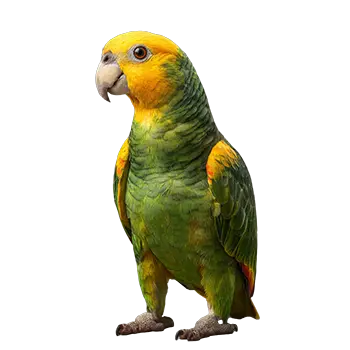
The plumage of an adult Double Yellow-Headed Amazon is unmistakable and breathtaking. The entire head, from the crown down through the nape and throat, is brilliant golden-yellow, creating the stunning 'double yellow head' appearance that gives the species its common name. This extensive yellow coloring is what distinguishes them from other yellow-headed Amazon species. The body is predominantly bright green, with each feather showing darker green centers creating a subtle scalloped effect. The bend of the wing displays vibrant red patches, and the primary flight feathers show deep blue coloring visible during flight. The tail is green with yellow-green tips, and the outer tail feathers show red patches at the base with blue tips.

Sexual dimorphism is minimal in Double Yellow-Headed Amazons, making visual sexing virtually impossible. Males and females appear identical in plumage coloration, size, and physical characteristics. DNA testing or surgical sexing is necessary for accurate sex determination. Some experienced breeders claim males may have slightly broader heads or more robust builds, but these differences are subtle and unreliable for definitive identification.

Juvenile Double Yellow-Headed Amazons look dramatically different from adults, which can surprise new owners unfamiliar with the species. Young birds emerge from the nest with predominantly green plumage and only a small amount of yellow on the crown and forehead. The characteristic full yellow head develops gradually over several years, with the yellow coloring spreading progressively from the crown downward. This maturation process takes approximately four to six years, with some individuals not achieving full adult coloration until seven or eight years of age. During this extended juvenile period, the amount of yellow increases with each molt, making it possible to estimate a bird's approximate age by the extent of yellow coloring.

Distinctive features include their powerful, horn-colored to grey-black beak that is remarkably strong and capable of cracking hard nuts and inflicting serious bites. The beak's upper mandible has a characteristic hook that overlaps the lower mandible. The eyes are orange-red in adults, providing a striking contrast against the yellow head. Juveniles have darker brown eyes that lighten to orange as they mature. The legs and feet are grey with strong, zygodactyl toes (two pointing forward, two backward) and sharp black claws adapted for climbing.

The Double Yellow-Headed Amazon's overall appearance conveys power, intelligence, and beauty. Their bright coloration, substantial size, and confident bearing make them impossible to ignore. When excited or displaying, they may fan their tail, raise the feathers on their nape, and pin their pupils in rapid dilations that indicate heightened emotion. Their feathers have a subtle iridescent quality in bright light, and healthy birds display smooth, glossy plumage that reflects their excellent condition. The combination of brilliant yellow, vibrant green, and accents of red and blue creates one of the most visually spectacular parrots in the avian world.

Affection Level
Double Yellow-Headed Amazons form intensely strong bonds with their favorite people and can be extremely affectionate. They eagerly seek physical contact, enjoy cuddling sessions, and demonstrate their love through vocalizations and body language. However, this strong bonding can lead to one-person attachment and jealousy toward others.
Sociability
These highly social parrots thrive on interaction and demand to be central to family activities. They are outgoing, bold, and confident in social situations. Double Yellow-Headed Amazons need several hours of daily interaction and become depressed or develop behavioral problems without adequate socialization and mental stimulation from their human flock.
Vocalization
Double Yellow-Headed Amazons are among the loudest parrot species, capable of ear-piercing screams that carry long distances. They naturally vocalize loudly at dawn and dusk, and many individuals call frequently throughout the day. Their exceptional talking ability comes with very high volume. They are unsuitable for apartments or noise-sensitive environments.
Intelligence
These parrots rank among the most intelligent bird species, demonstrating remarkable problem-solving abilities, extensive vocabulary acquisition, and complex social understanding. They learn quickly, remember for years, and can manipulate situations to their advantage. Their intelligence requires constant mental challenges to prevent boredom and destructive behaviors.
Exercise Needs
Double Yellow-Headed Amazons are highly active birds requiring extensive daily exercise and flight opportunities. They need minimum 3-4 hours of supervised out-of-cage time for climbing, playing, and flying. Without adequate physical activity, they become obese, develop health problems, and exhibit destructive or aggressive behaviors.
Maintenance Level
These large parrots are extremely high-maintenance, requiring extensive daily care, large cage cleaning, fresh food preparation, and constant supervision during out-of-cage time. They are messy eaters, destructive chewers, and demand significant time investment. Their long lifespans mean decades of commitment to intensive daily care routines and veterinary expenses.
Trainability
Double Yellow-Headed Amazons are highly trainable and excel at learning tricks, commands, extensive vocabularies, and complex behaviors. They respond enthusiastically to positive reinforcement training. However, their strong personalities mean they can also train their owners, manipulating situations to get their way. Consistent, patient training from an early age is essential.
Independence
These parrots have low independence and demand constant attention and interaction. They become distressed when ignored and may develop screaming or feather-plucking behaviors if left alone for extended periods. Double Yellow-Headed Amazons are best suited for people who work from home or can provide nearly constant companionship throughout the day.

Natural Habitat & Range

The Double Yellow-Headed Amazon is endemic to Mexico and northern Central America, with their historical range extending from western Mexico along the Pacific coastal lowlands through southern Mexico into Belize, Guatemala, and northern Honduras. Their distribution was once much more extensive, but habitat destruction and capture for the pet trade have dramatically reduced both their range and population numbers. Today, wild populations exist in fragmented pockets of remaining habitat, with the largest populations found in protected reserves and remote areas less affected by human development.

In their native habitat, Double Yellow-Headed Amazons occupy tropical deciduous forests, gallery forests along rivers, forest edges, savanna woodlands with scattered trees, and agricultural areas with remaining large trees. They show a preference for lowland habitats from sea level to approximately 1,800 feet elevation, rarely venturing into mountainous regions. These parrots require mature trees with suitable nesting cavities, which are increasingly scarce due to logging and land conversion for agriculture. They are particularly associated with mangrove forests in some coastal areas and riparian corridors that provide critical habitat for feeding, roosting, and nesting.

The climate throughout their range is tropical to subtropical, characterized by distinct wet and dry seasons. Temperatures remain warm year-round, typically ranging from 70 to 95°F, with high humidity during the rainy season and drier conditions during winter months. Double Yellow-Headed Amazons have adapted to these seasonal variations, timing their breeding cycles to coincide with periods of maximum food availability. The dry season, extending from November through April, triggers breeding behavior, while the wet season provides abundant food resources for raising chicks.

In the wild, Double Yellow-Headed Amazons are highly social birds that gather in flocks ranging from a few dozen to several hundred individuals outside of breeding season. These flocks roost communally in large trees, creating spectacular and noisy assemblies at dawn and dusk. During the day, smaller foraging groups of 6 to 20 birds disperse to feed in productive areas, maintaining contact through loud vocalizations. Their flight is strong and direct, with rapid wingbeats and distinctive calls that announce their presence long before they come into view.

Their wild diet consists of a diverse array of plant materials including seeds, nuts, fruits, berries, flowers, nectar, buds, and leaf matter. They are particularly fond of figs, palm fruits, and various native tree seeds. Double Yellow-Headed Amazons have powerful beaks capable of opening hard nuts and extracting seeds from tough pods. They play important ecological roles as seed dispersers, helping regenerate forests by transporting seeds away from parent trees. These parrots also visit clay licks, where they consume mineral-rich soil that may help neutralize toxins in their diet or provide essential minerals.

Breeding behavior in the wild involves formation of monogamous pairs that often maintain bonds for life. Pairs nest in natural tree cavities, typically high in large, mature trees that provide security from predators. Both parents participate in chick-rearing, with females incubating eggs while males provision food. The nesting season coincides with the dry season, ensuring optimal conditions for fledging young. Pairs become territorial around nest sites, driving away other parrots and potential threats.

The conservation status of the Double Yellow-Headed Amazon is critically endangered according to the International Union for Conservation of Nature, representing one of the most threatened parrot species in the Americas. Wild populations have declined catastrophically, with estimates suggesting a decrease of 90% or more over the past three generations. The primary threats include habitat loss from deforestation, agricultural expansion, and urban development, as well as illegal capture for the pet trade, which historically removed tens of thousands of birds from the wild annually. Nest poaching remains a significant problem despite legal protections.

Current population estimates suggest fewer than 7,000 individuals remain in the wild, with numbers continuing to decline. Conservation efforts include habitat protection and restoration, enforcement of anti-poaching laws, community education programs, nest monitoring and protection, and captive breeding programs aimed at reducing demand for wild-caught birds. Several protected areas now safeguard critical habitat, and international trade restrictions under CITES (Convention on International Trade in Endangered Species) have helped reduce, though not eliminate, illegal trafficking. The survival of wild Double Yellow-Headed Amazons depends on continued conservation action and protection of remaining forest habitat throughout their range.

Temperament

The Double Yellow-Headed Amazon possesses one of the most complex, challenging, and rewarding personalities in the parrot world. These birds are renowned for their intelligence, emotional depth, strong opinions, and powerful personalities that demand respect and understanding from their owners. They are not suitable for novice bird owners or anyone seeking a low-maintenance pet. Instead, Double Yellow-Headed Amazons are best described as feathered toddlers with bolt cutters for beaks, capable of both incredible affection and formidable aggression, often within the same day.

When properly socialized and bonded, Double Yellow-Headed Amazons can be extraordinarily affectionate, forming deep emotional attachments to their favorite people. They eagerly seek physical contact, enjoying head scratches, neck rubs, and cuddling sessions. Many individuals love being held, petted, and talked to, responding with soft vocalizations, eye pinning, and relaxed body language. They are true companion parrots that want to be intimately involved in their owner's daily activities, from sharing meals to watching television to participating in household conversations. Their affection is genuine, intense, and deeply fulfilling for owners who connect with these remarkable birds.

However, the bonding and affection levels of Double Yellow-Headed Amazons come with significant challenges. These parrots commonly develop intense one-person bonds, showing strong preference for a single individual while tolerating or even acting aggressively toward others. This favoritism can create household tensions and limit who can safely handle the bird. Jealousy is common, with bonded birds sometimes attacking partners, children, or anyone perceived as competition for their favorite person's attention. Managing these possessive behaviors requires careful socialization, ensuring the bird bonds with multiple family members from a young age, and maintaining consistent handling by different people throughout the bird's life.

Social needs for Double Yellow-Headed Amazons are extremely high and non-negotiable. These birds require several hours of direct interaction daily, including conversation, training, play, and physical contact. They are flock animals that become profoundly distressed when isolated or ignored, quickly developing psychological and behavioral problems. Screaming, feather plucking, aggression, and depression commonly emerge in under-socialized or neglected individuals. Prospective owners must honestly assess whether they can provide the intensive, decades-long commitment these demanding parrots require.

Interaction style with humans is bold, confident, and highly engaged. Double Yellow-Headed Amazons are not shy, retiring birds but rather assertive, opinionated individuals who make their preferences known vocally and physically. They initiate interactions, demand attention, and actively participate in household activities. Training sessions are typically enthusiastic, as these intelligent birds enjoy learning and showing off new skills. However, they can be stubborn, testing boundaries and sometimes refusing to cooperate if they don't feel like it. Owners need patience, consistency, and a good sense of humor to successfully navigate life with these strong-willed parrots.

Noise levels in Double Yellow-Headed Amazons are extreme and represent one of the most significant challenges of ownership. These parrots naturally vocalize loudly at dawn and dusk, producing ear-splitting screams, squawks, and calls that can be heard for a mile or more. This behavior is instinctive, serving to maintain contact with flock members at distances in the wild, and cannot be eliminated through training. Many individuals also call loudly throughout the day when excited, seeking attention, or simply expressing themselves. Their vocalizations can exceed 120 decibels, comparable to rock concerts or jet engines, and are genuinely painful to nearby human ears.

Prospective owners must understand that while training can reduce excessive attention-seeking screaming, natural dawn and dusk calling cannot and should not be suppressed. These birds are completely inappropriate for apartments, condominiums, townhouses, or any living situation with shared walls or nearby neighbors. Even in single-family homes, their volume can disturb neighbors hundreds of feet away. People sensitive to noise, with young children, or working night shifts should not consider this species. The noise is not occasional or manageable—it is daily, loud, and permanent for the bird's 60-80+ year lifespan.

Mood indicators in Double Yellow-Headed Amazons are pronounced and relatively easy to read once owners learn the signals. A relaxed, content bird displays sleek feathers, normal breathing, and may engage in soft talking, whistling, or singing. Eye pinning—rapid pupil dilation and constriction—indicates excitement or heightened emotion, which can signal either pleasure or agitation depending on context. Flared tail feathers, raised nape feathers, and forward-leaning body posture suggest aggression or defensiveness. Wings held slightly away from the body combined with fanned tail and open beak clearly indicate the bird is prepared to bite. Conversely, a bird seeking affection approaches with sleek feathers, soft vocalizations, and a lowered head requesting scratches.

Common behavioral quirks include exuberant displays of excitement, particularly during dawn and dusk when they become energetically vocal and active. Many individuals develop elaborate routines around favorite activities like mealtime, bath time, or owner arrivals home. They are natural performers who enjoy having an audience and often vocalize or show off when guests visit. Double Yellow-Headed Amazons can be possessive of toys, food, or favorite people, sometimes guarding these resources aggressively. They are notorious paper shredders and wood destroyers, capable of reducing furniture, trim, or books to splinters if given the opportunity. These parrots also go through hormonal periods, particularly during breeding season, when even well-socialized individuals may become unpredictably aggressive, lunging, and biting without apparent provocation.

Talking ability in Double Yellow-Headed Amazons is exceptional, ranking among the top talking parrot species alongside African Greys and some other Amazon species. Many individuals develop extensive vocabularies of hundreds of words and phrases, speaking with remarkable clarity and appropriate context. They excel at mimicking human speech, songs, environmental sounds, and even other pets. Their voice quality is loud and clear, though somewhat nasal, with excellent enunciation that makes their words easily understandable. Males and females both demonstrate excellent talking ability, though individual variation exists with some birds more verbally inclined than others.

What makes Double Yellow-Headed Amazons particularly impressive is not just vocabulary size but their apparent understanding of context and ability to use phrases appropriately. Many birds learn to say "hello" when people enter, "goodbye" when they leave, request specific foods by name, and comment on activities happening around them. They are natural mimics who pick up new words, phrases, and sounds with little formal training, absorbing language from their environment. However, their loud volume means their talking is very loud, and they may practice new words repetitively at high volume, which can be trying for household members.

Activity patterns follow diurnal cycles with distinct peaks at dawn and dusk. Early morning hours see maximum activity and vocalization as birds greet the day, a behavior deeply rooted in their wild heritage. Evening hours bring another activity surge before settling for the night. Mid-day tends to be quieter, with birds often taking naps or engaging in quieter activities like preening and foraging. Maintaining consistent sleep schedules of 10-12 hours of darkness per night is essential for preventing hormonal imbalances that can worsen behavioral problems. These parrots are sensitive to photoperiod, and irregular lighting can trigger breeding behaviors or mood instability, compounding already challenging temperament issues.

Care Requirements

Providing appropriate housing for a Double Yellow-Headed Amazon requires significant space, financial investment, and commitment to meeting the extensive needs of these large, active parrots. These birds absolutely cannot thrive in small or medium-sized cages suitable for smaller parrot species. The absolute minimum cage size for a single Double Yellow-Headed Amazon is 36 inches wide by 24 inches deep by 48 inches tall, though this represents a bare minimum that should only be considered if the bird receives many hours of out-of-cage time daily. Larger cages measuring 48 inches wide or more are strongly preferred and allow for better exercise, flight opportunities, and psychological wellbeing.

For optimal welfare, consider powder-coated wrought iron or stainless steel cages designed specifically for large parrots. These materials withstand the powerful beaks of Amazon parrots, which can bend or destroy cages made from inferior materials. Stainless steel cages, while expensive, are the gold standard as they are indestructible, non-toxic, and easy to clean. Avoid galvanized cages or those with zinc-containing hardware, as these metals are toxic to parrots. The cage should feature horizontal bars that facilitate climbing, as parrots are arboreal and naturally inclined to climb rather than fly exclusively.

Bar spacing is a critical safety consideration for Double Yellow-Headed Amazons. The bars should be spaced 3/4 inch to 1 inch apart, providing adequate spacing for these large birds while preventing head entrapment or escape. Ensure all doors have secure locks, as Amazon parrots are intelligent and dexterous, often learning to open simple latches. Many owners use additional padlocks or carabiner clips to prevent escapes. The cage should include large access doors for easy bird removal and cage cleaning, with some models featuring play-top designs that provide additional out-of-cage space.

Cage location significantly impacts the bird's comfort, security, and behavioral health. Position the cage in a room where family members spend considerable time, as Double Yellow-Headed Amazons are highly social and need to observe and participate in household activities. However, avoid the kitchen due to toxic fumes from cooking, particularly from non-stick cookware which releases fumes fatal to birds. Place the cage against a wall rather than in the center of a room, providing a protected back that increases the bird's sense of security. Ensure the location offers protection from direct sunlight during the hottest parts of the day while still providing access to natural light. Keep the cage away from drafty areas near windows, doors, air conditioning vents, or heating sources. Maintain consistent temperatures between 65-80°F, avoiding extreme fluctuations.

The cage should be positioned so the highest perches are at or slightly below human eye level when standing. Placing cages too high can contribute to dominance behaviors in some Amazon parrots, while positioning them too low may make the bird feel vulnerable and insecure. Consider noise implications, as Double Yellow-Headed Amazons are extremely loud, particularly at dawn and dusk. Placing the cage in a room where their vocalizations least disturb household members or neighbors may be necessary, though this must be balanced against their social needs.

Perch variety and placement are essential for foot health, exercise, and mental stimulation. Provide at least four to six perches of varying diameters ranging from 3/4 inch to 2 inches thick, ensuring the bird's feet exercise different gripping positions. Natural wood branches from bird-safe trees like manzanita, java wood, apple, willow, or eucalyptus make excellent perches, offering varied diameters, textures, and chewing opportunities that keep nails naturally trimmed and provide mental stimulation. Avoid sandpaper perches or smooth dowels of uniform diameter, as these contribute to foot problems.

Position perches at different heights throughout the cage, creating distinct activity zones. Place one perch near the top for sleeping, as parrots prefer elevated positions where they feel secure. Arrange perches to encourage climbing and movement rather than simply flying across open space. Avoid placing perches directly over food or water dishes to prevent contamination from droppings. Include rope perches, which many Amazon parrots enjoy, though monitor them for fraying and replace before they become hazardous. Some birds chew rope excessively, requiring removal if ingestion risks develop.

Toy requirements for Double Yellow-Headed Amazons are extensive, as these intelligent, active birds need constant mental stimulation to prevent boredom and destructive behaviors. Provide a diverse selection including heavy-duty wooden toys designed for large parrots that satisfy their need to chew and destroy, rope toys for climbing and manipulation, puzzle toys and foraging toys that hide treats and challenge problem-solving abilities, acrylic or hard plastic toys for different textures, swings and ladders for physical activity, shreddable items like paper, cardboard, or palm leaves that satisfy destructive urges safely, and bells, rattles, or noise-making toys. Rotate toys every week or two to maintain novelty and interest. Ensure all toys are appropriately sized for large parrots and made from bird-safe materials without small parts, toxic metals, or unsafe dyes.

Double Yellow-Headed Amazons are powerful chewers capable of destroying toys rapidly. Budget for regular toy replacement as a normal, ongoing expense. These birds need toys they can actually destroy rather than indestructible items that provide no satisfaction. Providing appropriate outlets for their destructive energy protects your furniture, walls, and household items from becoming targets.

Out-of-cage time is absolutely non-negotiable for Double Yellow-Headed Amazons, with a minimum of 3-4 hours daily required for birds kept in cages. Many behaviorists recommend even more time, arguing that large parrots kept in cages should spend most of their waking hours outside the cage in supervised areas. During out-of-cage time, birds need access to a bird-proofed room or area where they can fly, climb, explore, and interact with family members. Set up play stands, T-stands, or tabletop gyms with perches, toys, and food/water bowls to create enriching out-of-cage environments.

Safety hazards to avoid when bird-proofing areas for out-of-cage time include toxic plants like avocado, philodendron, dieffenbachia, and hundreds of other species poisonous to parrots, ceiling fans which have killed countless birds, open windows or doors without screens, other household pets particularly cats and dogs, hot stoves, ovens, or cooking surfaces, standing water in toilets, sinks, or bathtubs where birds can drown, electrical cords which parrots may chew causing electrocution, small objects like jewelry, coins, or buttons they could swallow causing crop or intestinal impaction, toxic metals including zinc and lead found in hardware, weights, or old paint, household cleaners, aerosols, candles, or air fresheners releasing toxic fumes, and mirrors or windows birds may fly into causing injury. Thoroughly examine and secure all potential hazards before allowing your Amazon freedom.

Enrichment strategies should engage the bird's natural behaviors and high intelligence. Create foraging opportunities by hiding food in puzzle feeders, wrapping treats in paper, scattering food throughout play areas, or stuffing treats into shreddable materials. Provide fresh branches for chewing, debarking, and destroying. Offer diverse foods, toys, and activities to prevent monotony. Many Double Yellow-Headed Amazons enjoy music, particularly singing along to favorite songs, watching television or bird videos, and observing outdoor activity through windows. Interactive play sessions, training exercises, and simply conversing with your bird all contribute to mental and emotional wellbeing.

Temperature and humidity needs for Double Yellow-Headed Amazons are moderate, reflecting their tropical origins. Maintain ambient temperatures between 65-80°F, with 70-75°F being ideal. These birds tolerate temperature variations better than extreme heat or cold. Avoid drafts, rapid temperature fluctuations, and positioning cages near heating or cooling vents. Humidity levels between 40-60% are comfortable, though Double Yellow-Headed Amazons adapt to varying humidity. Provide regular bathing opportunities through misting, showers, or shallow dishes to help maintain feather and skin health. Many Amazon parrots are enthusiastic bathers who enjoy daily or several-times-weekly bathing sessions.

Lighting requirements include exposure to natural daylight cycles or full-spectrum lighting that mimics sunlight. Provide 10-12 hours of light daily during non-breeding seasons, followed by 12-14 hours of darkness for sleep. Consistent light-dark cycles are crucial for maintaining hormonal balance and preventing breeding-related aggression common in Amazon parrots. If using artificial lighting, invest in full-spectrum bulbs designed for birds that emit UVA and UVB rays supporting vitamin D synthesis, calcium metabolism, and natural color perception. Cover the cage at night if necessary to ensure adequate darkness for restful sleep, particularly if the cage is in a room with evening activity. Proper sleep is essential for behavioral health, as sleep-deprived Amazon parrots become irritable and aggressive.

Feeding & Nutrition

Proper nutrition is absolutely critical for Double Yellow-Headed Amazons, as these large parrots are particularly prone to obesity and fatty liver disease, making dietary management a life-or-death matter for the species. In the wild, Double Yellow-Headed Amazons consume a varied diet consisting of seeds, nuts, fruits, berries, flowers, nectar, buds, and various plant materials. Their natural diet is diverse, relatively low in fat, and requires significant foraging effort that burns calories while providing mental stimulation. Replicating this natural dietary variety and activity level in captivity presents challenges that owners must address through careful meal planning and foraging enrichment.

The foundation of a captive Double Yellow-Headed Amazon's diet should consist of high-quality pellets specifically formulated for large parrots or Amazon parrots. These scientifically formulated pellets should comprise approximately 60-75% of the daily food intake, providing balanced nutrition with essential vitamins, minerals, and amino acids in appropriate proportions. Choose premium pellets without artificial colors, flavors, or excessive sugar, preferably from manufacturers with strong reputations in avian nutrition like Harrison's, Roudybush, TOP's, or similar brands recommended by avian veterinarians. Organic options are available for owners preferring to avoid pesticide residues.

The seeds versus pellets debate is particularly important for Amazon parrots, as all-seed diets have been conclusively linked to obesity, fatty liver disease, vitamin deficiencies, and shortened lifespans in this species. Seeds should comprise no more than 10-15% of the diet, serving primarily as training treats or foraging enrichment rather than the dietary staple. If offering seed mix, choose high-quality blends designed for large parrots with limited high-fat seeds. Appropriate seeds include safflower seeds, a few sunflower seeds, pumpkin seeds in small quantities, and various grass seeds. Avoid mixes dominated by sunflower seeds, peanuts, or corn, as these are extremely high in fat and contribute to obesity.

Fresh vegetables should comprise 15-20% of the daily diet and be offered daily without exception. Vegetables provide essential vitamins, minerals, antioxidants, and dietary fiber lacking in pelleted diets. Excellent vegetable choices include dark leafy greens like kale, collard greens, mustard greens, dandelion greens, and chard, orange vegetables like carrots, sweet potato, butternut squash, and pumpkin which provide vitamin A, cruciferous vegetables like broccoli, cauliflower, and Brussels sprouts, bell peppers of all colors which are favorites for many Amazon parrots, green beans, snap peas, and snow peas, zucchini and summer squash, and corn in very limited quantities as a treat. Chop vegetables into appropriate sizes, offer them in various presentations including whole, chopped, cooked, or raw, and use food clips or skewers to encourage foraging behavior.

Fruits can be offered several times weekly but must be strictly limited due to high sugar content that contributes to obesity and diabetes risks in Amazon parrots. Appropriate fruits in small quantities include apples without seeds, berries like strawberries, blueberries, and raspberries, pomegranate which many Amazons love, grapes cut in half to prevent choking, melons of various types, papaya, mango, and citrus fruits in moderation. Consider fruits as treats or training rewards rather than dietary staples. Some experts recommend limiting fruits to 5% or less of the overall diet for obesity-prone Amazon parrots.

Foods to avoid are critical knowledge for Double Yellow-Headed Amazon owners, as numerous common human foods are toxic to parrots. Never feed avocado in any form, as even small amounts are highly toxic and potentially fatal. Chocolate and caffeine are extremely dangerous, causing cardiac problems and death. Alcohol is absolutely prohibited, causing severe toxicity even in tiny amounts. Onions, garlic, chives, and other allium family members cause digestive distress and blood disorders. High-salt foods like chips, crackers, and processed snacks lead to kidney problems and dehydration. High-sugar foods including candy, cookies, and desserts contribute to obesity and diabetes. High-fat foods like fried items, butter, and cream cause obesity and fatty liver disease. Raw or dried beans contain toxins unless thoroughly cooked. Apple seeds, cherry pits, peach pits, and other fruit pits contain cyanide compounds. Avocado, rhubarb leaves, and mushrooms are particularly dangerous.

Treats and supplements should be used strategically for training, bonding, and addressing specific nutritional needs. Appropriate treats include unsalted nuts like almonds, walnuts, pecans, or Brazil nuts in very limited quantities due to high fat content, using pieces of nut as training rewards rather than offering whole nuts freely. Millet spray makes an excellent training reward. Small amounts of whole grain pasta, brown rice, or quinoa provide variety. Sprouted seeds and legumes are nutritious, lower in fat than dry seeds, and many parrots find them irresistible. Favorite vegetables or small fruit pieces work well as rewards.

Most Double Yellow-Headed Amazons eating a balanced pellet-based diet with adequate fresh vegetables do not require vitamin supplementation. Over-supplementation can be harmful, particularly with fat-soluble vitamins that accumulate in body tissues. However, birds eating predominantly seed-based diets or those with documented deficiencies may benefit from supplements under veterinary guidance. Never add vitamins to water for extended periods, as this promotes bacterial growth and most birds dislike the taste, leading to decreased water consumption.

Calcium and mineral needs are particularly important for breeding females at risk of egg binding, though all Double Yellow-Headed Amazons require adequate calcium for bone health. Provide a cuttlebone or mineral block in the cage allowing birds to self-regulate calcium intake. Calcium-rich foods like dark leafy greens contribute to adequate calcium levels. Ensure proper vitamin D levels through full-spectrum lighting or controlled sunlight exposure, as vitamin D is essential for calcium absorption and metabolism. Avoid excessive spinach, rhubarb, and other high-oxalate foods that bind calcium and prevent absorption.

Water requirements are straightforward but absolutely critical. Provide fresh, clean water daily in sturdy, heavy bowls that cannot be easily tipped. Large parrots often enjoy dunking food in water, necessitating more frequent water changes. Change water at least once daily, more often if visibly soiled. Some owners prefer filtered or bottled water to avoid chlorine and contaminants, though most municipal water supplies are safe. Ensure water bowls are thoroughly cleaned daily to prevent biofilm and bacterial accumulation. Amazon parrots may drink more during hot weather, after eating salty foods, or when ill.

Foraging opportunities should be extensively incorporated into feeding routines, providing mental stimulation while slowing eating and increasing activity levels that help prevent obesity. Hide food items in puzzle feeders designed for large parrots, wrap treats in paper, cardboard, or corn husks for the bird to unwrap, scatter food throughout the cage bottom or play area encouraging ground foraging, stuff treats into destructible toys, paper bags, or cardboard tubes, use foraging wheels, boxes, or trays that require manipulation to access food, freeze fruits or vegetables in ice cubes for extended foraging, and skewer vegetables on stainless steel kabobs. Rotate foraging techniques to maintain interest and provide varied challenges. Foraging activities satisfy natural behaviors, prevent boredom, encourage problem-solving, and transform eating from a quick activity into extended enrichment that occupies these intelligent birds for hours.

Weight monitoring is essential for Double Yellow-Headed Amazons given their tendency toward obesity. Invest in a digital scale accurate to 1-5 grams and weigh your bird weekly at the same time of day, recording weights to track trends. Healthy adult Double Yellow-Headed Amazons typically weigh 450-550 grams, though individual variation exists. Gradual weight gain of more than 10% suggests overfeeding or insufficient exercise. Sudden weight loss may indicate illness requiring immediate veterinary attention. Work with your avian veterinarian to establish ideal weight ranges for your individual bird and adjust diet and exercise accordingly. Remember that obesity significantly shortens lifespan and contributes to heart disease, fatty liver disease, and other serious health problems in Amazon parrots. Maintaining appropriate weight through proper diet and exercise is one of the most important things owners can do to ensure their Double Yellow-Headed Amazon lives a long, healthy life.

Double Yellow-Headed Amazon Health & Lifespan

Double Yellow-Headed Amazons are generally robust birds capable of living 60 to 80 years or more with proper care, though their long lifespans mean they accumulate significant health care costs over their lives. These large parrots are susceptible to various health conditions, many of which are preventable through appropriate husbandry, nutrition, and veterinary care. Understanding common health issues and implementing comprehensive preventive measures is essential for maintaining the wellbeing of these magnificent but demanding parrots. Respiratory infections can affect Double Yellow-Headed Amazons, particularly those housed in environments with poor ventilation, temperature fluctuations, or exposure to airborne irritants like cigarette smoke, aerosols, or cooking fumes. Symptoms include nasal discharge, sneezing, labored breathing, tail bobbing, reduced activity, and changes in voice quality. Psittacosis, a serious bacterial infection caused by Chlamydia psittaci, poses health risks to both birds and humans as a zoonotic disease. Infected birds may display respiratory symptoms, lethargy, lime-green droppings, conjunctivitis, and loss of appetite, requiring immediate veterinary treatment with appropriate antibiotics. Aspergillosis, a fungal respiratory infection, can develop in birds exposed to moldy food, contaminated bedding, or environments with high humidity and poor air circulation, causing chronic breathing difficulties and potentially fatal systemic infections.

Proper diet and nutrition represent the single most important factor in preventing health problems in Double Yellow-Headed Amazons. A balanced diet consisting primarily of high-quality pellets supplemented with abundant fresh vegetables, limited fruits, and small amounts of appropriate seeds provides essential nutrients for immune function, organ health, and disease resistance. Amazon parrots require careful monitoring of fat intake to prevent obesity and fatty liver disease, making low-fat diets with plenty of exercise critically important for this species. Avoid seed-based diets, which contribute to nutritional deficiencies and obesity-related health problems. Environmental enrichment prevents stress-related health issues and psychological problems that manifest as feather plucking, aggression, or depression. Providing varied toys, foraging opportunities, social interaction, training sessions, and mental challenges keeps these intelligent parrots engaged and content. Cage cleanliness cannot be overemphasized, as maintaining hygienic conditions prevents bacterial, fungal, and parasitic infections. Daily spot cleaning of food bowls, water dishes, and soiled areas combined with thorough weekly cage sanitization creates a healthy living environment. UV lighting benefits Double Yellow-Headed Amazons by enabling vitamin D3 synthesis essential for calcium absorption and bone health. Providing access to natural sunlight or full-spectrum UV bulbs designed for birds helps prevent metabolic bone disease and supports immune function. With diligent preventive care, appropriate nutrition, regular veterinary attention, and decades-long commitment to their complex needs, Double Yellow-Headed Amazons can enjoy long, healthy lives as remarkable companion parrots.

Common Health Issues

  • Psittacosis, a serious bacterial infection caused by Chlamydia psittaci - Poses health risks to both birds and humans as a zoonotic disease.
  • Infected birds may display respiratory symptoms - Lethargy, lime-green droppings, conjunctivitis, and loss of appetite, requiring immediate veterinary treatment with appropriate antibiotics.
  • Aspergillosis, a fungal respiratory infection - Can develop in birds exposed to moldy food, contaminated bedding, or environments with high humidity and poor air circulation, causing chronic breathing difficulties and potentially fatal systemic infections.\n\nFeather plucking and self-mutilation behaviors occur with disturbing frequency in Double Yellow-Headed Amazons, particularly those who are under-socialized, bored, stressed, or experiencing medical problems.
  • Psittacine Beak and Feather Disease - PBFD, , caused by circovirus, attacks the immune system and causes abnormal feather development, beak deformities, and immune suppression.
  • While less common in Amazon species than in some other parrots - PBFD remains a concern with no cure available, making prevention through avoiding exposure to infected birds critical.\n\nFatty liver disease, or hepatic lipidosis, is alarmingly common in captive Amazon parrots, including Double Yellow-Headed Amazons, particularly those fed inappropriate diets high in fats and lacking adequate exercise.
  • Amazon parrots appear particularly susceptible to obesity and fatty liver disease compared to other parrot families - Making diet management absolutely critical for this species.\n\nPolyomavirus can affect young Double Yellow-Headed Amazons, particularly in breeding facilities or situations where birds are exposed to infected individuals.
  • This deficiency causes respiratory problems - Decreased immune function, white plaques in the mouth and throat, and increased susceptibility to infections.\n\nAmazon foot necrosis syndrome, a poorly understood condition affecting Amazon parrots, causes inflammation and tissue death in the feet, potentially resulting in toe or foot loss.
  • Aspergillosis granulomas can form in various body locations beyond the respiratory system - Creating masses that compress organs or interfere with normal function.\n\nEgg binding poses serious risks to female Double Yellow-Headed Amazons, occurring when an egg becomes lodged in the reproductive tract and cannot be expelled.

Preventive Care & Health Monitoring

  • These large parrots are susceptible to various health conditions - Many of which are preventable through appropriate husbandry, nutrition, and veterinary care.
  • These complex behaviors can stem from psychological issues - Nutritional deficiencies, hormonal imbalances, or underlying diseases, making diagnosis and treatment challenging.
  • Hypovitaminosis A - Or vitamin A deficiency, commonly develops in birds fed seed-based diets lacking adequate fresh vegetables and fruits.
  • Contributing factors include calcium deficiency - Obesity, lack of exercise, stress, improper nesting conditions, and chronic egg-laying stimulated by inappropriate environmental cues.
  • Beak and nail overgrowth can develop when birds lack appropriate surfaces for natural wear or have underlying liver disease or nutritional imbalances affecting keratin production. - Beak and nail overgrowth can develop when birds lack appropriate surfaces for natural wear or have underlying liver disease or nutritional imbalances affecting keratin production.
  • Overgrown beaks interfere with eating and require veterinary trimming - While overgrown nails cause difficulty perching and increased risk of getting caught on toys or fabrics.\n\nRegular veterinary checkups with an avian veterinarian specializing in parrots are absolutely essential for Double Yellow-Headed Amazons, with annual wellness exams recommended for healthy adults and more frequent visits for young, senior, or compromised individuals.

Training & Vocalization

Training a Double Yellow-Headed Amazon is simultaneously one of the most rewarding and challenging experiences in parrot ownership. These highly intelligent, strong-willed birds are capable of learning extensive vocabularies, complex tricks, and sophisticated behaviors, but they are also opinionated, stubborn, and occasionally manipulative. Success requires patience, consistency, understanding of bird behavior, and recognition that you are training an intelligent individual with their own preferences and personality rather than a programmable robot. Starting training early with young birds yields optimal results, though even older, set-in-their-ways adults can learn new behaviors with appropriate techniques and realistic expectations.

The foundation of all training must be built on trust and positive reinforcement. Double Yellow-Headed Amazons respond enthusiastically to food rewards, praise, and activities they enjoy, but they become defensive, fearful, or aggressive when punished, yelled at, or handled roughly. Never hit, spray with water, or use other punishment-based methods, as these destroy trust and create long-term behavioral problems. Instead, reward desired behaviors immediately and generously, using high-value treats like small pieces of nut, favorite fruits, or preferred seeds. Timing is critical—rewards must occur within seconds of the desired behavior for the bird to make the connection.

Basic training begins with the step-up command, the most fundamental and important skill for any pet parrot. Place your hand or a perch just above the bird's feet while saying "step up" in a calm, consistent tone. Gently press against the lower belly to encourage stepping. Reward successful steps immediately with praise and treats. Practice this multiple times daily in brief sessions until the bird steps up reliably on command. Establishing solid step-up response provides the foundation for all future training and gives owners a way to safely move the bird when necessary.

Trick training possibilities with Double Yellow-Headed Amazons are virtually limitless, as these birds enjoy learning and showing off. Popular tricks include waving on command, turning in circles or dancing, retrieving specific objects and bringing them to hand, playing basketball with miniature hoops, ringing bells or pushing buttons on cue, climbing ladders or navigating obstacle courses, spreading wings for wing checks, allowing nail trimming and other husbandry behaviors, and countless other creative behaviors limited only by imagination and the bird's interests. Break complex tricks into small, successive approximations, rewarding progress at each step. Keep training sessions short (5-15 minutes) and end on a positive note.

Double Yellow-Headed Amazons can be stubborn during training, sometimes refusing to perform known behaviors if they don't feel like it. This is normal and reflects their intelligent, independent nature. Don't force the issue or become frustrated. Instead, try again later when the bird is more receptive. Understanding that these birds have moods, preferences, and off days helps maintain realistic expectations. They are not always eager to please like some dog breeds, but when engaged and motivated, they are brilliant students who genuinely enjoy training sessions.

Talking ability and mimicry in Double Yellow-Headed Amazons is truly exceptional, ranking among the very best talking parrot species in the world. Many individuals develop vocabularies of 200+ words and phrases, speaking with remarkable clarity, appropriate context, and engaging personality. Their voice quality is loud and clear with excellent enunciation, though somewhat nasal compared to human speech. They excel at mimicking not just words but vocal inflections, emotions, and individual voices, often sounding remarkably like specific family members. Males and females both demonstrate excellent talking ability, with individual variation greater than sex-related differences.

What distinguishes Double Yellow-Headed Amazons from mere vocal mimics is their apparent understanding of context and meaning. Many birds learn to use words and phrases appropriately, saying "hello" when people arrive, "goodbye" when they leave, requesting specific foods by name, commenting "that's good" when eating favorite foods, asking "what are you doing?" when curious, and engaging in back-and-forth conversations with remarkable coherence. They pick up new words, phrases, songs, and environmental sounds with minimal formal training, absorbing language from daily exposure to household conversation. Their ability to learn songs is particularly impressive, with many individuals singing entire melodies accurately.

The impressive talking ability comes with caveats. These birds are extremely loud talkers, with their voice easily carrying throughout houses and potentially disturbing neighbors. They practice new words and favorite phrases repetitively, often at maximum volume, which can become annoying. They pick up words and sounds you may not want repeated, including profanity, arguments, phone rings, smoke alarms, and other household sounds. Once learned, vocalizations are permanent—you cannot unteach words or sounds the bird has acquired. Prospective owners must accept that their Double Yellow-Headed Amazon will talk loudly, frequently, and sometimes at inconvenient times.

Noise levels throughout the day in Double Yellow-Headed Amazons are extreme and represent one of the most challenging aspects of ownership. These parrots engage in natural contact calling at dawn and dusk, producing ear-piercing screams, squawks, and loud vocalizations that can exceed 120 decibels. This behavior is instinctive, serving to maintain contact with flock members in the wild, and cannot be eliminated through training. Morning calling typically begins at first light, lasting 20-60 minutes as birds greet the day and check in with their flock. Evening calling occurs before settling for the night, with similar duration and intensity.

Many individuals also call loudly throughout the day when excited, seeking attention, hearing interesting sounds, communicating across the house, or simply expressing themselves. Some birds develop specific calling patterns, screaming when owners leave rooms, when they want attention, when they hear keys jangling indicating someone is leaving, or during favorite television programs. While training can reduce attention-seeking screaming, natural dawn and dusk calling is normal, healthy behavior that should not be suppressed. Prospective owners must honestly assess whether they can tolerate this noise level for 60-80+ years before acquiring a Double Yellow-Headed Amazon.

Socialization importance for Double Yellow-Headed Amazons cannot be overstated. These parrots commonly develop intense one-person bonds and may become aggressive toward other family members if not properly socialized to accept multiple people. From a young age, expose the bird to various family members, friends, and visitors in positive contexts. Have different people offer treats, perform training sessions, and provide out-of-cage time. Bring the bird to different rooms, introduce varied sounds and experiences, and create positive associations with novelty and change. Well-socialized Amazons are more confident, flexible, and less likely to develop territorial aggression or fearful behaviors.

Bonding techniques specific to Double Yellow-Headed Amazons should respect their intelligence and strong personalities while fostering positive relationships. These birds bond through interaction, conversation, and shared activities rather than just physical contact. Spend time talking to your bird throughout the day, sharing meals (offering bird-safe foods), watching television together, and including the bird in household routines. Many Amazons enjoy singing, dancing, and showing off, responding enthusiastically to music and applause. Respect boundaries—if the bird shows disinterest in interaction, don't force it. Provide head scratches, which most Amazons love, but avoid touching the body, wings, or under-wing areas, as this can be sexually stimulating and contribute to hormonal aggression.

Behavioral challenges in Double Yellow-Headed Amazons are significant and prospective owners must understand what they're getting into. Hormonal aggression is common, particularly during breeding season when even well-socialized birds may become unpredictably aggressive, lunging, biting, and attacking without apparent provocation. This typically occurs annually during spring months when lengthening days trigger breeding behaviors. Managing hormonal aggression requires reducing daylight exposure to 10-12 hours, removing potential nesting sites, avoiding touching the bird's body, and maintaining calm, consistent interactions. Some birds become so aggressive during breeding season that handling becomes dangerous, requiring owners to use stick training or towels for necessary interactions.

One-person bonding and jealous aggression are common problems, with bonded birds attacking partners, children, or anyone perceived as competing for their favorite person's attention. This can create serious household tensions and relationship problems. Prevention through early socialization is far more effective than treatment. Once established, these behaviors are difficult to modify, though behavior modification programs involving the bird spending more time with non-preferred people while the favorite person becomes temporarily less available can help redistribute bonding.

Screaming beyond natural calling can develop if birds learn that screaming brings attention. Avoid responding to screaming by yelling, going to the bird, or even making eye contact, as any response reinforces the behavior. Instead, completely ignore screaming, then immediately pay attention to the bird the moment they vocalize quietly or engage in acceptable behaviors. This is difficult but effective. Ensure the bird receives adequate attention, exercise, and stimulation to prevent boredom-related screaming.

Positive reinforcement methods remain the cornerstone of effective training despite behavioral challenges. Always reward desired behaviors, ignore or redirect unwanted behaviors, and maintain patience and consistency. Training sessions should be enjoyable for both bird and owner, ending on positive notes. Remember that Double Yellow-Headed Amazons are thinking, feeling individuals capable of joy, affection, frustration, and stubbornness. Approach training as a partnership rather than domination, respecting your bird's intelligence and personality while providing clear, consistent guidance on acceptable behaviors.

Children & Other Pets

Double Yellow-Headed Amazons are generally not recommended as pets for families with young children due to their powerful beaks, unpredictable hormonal aggression, loud vocalizations, and demanding care requirements. These large parrots can inflict severe, disfiguring bites that easily break skin, cause deep lacerations, and require medical attention. Even well-socialized, normally gentle birds may bite without warning during hormonal periods, when startled, or if they perceive threats. Children's quick movements, loud voices, and unpredictable behavior can trigger defensive responses in birds, creating dangerous situations. Additionally, the extreme noise levels these parrots produce can be frightening and overwhelming for children, while the intensive care requirements mean children cannot shoulder primary responsibility for the bird's welfare.

Age recommendations for child interaction with Double Yellow-Headed Amazons suggest that children under ten years old should not interact with these birds at all, except perhaps under extremely close supervision for brief, controlled observations. The risk of serious injury is simply too high, and young children lack the maturity, impulse control, and understanding necessary to read bird body language and respond appropriately. Children aged ten to fifteen may begin learning appropriate bird interaction under direct, constant adult supervision if they demonstrate maturity, responsibility, and genuine respect for the bird. Even then, they should not be expected to handle the bird independently or manage care responsibilities alone.

Teenagers aged sixteen and older with demonstrated maturity and genuine interest may take on more significant care responsibilities and supervised handling, though adults must maintain oversight of health monitoring, behavioral issues, and safety protocols. However, prospective owners should recognize that Double Yellow-Headed Amazons live 60-80+ years, meaning a bird acquired when children are young will almost certainly outlive the children's presence in the household. The primary caretaker must be an adult committed to decades of intensive care, not children whose interests, living situations, and availability will change dramatically as they grow.

Supervision requirements when children and Double Yellow-Headed Amazons share a household must be absolute and non-negotiable. Adults must always be present during any interaction, ready to intervene immediately if the child behaves inappropriately or the bird shows signs of stress, fear, or aggression. Never leave children alone in rooms with these birds, even if the bird is caged. The powerful beaks can reach through bars to bite curious fingers, and children may inadvertently provoke the bird by tapping on the cage, making sudden movements, or speaking loudly. During out-of-cage time, children should be in different rooms behind closed doors unless direct adult supervision is maintained.

Teaching children appropriate behavior around Double Yellow-Headed Amazons involves establishing and enforcing strict rules. Children must learn to never approach the bird without adult permission and supervision, always move slowly and speak quietly near the bird, never make sudden movements or loud noises, never tap on the cage or poke fingers through bars, never attempt to touch the bird without explicit adult permission, respect when the bird shows signs of wanting to be left alone, and immediately report any unusual bird behavior to adults. Explain that parrots are not domesticated animals like dogs or cats but wild animals with strong instincts and unpredictable behaviors, deserving respect and caution.

Children should understand that Double Yellow-Headed Amazons can cause serious injuries even when not intending to be aggressive. The powerful beak is designed to crack hard nuts and can easily cause severe damage to small hands and faces. Show children photographs of parrot bites to emphasize seriousness (appropriate to age and sensitivity). Explain bird body language indicating stress or aggression: feathers standing up on the head and nape, eyes pinning rapidly, wings held away from body, open beak, leaning forward, and loud vocalizations. Teach children to retreat calmly if the bird displays these signals and immediately inform adults.

Interactions with other household pets, particularly dogs and cats, require extreme caution and realistic assessment of risks. Double Yellow-Headed Amazons are prey animals, and even well-trained, gentle dogs or cats can injure or kill them through instinctive predatory behavior, overly enthusiastic play, or accidents. Cats pose particularly serious threats, as their saliva contains Pasteurella bacteria that causes deadly infections in birds even from minor scratches or bites. Therefore, Double Yellow-Headed Amazons should never be in the same room with cats during out-of-cage time, and cats should not have access to rooms containing bird cages.

Dogs vary greatly in temperament and prey drive. Terriers, hounds, and dogs bred for hunting small animals pose significant dangers and should never be trusted around birds. Large dogs can accidentally injure birds simply through size and exuberance. Even small, gentle dogs require careful management. If you have dogs, assess their individual temperament before introducing them to a Double Yellow-Headed Amazon. Dogs must be trained to ignore the bird's cage completely and respond reliably to commands like "leave it" and "stay." Never leave dogs and birds together unsupervised, even with the bird caged.

Conversely, Double Yellow-Headed Amazons can be aggressive toward dogs and cats, particularly during hormonal periods or if the bird feels territorial. These powerful parrots can inflict painful bites on pets who approach too closely, potentially triggering defensive aggression from the pet and escalating dangerous situations. Some Amazons actively chase cats or small dogs, creating household chaos and risks for all animals involved.

Introductions between Double Yellow-Headed Amazons and other birds are generally not recommended, as Amazons can be territorial, aggressive, and domineering toward other bird species. They have powerful beaks capable of severely injuring or killing smaller birds and may attack without provocation, particularly during hormonal periods. Some individual Amazons may tolerate other birds in separate cages within the same room, while others become agitated, territorial, and excessively vocal when other birds are present. Never house Double Yellow-Headed Amazons with other bird species in shared cages or aviaries, as serious injury or death may result.

If keeping multiple birds in the same household, provide complete physical separation with birds in different rooms, or at minimum, separate cages with significant distance between them. Monitor all interactions carefully. Some Amazons become obsessed with other birds, calling constantly, attempting to reach them, or displaying aggressive behaviors. This creates stress for all birds involved and may necessitate keeping them in completely separate areas of the home with no visual or auditory contact.

Safety precautions for multi-pet or multi-child households require vigilance and commitment. Install secure locks on bird cages that dogs, cats, or children cannot open. Keep the bird's cage in a room where other pets cannot access, ideally with a door that closes securely. Never allow out-of-cage bird time when other pets are present in the room. Establish and consistently enforce household rules about bird interactions. Recognize that even a single incident can result in death or serious injury, making prevention absolutely essential.

Prospective owners must honestly evaluate whether a Double Yellow-Headed Amazon is appropriate for their current household situation. These demanding, potentially dangerous birds are best suited for experienced bird owners in quiet households without young children or other pets. Families with children, multiple pets, or chaotic home environments should seriously consider whether they can provide the safe, stable, controlled environment these parrots require. The bird's welfare and family safety must take priority over desire to own an impressive parrot. If you cannot commit to strict safety protocols, constant supervision, and decades of intensive care in a controlled environment, Double Yellow-Headed Amazons are not the right choice. Consider adopting a less demanding species better suited to family situations with young children or multiple pets.