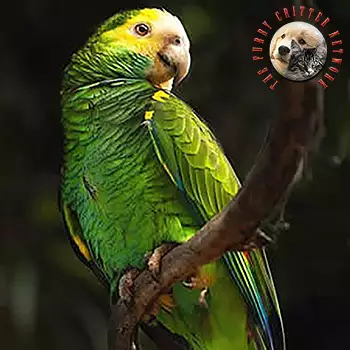

The White-Fronted Amazon's presence in mainstream film and television has been modest compared to the larger, more visually dramatic parrot species that tend to dominate screen portrayals. Hollywood and international cinema have historically favored macaws, cockatoos, and large Amazon parrots for on-screen roles, drawn to their size, vivid coloring, and capacity for loud, attention-grabbing vocalizations. The White-Fronted Amazon, compact and relatively understated in appearance, has not been cast in the kind of iconic roles that have defined other parrot species in the public imagination. However, the species has appeared in a number of productions, often in supporting or background roles that reflect its real-world prevalence as a companion bird.
In Mexican and Central American cinema and television, the White-Fronted Amazon has appeared more frequently, reflecting its status as one of the most familiar native parrot species in the region. Mexican telenovelas and comedic films have occasionally featured small green parrots that are identifiable as White-Fronted Amazons or closely related species, typically cast as household companions that provide comic relief or serve as markers of domestic authenticity. These portrayals, while rarely the focus of a production, contribute to the bird's cultural visibility within Latin American media and reinforce its image as an everyday companion rather than an exotic rarity.
Documentary filmmaking has provided a more substantive platform for the White-Fronted Amazon. Nature documentaries focusing on the dry forests and woodlands of western Mexico and Central America have featured the species in segments exploring parrot ecology, flock behavior, and the challenges of habitat conservation. These productions typically present the White-Fronted Amazon in the context of its natural environment, offering viewers a perspective on the bird's wild life that contrasts sharply with the domesticated image familiar to pet owners. Several conservation-focused documentaries produced by Mexican and international organizations have highlighted the species as part of broader narratives about parrot trafficking and ecosystem protection in Mesoamerica.
The rise of streaming platforms and niche content channels has created additional opportunities for the White-Fronted Amazon to reach audiences. Short-form content featuring companion parrots, including White-Fronted Amazons, has found a home on platforms that cater to pet enthusiasts and animal lovers, introducing the species to viewers who might not encounter it through traditional broadcast media.