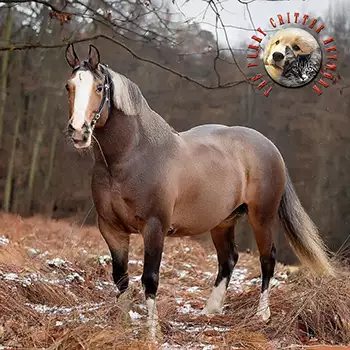

Wearable health monitors designed for equine use have advanced considerably and are particularly valuable for Danish Warmblood owners managing competitive sport horses. These devices typically attach to a halter, surcingle, or girth and track metrics such as heart rate, respiratory rate, movement patterns, resting behavior, and daily activity levels. Over time, the data establishes a baseline for the individual horse, making it possible to detect subtle changes that may indicate the early stages of illness, injury, or overtraining.
Heart rate monitoring during exercise is one of the most practical applications for Danish Warmbloods in training. Tracking how quickly the heart rate rises during work, the peak rate achieved at different effort levels, and the recovery time after exertion provides objective data about the horse's fitness trajectory. A horse whose recovery time is lengthening over weeks may be fatigued or developing a subclinical issue that has not yet manifested as overt lameness or behavioral change.
Resting behavior tracking is an underappreciated feature. Horses that are not lying down regularly may be experiencing discomfort, stall anxiety, or pain that prevents them from getting up safely. Devices that log lying time, frequency, and duration provide insights that would otherwise require constant observation or overnight camera monitoring. Changes in resting patterns often precede visible clinical signs by days or even weeks.
The data generated by these devices is only useful if it is reviewed consistently and understood in context. Raw numbers without interpretation are meaningless — a high resting heart rate could indicate pain, excitement, ambient heat, or simply a nervous temperament. The best monitoring systems offer trend analysis and alert functions that flag statistically significant deviations from the individual horse's established norms rather than relying on species-wide averages.