
Halters, Lead Ropes & Tack Essentials

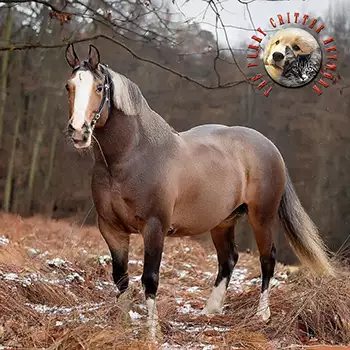
Every Danish Warmblood needs a properly fitted halter for daily handling, grooming, and turnout. Flat nylon halters with adjustable crownpieces and nosebands are standard for everyday use, offering durability and easy cleaning. For a breed that commonly reaches 16 to 17 hands, sizing is important — look for halters labeled for warmblood or large horse sizes, and adjust the fit so the noseband sits two fingers below the cheekbone without hanging too low toward the nostrils.

Leather halters are preferred by many warmblood owners for their classic appearance and the safety advantage of breaking under extreme pressure, which can prevent neck injuries if a horse becomes caught. A quality leather halter with brass or stainless steel hardware is a worthwhile investment for daily use and for in-hand showing. Breakaway halters that use a leather crownpiece on an otherwise nylon design offer a compromise between durability and safety.

Lead ropes should be at least 8 to 10 feet long with a sturdy snap that opens and closes smoothly under tension. Cotton and poly-cotton blend ropes offer a comfortable grip and enough weight to provide clear signals. Chain lead shanks have their place for horses that are strong or difficult to handle, but they should be used with skill and restraint to avoid causing mouth or chin injuries.

Beyond halters, the core tack kit for a Danish Warmblood includes a saddle, bridle, girth, and saddle pad appropriate to the horse's discipline. Given the breed's prevalence in dressage and jumping, most owners will need at least one saddle fitted specifically to the horse's back shape and wither profile. Professional saddle fitting is strongly recommended for Danish Warmbloods, as their athletic builds and often prominent withers make off-the-rack saddle fit unpredictable.

Grooming Tools

A comprehensive grooming kit for a Danish Warmblood includes several brush types, each serving a distinct purpose. A rubber curry comb is the starting point for most grooming sessions — used in circular motions, it loosens dirt, dried sweat, and shedding hair from the coat while stimulating circulation. Medium-stiffness dandy brushes follow the curry to flick debris away from the coat surface. Soft body brushes finish the job, distributing natural oils and producing the smooth, polished appearance that warmblood owners prize.

Face and leg grooming require softer tools. Small, soft-bristled brushes or grooming mitts are safer for the sensitive skin around the eyes, ears, and muzzle. Legs benefit from careful brushing that avoids harsh scrubbing over tendons and bony prominences. A clean, damp cloth is often the best tool for wiping down the face and dock area.

Mane and tail care is a significant grooming consideration for Danish Warmbloods, many of which grow thick, flowing manes and long tails that are essential to their appearance in the show ring. Wide-toothed combs and detangling sprays minimize breakage when working through tangles. Many owners finger-pick tails rather than brushing to preserve every hair. Mane pulling or thinning may be necessary for a neat appearance, and specialized thinning combs make this process more efficient and less uncomfortable for the horse.

Hoof care tools are non-negotiable. A quality hoof pick with a stiff brush attachment should be used before and after every ride and at least once daily during stall time. A hoof knife and rasp are useful for minor maintenance between farrier visits, though trimming and shoeing should be left to professionals. Hoof dressings and conditioners can help manage hoof moisture in dry climates or during seasonal transitions, though opinions vary on their necessity for horses with naturally healthy feet.

Blankets, Sheets & Protective Wear

Blanketing is a significant category of accessories for Danish Warmbloods, particularly for those in active competition whose coats are clipped for temperature management during work. A basic blanketing wardrobe includes a lightweight turnout sheet for rain and wind protection, a medium-weight turnout blanket for cold weather, and a stable blanket for overnight use in unheated barns. Horses in extreme climates or those that are fully body-clipped may also need a heavy-weight turnout blanket and a fleece cooler for post-exercise drying.

Fit is paramount. An ill-fitting blanket creates rub marks on the shoulders, withers, and chest, and can slip and become a dangerous entanglement hazard. Danish Warmbloods typically wear blankets in the 78 to 84 inch range, but the measurement from the center of the chest around the widest part of the barrel to the point of the buttock is the only reliable sizing method. Adjustable front closures, crossed surcingles, and leg straps help maintain position during movement and rolling.

Turnout blankets must be waterproof and breathable — a combination that separates quality products from cheap alternatives. Denier ratings indicate fabric toughness, with 1,200-denier and above being suitable for horses that are hard on their blankets. Fill weight, measured in grams, determines warmth: 100 grams for light insulation, 200 to 300 grams for moderate cold, and 400 grams or more for severe winter conditions. Breathability prevents the horse from sweating under the blanket, which defeats the purpose of blanketing entirely.

Fly sheets and fly masks deserve mention as warm-weather essentials. UV-blocking fly sheets protect against biting insects and sun damage, which is particularly relevant for Danish Warmbloods with lighter coat colors or pink skin. Fly masks should fit closely without rubbing the eyes and should include ear covers if the horse is bothered by flies around the ears. Belly bands and neck covers extend protection for horses that are especially sensitive.

Leg Protection & Support

Leg protection is a major accessory category for Danish Warmbloods given their athletic workloads and the value placed on keeping these competition horses sound. Splint boots or brushing boots are the baseline for most flatwork and jumping sessions, protecting the cannon bone and fetlock from strikes by the opposite limb. Neoprene, leather, and synthetic materials all have their advocates — the best choice depends on the horse's sensitivity, the intensity of the work, and how easily the boots can be cleaned and dried.

Open-front jumping boots are standard for show jumping and cross-country work with Danish Warmbloods. The open front allows the horse to feel the rails, encouraging careful technique, while the strike pad at the back of the fetlock protects against overreach injuries. These boots should fit snugly without constricting circulation and must be checked between rounds to ensure they haven't shifted or loosened.

Bandages — both exercise wraps and standing wraps — remain a part of many Danish Warmblood care routines, though their use has become more nuanced as research evolves. Standing wraps applied with adequate padding provide light compression and support during stall rest or after strenuous work. Exercise bandages require careful, even application to avoid pressure points that can damage tendons. For owners without extensive wrapping experience, boots are generally the safer choice.

Bell boots protect the heel bulbs from overreach injuries, where the hind hoof clips the back of the front heel. This is common in athletic warmbloods with long, reaching gaits. Pull-on rubber bell boots are the most secure, while Velcro-closure models are easier to apply but may come off during turnout. For horses prone to grabbing or pulling shoes, bell boots during both work and turnout are a prudent precaution.

Feeders, Buckets & Water Systems

Corner-mounted feed tubs and flat-back buckets are the standard feeding hardware for stalled Danish Warmbloods. These should be made from heavy-duty rubber or polyethylene, mounted at an appropriate height — roughly chest level — and secured so the horse cannot flip or dislodge them. Ground-level feeding is more natural for horses and preferred by many equine dentists and physiotherapists, but it requires a heavy, tip-resistant container that can withstand being pawed and stepped on.

Automatic waterers provide continuous fresh water and reduce the daily labor of filling and scrubbing buckets. Heated models prevent freezing in cold climates, which eliminates one of winter's most persistent barn chores. The drawback is that automatic waterers make it difficult to monitor individual water intake, which is an important health indicator. Many owners use automatic waterers as the primary source but check consumption by noting the float valve position or supplementing with a measured bucket.

Hay feeders and hay racks come in wall-mounted, corner, and freestanding configurations. The ideal height and design depends on the feeding philosophy — some practitioners prefer ground-level feeding for ergonomic reasons, while others use chest-height feeders to reduce waste and contamination. Whatever style is chosen, the feeder should not have openings or gaps where a horse could trap a hoof or jaw.

Portable water and feed options are necessary for horses that travel to shows and clinics. Collapsible buckets, hanging bucket holders for trailer ties, and portable hay bags ensure that the horse can eat and drink comfortably during transport and at unfamiliar venues. Bringing water from home — or flavoring unfamiliar water with a small amount of apple juice — can encourage drinking in horses that are reluctant to accept water from different sources.

Seasonal & Travel Gear

Travel gear for Danish Warmbloods extends beyond blankets and buckets to include shipping boots, tail wraps, head bumpers, and trailer accessories. Shipping boots — tall, padded wraps that protect from coronet to knee and hock — are essential for trailering. They prevent injuries from scrambling, shifting weight, and accidental contact with trailer walls. Four-piece sets that include separate front and hind configurations provide the most comprehensive coverage.

Tail guards or tail wraps protect the dock and tail hair from rubbing against the trailer's butt bar or ramp during loading and transit. Neoprene tail guards that wrap and secure with Velcro are quick to apply and effective. Some owners braid the tail and wrap it in a bandage for additional protection, particularly for horses with long, thick tails that might be damaged during extended hauls.

Head bumpers — padded poll guards that attach to the halter — protect the top of the head if the horse throws its head up during loading, sudden stops, or while standing in the trailer. For a tall warmblood in a standard-height trailer, the margin between the horse's poll and the trailer ceiling can be minimal, making this a worthwhile piece of insurance.

Seasonal gear rounds out the accessory collection. Cooling products such as ice boots, cold-water wraps, and alcohol-based liniments support recovery after intense training or competition in warm weather. Winter gear includes insulated water bucket covers, heated bucket bases, and ice-melting products for barn aisles and wash areas. A well-stocked tack trunk organized by season ensures that the right accessories are always at hand without cluttering daily storage spaces.

Always consult a qualified professional before making any health-related decisions. This content is provided for informational reference only and should not replace professional guidance specific to your animal.