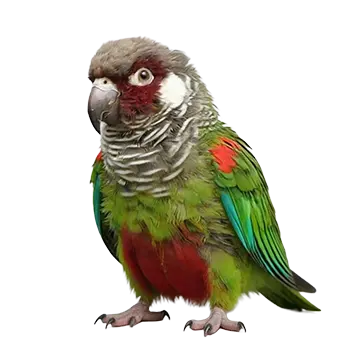

Space Requirements

Scaly Breasted Parakeets are energetic, highly mobile birds that spend much of their waking hours climbing, swinging, and flying short bursts within their environment. In the wild, they range across open woodlands, suburban gardens, and coastal scrublands of eastern Australia, covering considerable distances during daily foraging flights. This level of natural activity means that captive housing must provide enough volume for the bird to move freely, stretch its wings, and engage in the aerial play that is central to its behavioral repertoire. Cramped cages lead to muscle atrophy, feather damage from contact with bars, and behavioral problems including repetitive pacing and self-mutilation.

The minimum recommended cage size for a single Scaly Breasted Parakeet is thirty-six inches long by twenty-four inches wide by thirty-six inches tall, though larger is always preferable. For a pair, the minimum dimensions should increase to at least forty-eight inches in length to allow both birds adequate personal space and reduce the risk of territorial conflict within the enclosure. Length matters more than height for this species, as lorikeets tend to fly horizontally rather than vertically, and a long flight cage allows the sustained movement patterns that keep flight muscles in condition.

Flight cages and walk-in aviaries represent the gold standard for lorikeet housing when space and budget permit. A flight cage of six feet or more in length gives a Scaly Breasted Parakeet the room to make genuine short flights rather than simply hopping between perches, which has measurable benefits for cardiovascular health and psychological well-being. Walk-in aviaries offer the additional advantage of allowing the owner to enter the bird's space for interaction and maintenance without the stress of reaching into a conventional cage.

Owners who provide supervised out-of-cage time in a bird-safe room can accept a slightly smaller primary enclosure, but the cage should never be so small that the bird cannot fully extend and flap its wings without touching the sides. The enclosure is where the bird spends its unsupervised hours, including the overnight period, and it must function as a comfortable living space rather than merely a containment unit.

Cage Design & Construction Materials

The construction material of a lorikeet enclosure must withstand the unique challenges that this group of birds presents. Lorikeet droppings are liquid and acidic, a direct consequence of their nectar-based diet, and they are projected with surprising force across cage bars, walls, and surrounding surfaces. Powder-coated steel and stainless steel are the two most suitable materials for lorikeet cages. Stainless steel is the superior choice for longevity and hygiene, as it resists corrosion from acidic waste and withstands repeated cleaning with disinfectants without degrading. Powder-coated steel is more affordable and adequate for most owners, provided the coating is lead-free, zinc-free, and applied in a durable finish that the bird's beak cannot chip or peel.

Zinc toxicity is a serious and well-documented hazard in avian housing. Galvanized wire, which is standard in many affordable small-animal cages and some imported bird cages, contains zinc in its coating that birds ingest through chewing and beak-wiping on the bars. Chronic zinc exposure causes lethargy, anemia, weight loss, and organ damage. Any cage or aviary constructed from galvanized wire must be either avoided entirely or treated with a vinegar wash and multiple rinses before use, though even treated galvanized wire remains a risk as the zinc coating wears unevenly over time.

Bar spacing is a critical safety specification. For Scaly Breasted Parakeets, bar spacing should not exceed half an inch (approximately twelve to thirteen millimeters). Wider spacing allows the bird to wedge its head between bars, which can cause neck injuries, strangulation, or escape. Horizontal bar orientation on at least two sides of the cage is strongly preferred, as it facilitates the climbing behavior that lorikeets engage in constantly. A cage with all vertical bars forces the bird to rely entirely on perches for elevation changes, depriving it of a natural exercise behavior.

Door design affects both convenience and safety. Large, front-opening service doors simplify cleaning and food replacement, which is especially important for lorikeets given the frequency with which feeding stations must be refreshed. Doors should latch securely with mechanisms that the bird cannot manipulate, as Scaly Breasted Parakeets are intelligent and dexterous enough to learn simple latch operations. Spring-loaded or padlock-style closures are more reliable than simple slide bolts for persistent escape artists.

Interior Layout & Perching

The internal arrangement of a Scaly Breasted Parakeet's enclosure should prioritize open flight paths, varied perching options, and easy access to food and water stations. A common mistake is overcrowding the cage with accessories, which fragments the interior space and prevents the bird from moving freely between perching sites. The goal is a thoughtfully arranged environment where every element serves a purpose and the bird can navigate the full volume of the cage without obstruction.

Perch variety is essential for foot health. Lorikeets spend virtually all of their resting time perched, and uniform perch diameters cause pressure sores, bumblefoot, and joint stiffness over time. A well-equipped cage should include natural hardwood branches of varying diameters, a rope perch for flexible gripping, and at least one textured conditioning perch positioned away from food stations. Natural branches from bird-safe trees such as eucalyptus, apple, willow, or manzanita are ideal because they provide irregular surfaces that exercise the feet naturally and can be chewed and replaced as they wear down.

Perch placement follows a few practical rules. The highest perch should be positioned as the primary sleeping perch, since birds instinctively roost at the highest available point. Food and water stations should be accessible from a mid-level perch to prevent contamination from droppings falling from above. Perches should not be placed directly above one another for the same reason. Leaving the lower third of the cage relatively open simplifies cleaning and provides floor space for foraging trays or ground-level enrichment when desired.

Swings and boing-style spiral perches add dynamic movement to the interior and are typically well-received by Scaly Breasted Parakeets, which enjoy the vestibular stimulation of swinging and bouncing. These should be hung where they have room to sway without colliding with cage walls or other perches. A single swing positioned near the top of the cage often becomes a favored roosting and play spot.

Substrate & Cleaning Considerations

Substrate selection and cleaning protocol are arguably more important for lorikeets than for any other group of companion birds. The liquid, sugar-rich droppings produced by nectar-feeding species create an environment where bacteria, yeast, and mold proliferate rapidly if hygiene lapses. Choosing a substrate that simplifies daily cleaning and resists microbial growth directly impacts the health of the bird and the workload of the owner.

Newspaper remains one of the most practical substrates for lorikeet cages. It is inexpensive, easy to replace daily, and allows the owner to visually monitor droppings for changes in color, consistency, or volume that might indicate a health problem. Several layers of newspaper can be laid on the cage tray and the top soiled layers peeled off during mid-day spot cleaning, with a full replacement performed each morning. Butcher paper and plain kraft paper serve the same function and are available in rolls for convenient sizing.

Wood shavings and corncob bedding, while popular for hookbill species, present problems for lorikeets. The liquid droppings saturate these substrates quickly, creating a damp mass that harbors Aspergillus mold spores and gram-negative bacteria. The material also makes it difficult to assess dropping quality at a glance. If a particulate substrate is preferred for aesthetic reasons or odor absorption, paper-based recycled bedding designed for small animals is a better option than wood or corncob, though daily replacement remains necessary.

Cage cleaning should follow a tiered schedule. Daily tasks include replacing the substrate liner, washing and refilling food and water dishes with hot soapy water, and wiping down cage bars within the splash zone around feeding stations. A weekly deep clean involves removing all perches, toys, and accessories for scrubbing and disinfection, and wiping the entire cage with a bird-safe disinfectant. Monthly, the cage tray and grate should be removed for thorough soaking and scrubbing to address buildup in crevices and joints. This routine sounds intensive, and it is. Lorikeet keeping demands a commitment to hygiene that exceeds what most seed-eating parrot species require.

Climate & Environmental Control

Scaly Breasted Parakeets originate from the temperate to subtropical coastal regions of eastern Australia, where they experience warm summers, mild winters, and moderate to high humidity. In captivity, they are reasonably tolerant of temperature variation but perform best when kept in environments that approximate this range. An ambient temperature between sixty-five and eighty-five degrees Fahrenheit (eighteen to twenty-nine degrees Celsius) is comfortable for most individuals, with overnight lows above fifty-five degrees Fahrenheit considered safe for healthy adults.

Humidity is an often-overlooked element of lorikeet housing. Dry indoor air, particularly in homes with forced-air heating during winter, desiccates the skin and respiratory membranes of birds adapted to humid coastal and woodland environments. Relative humidity between forty and sixty percent is ideal. A hygrometer placed near the cage provides continuous monitoring, and a room humidifier can bring levels into the appropriate range during dry seasons. Excessive humidity above seventy percent encourages mold growth in the cage environment, so the goal is moderation rather than tropical saturation.

Draft exposure is a genuine health risk for caged birds and must be considered during cage placement. Positioning the cage away from exterior doors, windows that are frequently opened, and the direct output of heating or cooling vents prevents the sudden temperature shifts that can stress the respiratory system. This does not mean the bird should be sealed in a stagnant air environment. Gentle, indirect air circulation is beneficial and helps dissipate the volatile organic compounds that can accumulate from droppings and fresh food residue. A ceiling fan on a low setting in an adjacent area or a household HVAC system with good filtration provides adequate air movement without creating a direct draft on the bird.

Light exposure affects hormonal regulation, molt cycling, and overall behavioral health. Scaly Breasted Parakeets benefit from a photoperiod that approximates natural daylight cycles, generally ten to twelve hours of light followed by twelve to fourteen hours of darkness for sleep. Full-spectrum lighting designed for birds, which includes ultraviolet-A and ultraviolet-B wavelengths, supports vitamin D synthesis and allows the bird to perceive the full color spectrum of its environment and food. These lights should be positioned above the cage at the manufacturer's recommended distance and replaced on schedule, as UV output diminishes well before the visible light component burns out.

Outdoor & Aviary Housing

An outdoor aviary represents the most naturalistic housing option for Scaly Breasted Parakeets and allows behaviors that indoor cages simply cannot accommodate, including sustained flight, exposure to natural sunlight and weather patterns, and interaction with environmental stimuli such as wild bird calls and seasonal changes. In climates with mild winters and warm summers, a well-designed outdoor aviary can serve as the primary enclosure year-round. In regions with cold winters, a seasonal arrangement where the birds move between an indoor flight cage and a warm-weather outdoor aviary provides the best of both environments.

Aviary construction must address security from predators, weather protection, and material durability. Welded mesh panels of half-inch spacing in stainless steel or powder-coated steel are appropriate for wall and roof construction. The aviary should include a fully roofed section or sheltered area where the birds can retreat from rain, wind, and direct sun, as well as an open section that allows unfiltered sunlight exposure for natural vitamin D synthesis. A double-door entry system, consisting of a small vestibule between two doors, prevents accidental escapes during entry and exit.

Flooring in an outdoor aviary can be concrete, paving stones, or compacted gravel, each with distinct advantages. Concrete is the easiest to hose down and disinfect but requires a slight slope for drainage. Gravel drains naturally and has a more natural appearance but is harder to clean thoroughly and may harbor rodent burrows if not underlaid with hardware cloth. Natural earth floors allow planting of bird-safe grasses and shrubs but require the most maintenance and pose the greatest risk of parasitic and fungal contamination. Whatever the material, the floor should be easy to clean and resistant to the accumulation of liquid waste that lorikeets produce in quantity.

Planting within or around the aviary enriches the environment considerably. Non-toxic native Australian plants such as bottlebrush, grevillea, and melaleuca are ideal because they provide blossoms that the birds can feed from naturally, as well as foliage for shelter and perching. Any plants accessible to the birds must be confirmed safe for avian contact, as lorikeets will chew bark, strip leaves, and consume flowers from any vegetation within reach. Pesticides and chemical fertilizers must be eliminated entirely from any plantings the birds can access.

Cage Placement & Safety

Where the cage sits within the home has a significant impact on the bird's sense of security, social engagement, and physical health. Scaly Breasted Parakeets are social birds that thrive on household activity and visual contact with their family group. Placing the cage in a living area where the family spends time provides the social stimulation that this species requires, while positioning at least one side of the cage against a wall gives the bird a sense of security by reducing the number of directions from which perceived threats can approach.

Kitchen placement is strongly discouraged for any bird species, and the reasons are especially relevant for lorikeets. Overheated nonstick cookware releases polytetrafluoroethylene (PTFE) fumes that are acutely lethal to birds within minutes of exposure. Gas stoves produce carbon monoxide and nitrogen dioxide at levels that, while tolerable for humans, can damage avian respiratory systems over time. Cooking fumes, aerosolized oils, and temperature fluctuations during meal preparation create a hostile environment for a small bird with an extremely efficient respiratory system.

Additional household hazards to consider during cage placement include scented candles, incense, plug-in air fresheners, and aerosol sprays, all of which release volatile compounds that irritate or damage avian respiratory tissue. Rooms where these products are routinely used should not house birds. Similarly, rooms with heavy foot traffic from dogs, cats, or young children may cause chronic stress unless the cage is positioned at an elevated height that places the bird above the line of approach of other household members.

The cage should be elevated so that the bird's resting perch is at or above the owner's eye level. Birds feel vulnerable when positioned below the humans and animals around them, and a low cage placement often contributes to nervousness, excessive screaming, and reluctance to interact. A sturdy cage stand or a secure wall-mounted shelf at the appropriate height achieves this. The stand or shelf must be stable enough to support the full weight of the cage, water dishes, and the bird's activity without wobbling, as an unstable perch creates chronic low-level anxiety.

Always consult a qualified professional before making any health-related decisions. This content is provided for informational reference only and should not replace professional guidance specific to your animal.