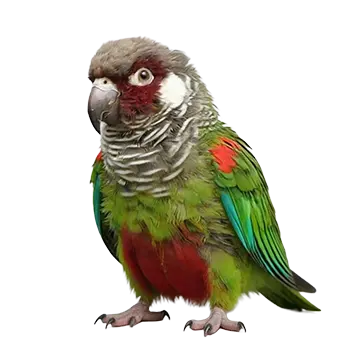

Technology in Lorikeet Care

The application of consumer technology to companion bird care has expanded substantially in recent years, creating practical tools that were unavailable to aviculturists a decade ago. For Scaly Breasted Parakeet owners, technology addresses several specific challenges inherent to lorikeet keeping: maintaining precise environmental conditions, monitoring bird behavior and health during absence, managing the lighting schedules that regulate hormonal and sleep cycles, and maintaining air quality in rooms affected by the volatile compounds that lorikeet diets and droppings produce.

Technology should be understood as a supplement to attentive, hands-on care rather than a replacement for it. No sensor or camera eliminates the need for daily direct observation of the bird's behavior, appetite, droppings, and feather condition. What technology provides is continuity of awareness during the hours when the owner is away from home, early warning of environmental shifts that might otherwise go unnoticed, and data that can reveal subtle trends over time. A temperature spike while the owner is at work, a bird that is unusually inactive during hours when it should be feeding, or a gradual decline in daily weight over weeks are the kinds of signals that technology can surface before they escalate into emergencies.

The ecosystem of smart home devices, wireless sensors, and mobile-connected cameras available to consumers today can be assembled incrementally. An owner does not need to invest in every category simultaneously. Starting with environmental monitoring, which directly protects the bird's physical safety, and adding remote observation and automated lighting as budget and interest allow creates a technology layer that builds over time without requiring a large upfront commitment.

Compatibility and reliability should guide purchasing decisions more than feature counts. Devices that integrate with a common smart home platform and communicate through a single app provide a more manageable and useful experience than a collection of standalone products, each with its own app, its own notification system, and its own battery schedule. Choosing a platform early and selecting devices within that ecosystem simplifies setup and long-term maintenance.

Environmental Monitoring

Environmental monitoring devices provide continuous, quantified insight into the temperature, humidity, and air conditions surrounding the bird's enclosure. For a species native to the temperate to subtropical coast of eastern Australia, these parameters are not abstract data points but direct determinants of health and comfort. A Scaly Breasted Parakeet housed in conditions that consistently fall outside its tolerance range will show signs of stress, respiratory vulnerability, and behavioral disruption long before the environment becomes acutely dangerous.

Digital thermometer-hygrometer units with wireless connectivity represent the most useful entry point into environmental monitoring. These compact sensors can be positioned near the cage and report real-time temperature and humidity readings to a smartphone app, along with historical data that reveals daily and seasonal patterns. Models that support configurable alert thresholds will send push notifications when temperature or humidity falls outside a user-defined range, providing early warning of heating system failures, air conditioning outages, or sudden weather-driven environmental changes.

For lorikeet owners, humidity monitoring deserves particular emphasis. The liquid droppings and nectar residue endemic to lorikeet environments can elevate localized humidity around the cage, creating conditions favorable to mold and bacterial growth even when room-level humidity appears normal. Placing a sensor near the cage in addition to a room-level sensor reveals the microclimate the bird actually experiences. If the cage-level sensor consistently reads significantly higher than the room sensor, improved ventilation around the cage or relocation away from walls and corners that trap moisture may be warranted.

Carbon dioxide and volatile organic compound (VOC) sensors add another layer of environmental awareness. In enclosed rooms with limited ventilation, CO2 levels can climb to concentrations that cause lethargy and respiratory stress in birds before reaching levels noticeable to humans. VOC sensors detect the chemical emissions from household products, new furniture, and cleaning agents that compromise avian air quality. While these sensors represent a higher investment than basic temperature and humidity monitors, they provide actionable data for owners who want to optimize the air their bird breathes.

Cameras & Remote Observation

Pet cameras enable owners to observe their Scaly Breasted Parakeet's behavior during absences, providing peace of mind and a valuable window into the bird's unsupervised activity patterns. A bird that appears lively and social when the owner is present may behave very differently when alone, and cameras often reveal behavioral problems such as feather picking, repetitive pacing, excessive vocalization, or prolonged inactivity that the owner would otherwise never witness.

The most useful cameras for bird monitoring offer high-definition video with clear daytime image quality, night vision or low-light capability for observing evening and early-morning behavior, and two-way audio that allows the owner to speak to the bird remotely. Two-way audio serves a dual purpose: it allows the owner to provide vocal reassurance to a stressed bird, and it captures the bird's vocalizations, which are a significant indicator of emotional state. A bird that is vocalizing normally throughout the day is generally content, while prolonged silence or repetitive distress calls signal a problem worth investigating.

Camera placement should balance comprehensive coverage with the bird's comfort. Positioning the camera at or slightly above cage level, facing the primary activity area of the cage, captures feeding behavior, social interaction, and movement patterns. Avoid placing cameras where their status lights or clicking autofocus mechanisms are within direct view of the bird, as some individuals fixate on or are disturbed by these stimuli. Most modern cameras allow status lights to be disabled through the app, which is recommended for bird room use.

Motion-triggered recording and cloud or local storage of video clips create a searchable archive of the bird's daily activity. Reviewing time-lapse summaries of the day's recordings provides a compressed view of activity levels, feeding frequency, and sleep timing that would be impractical to monitor in real time. Some owners use this footage to share behavioral observations with their avian veterinarian, providing context that a brief clinic visit cannot capture. Video documentation of unusual behaviors, postures, or interactions can significantly aid veterinary assessment of behavioral or neurological concerns.

Smart Lighting Systems

Lighting is one of the most impactful environmental factors in avian health, influencing circadian rhythm, hormonal regulation, vitamin D synthesis, color perception, and psychological well-being. Smart lighting systems give owners precise, automated control over the photoperiod and spectral quality of light in the bird's environment, eliminating the inconsistency that comes with manually switching lights on and off and ensuring that the bird receives appropriate light exposure regardless of the owner's daily schedule.

Full-spectrum avian lighting that includes ultraviolet-A and ultraviolet-B wavelengths is essential for Scaly Breasted Parakeets, which, like all birds, possess tetrachromatic vision that extends into the ultraviolet range. Under standard household lighting, which lacks UV output, the bird's visual experience of its environment and food is degraded compared to what natural sunlight provides. UVB exposure also enables the synthesis of vitamin D3 in the preen gland oil, which the bird ingests during preening and which is critical for calcium metabolism. Smart timers connected to full-spectrum bird lamps automate the daily on-off cycle and ensure consistent exposure duration.

Photoperiod management through programmable schedules supports healthy hormonal regulation. Extending daylight hours artificially can trigger breeding behavior, including territorial aggression, chronic egg-laying in hens, and hormonal feather plucking. Maintaining a consistent cycle of ten to twelve hours of light and twelve to fourteen hours of darkness mimics the natural photoperiod of the species' native range and keeps hormonal activity within normal non-breeding parameters. Smart bulbs and smart plugs allow this schedule to be programmed once and maintained automatically, with gradual dimming at dusk and gradual brightening at dawn options that simulate natural light transitions rather than abrupt on-off switches.

Dimmable smart lighting also accommodates the transitional periods at the beginning and end of the day. A sudden switch from full darkness to bright overhead lighting can startle a sleeping bird and trigger a night fright response, while a gradual brightening over fifteen to thirty minutes allows the bird to wake naturally. Similarly, a gradual dimming period in the evening signals approaching sleep time and encourages the bird to settle on its roosting perch. These transitions are easy to program on most smart lighting platforms and make a noticeable difference in the bird's evening and morning behavior.

Air Quality & Filtration

Air quality management is a critical concern for any household with birds, and lorikeet-specific challenges make it even more so for Scaly Breasted Parakeet owners. The liquid droppings produced by nectar-feeding species generate volatile organic compounds as they dry and decompose, particularly in warm or poorly ventilated rooms. Fruit residue left in feeding dishes contributes additional organic emissions as it spoils. While daily cleaning minimizes these sources, some level of airborne contamination is an ongoing reality of lorikeet keeping, and mechanical air filtration provides a practical solution.

HEPA air purifiers are the most broadly effective filtration technology for bird rooms. True HEPA filters capture particles down to 0.3 microns, which includes mold spores, dander, dried fecal dust, and many airborne bacteria. For lorikeet rooms, selecting a purifier with an activated carbon pre-filter adds the ability to adsorb volatile organic compounds and odors that HEPA filtration alone cannot address. The activated carbon component is particularly valuable for managing the sweet, fermenting smell that can develop in rooms where wet nectar is served multiple times daily.

Purifier placement affects performance significantly. The unit should be positioned in the same room as the cage, ideally within ten to fifteen feet, but not so close that its fan output creates a direct draft on the bird. Most manufacturers provide room-size ratings for their units, and selecting a purifier rated for a somewhat larger space than the actual bird room ensures adequate air exchange without running the unit at its highest and noisiest setting. Noise is a relevant consideration for bird rooms, as some purifiers produce operating sounds in frequency ranges that may disturb sensitive birds.

Ionizers and ozone-generating air cleaners should be avoided entirely in bird environments. Ozone is a powerful respiratory irritant for birds even at concentrations marketed as safe for humans, and ionizers produce ozone as a byproduct of their operation. Some air purifiers include an ionizer function alongside their HEPA filter, and this function should be permanently disabled if the unit is used in a bird room. Checking product specifications and disabling ionizer features before installation prevents accidental exposure.

Automated Feeding & Watering

Automated feeding and watering devices have evolved to the point where they can meaningfully support the demanding feeding schedule of captive lorikeets, though the limitations of current technology must be understood to avoid creating problems rather than solving them. The primary appeal of automation is consistency: a timed feeder can deliver fresh nectar or dry food at precise intervals regardless of the owner's schedule, reducing the gap between the bird's natural feeding rhythms and the practical constraints of human work hours.

Timed dry-food dispensers are the most reliable category of automated feeders for bird use. These devices hold a reservoir of dry lorikeet powder or pellets and release a measured portion into a dish at programmed intervals. Because dry food does not spoil as rapidly as wet nectar, timed dispensers for dry food carry lower hygiene risk. Models with dishwasher-safe components and wide openings for easy cleaning are strongly preferred, as any device that contacts food must be disinfected regularly to prevent mold and bacterial accumulation in the reservoir and dispensing mechanism.

Automated wet nectar delivery is more technologically challenging and currently has fewer reliable consumer options. The sugar content of lorikeet nectar promotes rapid bacterial growth, and any automated system that holds mixed nectar at room temperature for extended periods risks serving spoiled food. Some owners use automated pet water fountains with food-grade tubing to deliver small amounts of freshly mixed nectar from a refrigerated reservoir, but these custom setups require careful design and frequent maintenance to remain safe. Until commercial products specifically address the hygiene challenges of automated nectar delivery, most aviculturists recommend that wet nectar continue to be prepared and served manually.

Automated water dispensers, particularly gravity-fed or pump-circulated systems with replaceable filters, provide continuous access to clean drinking water and reduce the frequency of manual water changes. These systems work well for lorikeets when the reservoir and all water-contact surfaces are cleaned and refilled every two to three days. Built-in filters help maintain water clarity and reduce bacterial counts between cleanings. Monitoring water consumption via the reservoir level or a smart water sensor provides an additional data point for health tracking, as a sudden decrease in water intake can signal illness before more obvious symptoms appear.

Health Tracking & Digital Records

Digital health tracking consolidates the various data points generated by daily bird care into a format that reveals trends, supports veterinary communication, and creates an institutional memory of the bird's health history over its potentially twenty-year lifespan. At its simplest, health tracking consists of a daily log entry recording body weight, food consumption, dropping appearance, activity level, and any behavioral observations. At its most sophisticated, it integrates data from environmental sensors, weight scales, and veterinary records into a comprehensive digital profile.

Digital gram scales with Bluetooth connectivity represent a practical upgrade over standard kitchen scales for daily weigh-ins. These scales transmit each reading directly to a smartphone app, where it is timestamped and stored automatically. Over weeks and months, the resulting weight graph reveals patterns that manual logging might miss: gradual weight loss that proceeds too slowly to notice on a day-to-day basis, cyclical weight fluctuations associated with molting or seasonal changes, and the immediate weight impact of dietary adjustments. Many avian veterinarians now request weight trend data as part of routine wellness assessments, and a digital record eliminates the need to transcribe handwritten notes.

Dedicated pet health tracking apps allow owners to log veterinary visits, medication schedules, vaccination records, and behavioral observations in a single organized platform. Some apps include reminder functions for recurring care tasks such as scheduled veterinary checkups, parasite preventive treatments, and supplement rotations. The best apps allow data export in formats that can be shared with veterinary clinics, creating a portable medical record that travels with the bird if it changes veterinarians or if the owner needs to seek emergency care at an unfamiliar clinic.

Photographic and video documentation of the bird's condition at regular intervals serves as a visual health record that complements numerical data. Monthly full-body photographs taken under consistent lighting conditions create a visual timeline of feather condition, posture, eye brightness, and overall body condition. Comparing current photographs to those taken months earlier can reveal gradual changes in feather quality, beak condition, or body shape that daily observation normalizes. Storing these images in a dedicated album, organized chronologically and annotated with any concurrent health notes, builds a resource of considerable diagnostic value over the bird's lifetime.

Always consult a qualified professional before making any health-related decisions. This content is provided for informational reference only and should not replace professional guidance specific to your animal.