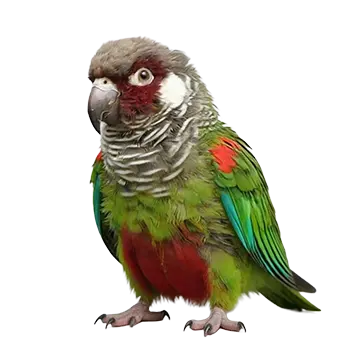

The Scaly Breasted Parakeet, also known as the Scaly-breasted Lorikeet (Trichoglossus chlorolepidotus), belongs to the lorikeet family and has nutritional requirements that differ fundamentally from those of seed-eating parrots. In the wild, this species feeds primarily on nectar, pollen, soft fruits, and the occasional insect, using a specialized brush-tipped tongue to extract liquid food from flowering eucalyptus, melaleuca, and grevillea trees. This biological specialization means that the digestive system of the Scaly Breasted Parakeet is adapted for processing sugary, liquid, and semi-liquid foods rather than hard seeds and dry grains. Any feeding plan that ignores this distinction will lead to malnutrition, digestive distress, and a significantly shortened lifespan.
The primary macronutrient concern for lorikeets is the balance between simple sugars and complex carbohydrates. Wild nectar provides a ready source of energy, but captive nectar substitutes must also deliver adequate protein, which lorikeets obtain naturally from pollen. Most commercial lorikeet formulas address this by incorporating plant-based proteins, amino acids, and sometimes spirulina or bee pollen into their dry or wet nectar mixes. Protein levels between twelve and sixteen percent of total diet are generally considered appropriate for maintenance in adult birds, with slightly higher levels needed during molting or breeding.
Vitamins and minerals play a critical role in lorikeet health. Vitamin A supports the integrity of mucous membranes and respiratory tissues, which are particularly vulnerable in lorikeets kept in dry indoor environments. Iron is a nutrient that requires careful management in this group of birds, as lorikeets and lories are susceptible to iron storage disease, also known as hemochromatosis. This condition causes progressive organ damage as excess iron accumulates in the liver and other tissues. Foods and supplements with elevated iron levels must be identified and limited or excluded from the diet entirely.
Calcium and phosphorus must be provided in appropriate ratios to support bone health, feather development, and eggshell production in breeding hens. A ratio of roughly two parts calcium to one part phosphorus is considered ideal. Because lorikeets do not consume cuttlebone or mineral blocks with the same enthusiasm as hookbill species, calcium is most reliably delivered through the nectar formula itself or through calcium-rich fresh foods such as broccoli, kale, and figs.