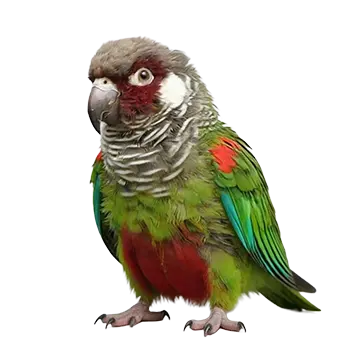

Enrichment Needs of Lorikeets

Scaly Breasted Parakeets are among the most active and inquisitive members of the parrot family, and their enrichment needs reflect a natural history built around constant foraging, social interaction, and aerial agility. In the wild, these birds spend the majority of their daylight hours moving between flowering trees, probing blossoms for nectar, stripping bark to locate insects, and engaging in acrobatic chasing play with flock mates. Captive birds retain all of these behavioral drives, and when the environment fails to provide appropriate outlets, the energy manifests as destructive behavior, excessive vocalization, feather plucking, or stereotypic repetitive movements.

Enrichment for this species should engage multiple behavioral systems simultaneously. Physical activity, problem-solving, oral manipulation, and social play all require attention, and the most effective toy selections address more than one of these categories at a time. A foraging toy that requires climbing to reach and manipulation to open, for example, delivers physical exercise, cognitive stimulation, and the reward of food discovery in a single interaction. Thinking about toys in terms of the behavioral needs they satisfy, rather than simply filling the cage with objects, leads to a more effective and less cluttered enrichment strategy.

The temperament of the individual bird also guides toy selection. Scaly Breasted Parakeets tend to be bold and curious compared to some of the more cautious lorikeet species, but personality variation within the species is real. Some individuals immediately investigate new objects, while others require a gradual introduction period where the toy is placed near but not inside the cage before being offered directly. Observing how the bird responds to novel items in its environment reveals which enrichment categories are most engaging and which may require a slower approach.

Toy rotation is a fundamental principle of effective enrichment. Even the most engaging toy loses its novelty after continuous exposure, and a bird that has habituated to its environment will disengage behaviorally even when surrounded by technically appropriate enrichment. Maintaining a collection of toys and rotating three to five items in and out of the cage on a weekly basis keeps the environment fresh and sustains the investigative behavior that signals a psychologically healthy bird.

Foraging & Food-Based Toys

Foraging toys rank as the single most important enrichment category for captive lorikeets because they directly replicate the behavior that occupies the largest portion of a wild bird's day. In nature, a Scaly Breasted Parakeet works for every meal, probing flower clusters, navigating branch networks, and competing with flock mates for access to the richest nectar sources. A captive bird that receives all of its food in an open dish has no reason to engage in this behavior, and the resulting boredom is a primary driver of behavioral problems in pet lorikeets.

Lorikeet-appropriate foraging toys differ from those designed for seed-eating parrots in an important way: they need to accommodate wet and sticky foods rather than dry seeds and pellets. Acrylic foraging wheels, tubes, and boxes with adjustable openings allow nectar-soaked pieces of fruit, small portions of wet nectar mix, or edible flowers to be placed inside, requiring the bird to manipulate the device to access the reward. Products made from stainless steel or food-safe acrylic are preferred for wet-food foraging because they can be thoroughly cleaned and do not absorb sugary residue the way wood or natural fiber toys would.

Simple homemade foraging setups can be as effective as commercial products. Wrapping a piece of fruit in a small sheet of unbleached paper towel and tucking it into a stainless steel foraging cup gives the bird something to unwrap and discover. Skewering fruit and vegetable chunks on a stainless steel kabob holder encourages the bird to hang, reach, and twist to access the food. Placing edible flowers inside a clean wiffle ball or a paper cup with small holes creates a disposable foraging puzzle that provides both mental stimulation and dietary enrichment.

The difficulty level of foraging challenges should be calibrated to the individual bird's experience. A bird that has never used foraging toys should start with simple, transparent devices where the food is visible and easily accessed, then progress to opaque containers, smaller openings, and multi-step puzzles as competence builds. Advancing too quickly leads to frustration and learned helplessness, where the bird ignores foraging toys entirely because past experience taught it that the effort does not yield a reliable reward.

Shredding & Chewing Toys

Chewing and shredding behavior is a natural part of lorikeet activity, though Scaly Breasted Parakeets are generally less destructive chewers than the larger cockatoo and macaw species. Their beak strength is moderate, oriented more toward stripping soft bark and probing crevices than demolishing hardwood blocks. Toys that provide satisfying tactile feedback without requiring enormous beak power are the best match for this species. Balsa wood, yucca, sola, cork, and palm leaf shredders offer appropriate resistance and produce the fibrous debris that many lorikeets seem to enjoy creating.

Paper-based toys deserve particular mention for lorikeets. Crinkled paper strips, woven paper rings, and cardboard tubes stuffed with tissue paper provide lightweight shredding satisfaction and are inexpensive enough to replace frequently. The disposability of paper toys is actually an advantage for lorikeet keepers, because toys that absorb the sugary liquid droppings characteristic of this species become hygiene concerns much faster than they would in a seed-eating parrot's cage. Rotating in fresh paper toys every few days keeps the cage sanitary and the bird engaged.

Leather strips and undyed sisal or jute rope components appear in many commercially available bird toys and are generally safe for Scaly Breasted Parakeets, provided the bird is shredding rather than ingesting the material. Monitoring how the bird interacts with fibrous materials is important, as some individuals swallow strands that can cause crop impaction or intestinal blockage. If a bird is observed consuming rather than simply tearing at rope or leather, those materials should be removed and replaced with alternatives that break apart into smaller, less ingestible fragments.

Wood selection matters for safety. Toys made from bird-safe woods such as pine, birch, balsa, manzanita, and dragonwood are appropriate. Woods treated with pesticides, preservatives, or paints not certified as bird-safe must be avoided. Cedar and redwood contain aromatic oils that irritate the respiratory tract, and pressure-treated lumber contains copper, chromium, and arsenic compounds that are toxic if ingested. When purchasing toys from small or artisanal makers, confirming the wood species and finish is a reasonable precaution.

Climbing & Physical Activity Toys

Climbing is a core locomotion behavior for Scaly Breasted Parakeets, which navigate their natural habitat by scaling branches, hanging from twigs, and swinging between perching sites as much as by flying. Captive environments should replicate this three-dimensional movement as fully as space allows. Rope ladders, chain-link climbing nets, wooden lattice panels, and spiral boing perches all provide climbing surfaces that encourage full-body exercise and coordination.

Playground-style tabletop stands offer out-of-cage climbing and exploration during supervised free time. A quality play stand for a bird this size should include multiple perching levels connected by ladders or ramps, cup holders for treats or water, and attachment points for hanging toys. Acrylic or stainless steel construction is most practical for lorikeet use because of the cleaning demands, though hardwood stands can be sealed with bird-safe finishes and remain serviceable with diligent maintenance.

Swings remain one of the most universally enjoyed toys across lorikeet species, and Scaly Breasted Parakeets are no exception. The vestibular stimulation of swinging engages the bird's balance and coordination systems, providing a form of passive exercise that many birds seek out voluntarily for extended periods. Swings sized for medium birds, with a perch diameter of roughly half an inch to three-quarters of an inch, fit this species well. Some swings incorporate additional elements such as beads, rings, or bells along the chain, adding manipulative interest to the swinging experience.

Boing perches, which are coiled rope spirals that mount vertically or at an angle inside the cage, provide a dynamic perching surface that bounces and sways with the bird's movements. The unpredictable motion engages the bird's stabilizing muscles and seems to stimulate playful behavior in most individuals. Boings come in various diameters and lengths, and selecting one proportionate to the bird's size ensures comfortable gripping. As with all rope products, periodic inspection for fraying and fiber ingestion risk is necessary.

Interactive & Puzzle Toys

Scaly Breasted Parakeets possess the cognitive capacity to engage with puzzle toys and interactive devices that would frustrate less inquisitive species. Their intelligence sits comfortably in the middle range of parrot cognitive ability, below the problem-solving powerhouses like African Greys and cockatoos but well above the capacity of finches or doves. Puzzle toys that require one or two manipulative steps to access a reward are typically the right complexity level, with more elaborate multi-step puzzles reserved for experienced individuals that have demonstrated progressive mastery.

Acrylic puzzle boxes with sliding lids, rotating doors, or pull-out drawers allow the bird to work through a mechanical challenge to reach a food reward placed inside. These are particularly effective for lorikeets when the reward is a piece of favored fruit or a dab of nectar, as the food motivation of this species is strong. Clear acrylic construction lets the bird see the reward throughout the problem-solving process, maintaining motivation during the learning phase.

Bell toys, rattle balls, and noise-making devices provide a different category of interactive stimulation that appeals to the vocal and auditory nature of lorikeets. Scaly Breasted Parakeets are vocal communicators that respond to sound in their environment, and toys that produce noise when manipulated create a feedback loop that sustains engagement. Stainless steel bells are preferred over jingle bells, which can trap toes or beak tips in the slotted opening. Rattle balls containing internal sound elements should be sturdy enough that the bird cannot crack them open and access small parts.

Mirrors are a topic of debate in avian enrichment. Some Scaly Breasted Parakeets enjoy interacting with their reflection and show no adverse effects, while others become fixated on the mirror image in ways that interfere with social bonding with their human family or cage mate. If a mirror is offered, the bird's behavior should be monitored for signs of obsessive interaction, regurgitative feeding toward the reflection, or aggression. Mirror toys work best as an occasional rotation item rather than a permanent fixture, and they should be removed entirely if problematic behaviors emerge.

Bathing & Water Play

Water play is an enrichment category that deserves dedicated attention for Scaly Breasted Parakeets, which are enthusiastic bathers both in the wild and in captivity. Regular bathing supports feather condition, skin hydration, and natural preening behavior, and most individuals in this species actively seek out bathing opportunities when provided. The frequency and enthusiasm of bathing behavior in lorikeets means that water play products and routines are enrichment staples rather than occasional extras.

Shallow ceramic or stainless steel bathing dishes, sized so the bird can stand in the water with it reaching mid-chest, are the simplest and most effective bathing option. The dish should be heavy enough to resist tipping and placed at a low level in the cage or on a play stand during supervised time. Water temperature should be lukewarm to room temperature, never hot, and the bathing dish should be removed after the bird has finished to prevent drinking of soiled bath water. Some owners offer the bath dish at a consistent time each day, and many birds learn to anticipate and vocalize for their bathing session.

Misting with a clean spray bottle offers an alternative or supplementary bathing method that mimics the rain showers lorikeets experience in their native habitat. A fine mist setting sprayed above the bird so the droplets drift down naturally is generally better received than direct spraying, which can feel confrontational to a nervous bird. The water should be plain, without additives, and at room temperature. Misting is particularly useful for birds that are reluctant to use a bathing dish or during dry winter months when additional humidity benefits feather and skin condition.

Fountain-style bird baths and drip baths, which produce a gentle stream or cascade of running water, appeal strongly to the lorikeet instinct to bathe in moving water. Commercial bird bath fountains designed for parrot-sized birds are available, or a simple setup can be created by positioning a slow drip from a suspended water container into a shallow basin. The sound and movement of running water often attracts birds that show little interest in still bath water. These devices require daily cleaning to prevent biofilm formation in the tubing and reservoir.

During warm weather, supervised outdoor bathing provides the additional benefit of natural sunlight exposure. Setting a shallow dish on a secure surface in a shaded area of the yard and allowing the bird to bathe outdoors combines enrichment with vitamin D synthesis. The bird must be fully flighted and supervised, or the bathing area must be enclosed to prevent escape and predator access.

Toy Safety & Maintenance

Every toy introduced into a Scaly Breasted Parakeet's environment should be evaluated for safety before installation and monitored throughout its useful life. The most common toy-related injuries in companion birds involve entanglement, ingestion of small parts, and exposure to toxic materials, all of which are preventable with appropriate product selection and ongoing inspection. A few minutes of assessment before hanging a new toy and a quick visual check during daily cage maintenance are sufficient to catch most hazards before they cause harm.

Hardware quality is a frequently overlooked safety factor. The chains, quick links, split rings, and carabiners that attach toys to the cage must be appropriately sized for the bird. Links that are large enough for a toe or beak tip to become wedged create entrapment hazards. Quick links should close completely without gaps, and split rings should be tight enough that the bird cannot pry them open and get a toe or tongue caught in the coil. Stainless steel hardware is safer and more durable than plated zinc or nickel alternatives.

Toy longevity differs dramatically between lorikeet use and the expectations set by seed-eating parrot households. The moist environment of a lorikeet cage, with its frequent nectar splashes and liquid droppings, accelerates the degradation of organic materials. Wooden toys absorb moisture and become breeding grounds for mold. Cotton rope frays and retains humidity. Dyed leather can leach color when wet. Inspecting toys weekly for mold growth, structural weakening, fraying fibers, and loose components is essential. Toys that show any sign of mold should be discarded immediately rather than cleaned and returned, as mold spores are extremely difficult to eliminate completely from porous materials.

Replacement budgeting is a practical consideration that new lorikeet owners sometimes underestimate. Toys are consumable supplies, not permanent furnishings, and a responsible enrichment program requires ongoing investment. Balancing commercial purchases with inexpensive homemade options, such as paper and cardboard creations, keeps the enrichment budget manageable while maintaining variety. Reserving commercial puzzle toys and durable climbing structures for longer-term use and using disposable shredding and foraging items as the rotating daily enrichment creates a sustainable financial model.

Always consult a qualified professional before making any health-related decisions. This content is provided for informational reference only and should not replace professional guidance specific to your animal.