
Space Requirements

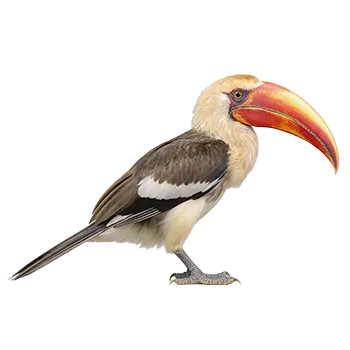
The Red-Billed Hornbill is an active, flight-capable species that demands considerably more space than comparably sized parrots or finches. In the wild, these birds range across expansive territories of dry savanna and open woodland, spending much of their day in flight between foraging sites, perching trees, and roosting locations. A standard parrot cage, even a large one, is wholly inadequate for this species. The minimum viable enclosure for a single Red-Billed Hornbill is a planted flight aviary measuring at least eight feet long, four feet wide, and six feet tall, though larger dimensions substantially improve the bird's quality of life and behavioral repertoire.

Paired or group-housed hornbills require proportionally more space. Breeding pairs need enough room to establish nesting territory without feeling crowded, and the enclosure should allow the female to retreat to the nest cavity while the male maintains a comfortable foraging and roosting area outside. For a breeding pair, an aviary of at least twelve feet in length is strongly recommended. Mixed-species aviaries housing hornbills alongside compatible softbill species need even more room to prevent territorial conflict, particularly during breeding season when hornbills become more assertive.

Vertical space is as important as floor area for this species. Red-Billed Hornbills use all levels of their enclosure, from ground-level foraging to elevated perching and roosting, and the aviary should provide enough height for the bird to fly in shallow ascending and descending arcs between perches. Enclosures that are tall but narrow restrict horizontal flight and force the bird into awkward hovering and climbing behaviors that do not reflect its natural locomotion. The ideal aviary shape for a hornbill is a long rectangle with moderate height rather than a tall, narrow column.

Outdoor aviaries offer significant advantages for Red-Billed Hornbills when climate allows. Natural sunlight provides essential ultraviolet radiation for vitamin D synthesis and calcium metabolism, and exposure to natural weather patterns, ambient sounds, and seasonal light cycles supports the bird's overall physiological and psychological well-being. However, outdoor housing requires robust predator protection, weather shielding, and the ability to bring the bird indoors during temperature extremes. In temperate climates, a combined indoor-outdoor setup with a heated indoor shelter connected to an outdoor flight by a doorway or tunnel offers the best of both approaches.

Enclosure Materials and Construction

The structural materials used to build a hornbill enclosure must balance durability, safety, and visibility. Welded wire mesh is the standard material for aviary walls and ceiling panels, and the gauge and mesh spacing must be appropriate for the species. Red-Billed Hornbills have strong beaks capable of bending thin wire, so a minimum wire gauge of 14 is recommended, with 12-gauge being preferable for long-term durability. Mesh openings should be small enough to prevent the bird from pushing its head through, typically no larger than one inch by one inch, yet large enough to allow adequate airflow and visibility.

Stainless steel mesh is the premium choice for hornbill aviaries. Unlike galvanized wire, which can leach zinc when birds chew on it and potentially cause heavy metal poisoning, stainless steel is chemically inert and completely safe for oral contact. The initial cost of stainless steel mesh is substantially higher than galvanized alternatives, but its corrosion resistance and longevity justify the investment, particularly in outdoor installations exposed to rain and humidity. If budget constraints require galvanized mesh, it should be new, thoroughly scrubbed with a vinegar solution to remove loose zinc flakes, and allowed to weather outdoors for several weeks before a bird is introduced.

The frame structure supporting the mesh panels can be constructed from powder-coated steel tubing, aluminum extrusion, or treated hardwood. Softwoods like pine are less suitable because hornbills will chip and splinter them with their beaks over time, and the preservative chemicals used to treat softwood can be toxic. Aluminum is lightweight, corrosion-resistant, and easy to work with, making it a popular choice for both indoor and outdoor frames. Whatever material is chosen, all joints and fasteners should be recessed or covered to prevent the bird from catching its toes, bill, or casque on sharp edges.

Flooring options depend on whether the aviary is indoors or outdoors. Outdoor aviaries benefit from a natural earth or sand substrate over a concrete base with drainage holes, allowing rainwater to pass through and facilitating natural ground-foraging behavior. Indoor aviaries typically use solid flooring covered with a removable substrate layer for easy cleaning. The substrate should be changed frequently to prevent bacterial and fungal buildup, which is a particular concern in humid environments where hornbills' fruit-based diet produces moist droppings that decompose quickly.

Perching and Interior Layout

Perch design and placement profoundly affect a hornbill's foot health, activity level, and overall comfort within the enclosure. Red-Billed Hornbills have zygodactyl-adjacent foot structures adapted for gripping branches of varying diameters, and their perches should reflect this by offering a range of widths and textures. Natural hardwood branches are far superior to dowel rods or manufactured perches for this species, as they provide irregular surfaces that exercise the foot muscles and prevent pressure sores caused by repetitive contact with a uniform surface.

Hardwood species suitable for hornbill perches include manzanita, java wood, fruit tree branches from unsprayed orchards, and grapevine. These woods are dense enough to resist the hornbill's beak and provide the textural variation that keeps feet healthy. Branches should be securely mounted using stainless steel brackets or bolts rather than simply wedged into place, as a perch that shifts or falls when the bird lands on it can cause injury and erode the bird's confidence in using elevated positions. Multiple perches should be positioned at different heights and angles throughout the aviary, with spacing that encourages short flights between them.

The interior layout should create distinct zones within the enclosure. A feeding station at a moderate height keeps food off the ground and away from contamination by droppings. A roosting perch positioned at the highest point in the aviary satisfies the bird's instinct to sleep in the most elevated available position. A ground-level area with substrate and scattered leaf litter provides foraging territory. A sheltered corner with visual barriers from at least two sides gives the bird a retreat when it feels stressed or overexposed. This zoned approach mimics the spatial complexity of the wild habitat and gives the bird meaningful choices about where to spend its time.

Platforms and flat perching surfaces are a useful addition to the standard branch-style perch arrangement. A flat wooden shelf mounted at mid-height serves as a feeding platform where the bird can manipulate food items without the balancing challenge of eating on a narrow branch. Some keepers install shallow trays on these platforms and fill them with leaf litter or shredded paper to create elevated foraging stations. The key principle is that the interior layout should never be static. Rearranging perches, rotating branches, and changing the positions of feeding stations every few weeks prevents habituation and keeps the bird mentally engaged with its environment.

Rope perches and bungee-style perches marketed for parrots are generally not recommended for hornbills. These products are designed for birds that grip with strong, curved talons, and they can entangle a hornbill's toes or fray into threads that wrap around the bird's feet or bill. Sisal rope and cotton rope perches present a particular ingestion hazard, as hornbills may shred and swallow fibers that can cause crop impaction or intestinal blockage. The safest perch materials for this species remain natural hardwood and stainless steel.

Nesting and Breeding Accommodations

Red-Billed Hornbills are cavity nesters with one of the most remarkable breeding behaviors in the avian world. The female enters a tree cavity or nest box and seals herself inside using a mixture of mud, droppings, and food debris, leaving only a narrow slit through which the male passes food for the duration of the incubation and early brooding period. This behavior is obligate for successful breeding in captivity, and the enclosure must provide an appropriate nest structure and sealing materials if breeding is a goal.

Nest boxes for Red-Billed Hornbills should be constructed from thick hardwood or exterior-grade plywood with internal dimensions of approximately ten inches wide, ten inches deep, and eighteen to twenty-four inches tall. The entrance hole should be roughly three inches in diameter, large enough for the female to enter and exit but small enough for her to partially seal. The interior should be lined with a layer of wood shavings or cork bark to provide cushioning for eggs and chicks. The nest box should be mounted at the highest practical point in the aviary, ideally in a sheltered corner that provides privacy and protection from drafts.

Sealing materials must be provided in the enclosure during the breeding period. In the wild, hornbills use mud, clay, droppings, and chewed bark to construct the nest seal. In captivity, a shallow dish of damp clay or a mixture of mud and fine wood shavings placed near the nest box entrance gives the female the raw materials she needs. Some keepers provide a mixture of damp peat moss and clay, which holds together well and is easy for the bird to manipulate with her bill. Without access to sealing materials, the female may refuse to enter the nest box or may attempt to seal the entrance with food and droppings alone, resulting in a structurally weak seal that does not provide adequate protection.

For keepers who do not intend to breed their hornbills, the nest box still serves a valuable function as a roosting shelter. Even non-breeding birds appreciate the security of an enclosed space in which to sleep, and a well-placed nest box can reduce stress-related behaviors in birds that feel exposed or vulnerable in an open aviary. In this case, the entrance hole can be left slightly larger than breeding specifications to allow the bird easy entry and exit without triggering nesting behavior, and sealing materials should be withheld.

Inspecting and cleaning the nest box requires careful timing. During active breeding, disturbance should be minimized to avoid causing the female to abandon the nest. Outside of breeding season, the nest box should be thoroughly cleaned, disinfected, and inspected for structural damage at least twice a year. Replacing the interior lining, checking for mold or insect infestations, and ensuring the mounting hardware is secure are all essential maintenance tasks that extend the useful life of the nest box and protect the health of the birds.

Climate Control and Lighting

The Red-Billed Hornbill originates from the warm, dry savannas of sub-Saharan Africa, and captive housing must maintain environmental conditions that approximate this climate as closely as possible. The species tolerates a temperature range of roughly sixty-five to ninety-five degrees Fahrenheit but is most comfortable between seventy-five and eighty-eight degrees. Prolonged exposure to temperatures below sixty degrees can suppress the immune system and trigger respiratory illness, while sustained heat above one hundred degrees without shade and ventilation access can cause heat stress.

Indoor aviaries in temperate climates require supplemental heating during cold months. Ceramic heat emitters mounted outside the mesh and directed at a favored perching area provide radiant warmth without emitting light that would disrupt the bird's photoperiod. Panel heaters mounted along one wall of the enclosure create a thermal gradient, allowing the bird to self-regulate by moving closer to or farther from the heat source. Forced-air heaters and heat lamps with visible light output are less desirable because they dry the air excessively and can alter the bird's perception of day length, interfering with molt and breeding cycles.

Humidity management is equally important. The Red-Billed Hornbill inhabits semi-arid environments with humidity levels typically between thirty and fifty percent. Excessively dry indoor air, common in heated buildings during winter, can cause dry skin, brittle feathers, and respiratory irritation. A room humidifier or a misting system set to maintain ambient humidity in the forty to fifty-five percent range helps prevent these issues. Conversely, humidity above seventy percent promotes mold growth on substrates and food, and creates conditions favorable to aspergillosis, a fungal respiratory infection to which hornbills are moderately susceptible.

Full-spectrum lighting that includes UVA and UVB wavelengths is essential for indoor-housed hornbills. UVB radiation drives the synthesis of vitamin D3 in the bird's skin, which in turn governs calcium absorption from the diet. Without adequate UVB exposure, even a calcium-rich diet may fail to prevent metabolic bone disease. Avian-specific fluorescent tubes or LED panels designed to emit UVB in the 290 to 315 nanometer range should be mounted within twelve to eighteen inches of the bird's primary perching area and replaced according to the manufacturer's recommended schedule, as UVB output declines well before the bulb visibly burns out. A photoperiod of twelve to fourteen hours of light followed by ten to twelve hours of uninterrupted darkness supports natural circadian rhythms and hormonal regulation.

Substrate and Hygiene Products

Substrate selection for a Red-Billed Hornbill enclosure must balance hygiene, safety, and the bird's behavioral need to forage on the ground. Unlike parrots, which spend most of their time on elevated perches, Red-Billed Hornbills frequently descend to the ground to hunt insects, pick through leaf litter, and explore their environment at floor level. The substrate must therefore be non-toxic, easy to replace, and compatible with the foraging enrichment strategies that are central to hornbill husbandry.

For indoor aviaries, a layer of untreated aspen shavings, coconut coir, or shredded paper over a solid floor provides a clean, absorbent substrate that can be spot-cleaned daily and fully replaced weekly. Cedar and pine shavings should be avoided entirely, as the aromatic oils they contain are irritating to avian respiratory systems and can cause chronic inflammation of the air sacs and lungs. Corn cob bedding, while popular for some bird species, poses an impaction risk if ingested and tends to harbor mold when moistened by droppings or discarded fruit.

Outdoor aviaries benefit from a more naturalistic substrate approach. A base layer of compacted pea gravel or river rock over a concrete pad with drainage allows rainwater to pass through and minimizes standing water that could breed mosquitoes or harbor bacteria. Over this drainage layer, a top dressing of clean play sand or fine bark mulch provides a softer surface for ground foraging. Leaf litter from non-toxic deciduous trees can be scattered across the sand layer to create a foraging environment that closely resembles the woodland floor these hornbills navigate in the wild.

Disinfection and cleaning products used in the enclosure must be bird-safe. Many household cleaners contain volatile organic compounds, chlorine bleach, or quaternary ammonium compounds that leave residues toxic to birds. Products specifically formulated for avian use are the safest option, and they are available in both spray and concentrate forms. A dilute solution of white vinegar and water serves as an effective daily cleaner for perches, food dishes, and hard surfaces. For deeper disinfection during substrate changes or illness outbreaks, a veterinary-grade disinfectant such as chlorhexidine or an F10-based product provides broad-spectrum antimicrobial action without the respiratory hazards of bleach.

Waste management systems that simplify daily maintenance encourage consistent cleaning habits. Pull-out trays beneath the aviary floor allow keepers to remove soiled substrate without entering the enclosure and disturbing the bird. Grated false floors positioned above the collection tray let droppings fall through while keeping the bird's feet clean and dry. These systems are commercially available in various sizes or can be custom-fabricated from stainless steel or powder-coated aluminum to fit a specific enclosure footprint.

Outdoor Aviary Considerations

Housing a Red-Billed Hornbill in an outdoor aviary introduces unique benefits and challenges that differ substantially from indoor keeping. The advantages are significant: natural sunlight provides unmatched UVB exposure, ambient temperature fluctuations within a safe range can stimulate natural behaviors including breeding readiness, and the sensory richness of an outdoor environment, with its changing weather, insect visitors, and natural sounds, provides a level of stimulation that no indoor setup can replicate. For keepers in warm climates with mild winters, a well-designed outdoor aviary is often the preferred housing solution.

Predator protection is the foremost safety concern for any outdoor aviary. Depending on geographic location, potential predators may include hawks, owls, raccoons, snakes, rats, and domestic cats. The aviary mesh must be fine enough to exclude snakes and rodents, which typically means half-inch by half-inch welded wire for at least the lower three feet of the enclosure, where rodent entry is most likely. A solid roof or double-layer mesh ceiling protects against aerial predators, and the aviary foundation should include a buried wire apron or concrete footer extending at least twelve inches below ground level to prevent digging predators from tunneling in.

Weather protection within the outdoor aviary is essential even in warm climates. A covered section comprising at least one-third of the total aviary footprint provides shelter from rain, wind, and direct midday sun. This sheltered zone should contain the primary roosting perch, the nest box, and one of the feeding stations so the bird can access critical resources without exposure to adverse weather. Solid panels on the windward side of the aviary block prevailing wind gusts that can chill the bird and scatter food. In regions that experience occasional freezes, an insulated shelter within the aviary, equipped with a ceramic heat emitter and a thermostat, provides emergency warmth during cold snaps.

Planting live vegetation inside or immediately around the outdoor aviary enhances both aesthetics and functionality. Non-toxic shrubs and small trees planted within the aviary structure provide natural perching opportunities, visual barriers for privacy, and habitat for the small insects that hornbills naturally forage on. Suitable plant species include hibiscus, ficus, and dwarf fruit trees, all of which tolerate aviary conditions and provide edible flowers, leaves, or fruit as a dietary bonus. Ground covers like mondo grass or liriope create a naturalistic floor that is more attractive and biologically active than bare sand or gravel alone.

Local regulations governing the keeping of exotic birds outdoors vary considerably by jurisdiction and should be researched thoroughly before construction begins. Many municipalities require permits for outdoor aviaries above a certain size, and some impose setback distances from property lines, noise ordinances that may affect hornbill keeping, and zoning restrictions that limit the number of non-domestic animals on a residential property. Checking with local animal control, the planning department, and any applicable homeowners association before building avoids costly modifications or legal complications after the aviary is complete.

Always consult a qualified professional before making any health-related decisions. This content is provided for informational reference only and should not replace professional guidance specific to your animal.