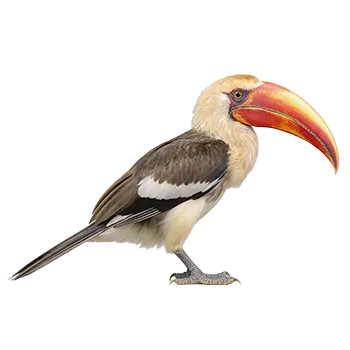

The Red-Billed Hornbill's elongated, decurved bill and its distinctive toss-and-swallow feeding method place specific demands on the design of food and water vessels. Standard clip-on parrot cups are poorly suited for this species because their narrow openings restrict the bill's range of motion and make it difficult for the bird to pick up, manipulate, and toss food items. Instead, wide, shallow dishes that allow the hornbill to see and access the full contents from above are the preferred style. Stainless steel or ceramic dishes with low rims and weighted or suction-cup bases prevent tipping when the bird inevitably strikes the edge during feeding.
Separate dishes should be provided for pellets, fresh produce, and live insects to prevent cross-contamination and allow the keeper to monitor consumption of each food category independently. Insect dishes benefit from smooth, steep-sided walls that prevent crickets and roaches from climbing out before the bird can eat them. Commercially available escape-proof feeder bowls designed for reptile keepers serve this purpose well and are available in sizes appropriate for hornbill use. The placement of food dishes should be at a height that corresponds with the bird's natural feeding posture, which for Red-Billed Hornbills includes both elevated platform feeding and ground-level foraging.
Water delivery systems must account for the hornbill's habit of dunking food items before swallowing. Any water dish used by a hornbill will become contaminated with food particles, insect fragments, and bill debris within hours, requiring at least twice-daily water changes to maintain hygienic conditions. Larger volume dishes dilute contaminants and stay cleaner longer, but they must still be changed frequently. Some keepers use automatic watering systems with nipple drinkers designed for poultry, which deliver clean water on demand without the contamination issue, though not all hornbills accept this style of dispenser and some training may be required.
A dedicated bathing dish, separate from the drinking water supply, gives the hornbill the opportunity to bathe without fouling its drinking water and allows the keeper to maintain clean water for hydration at all times. The bathing dish should be large enough for the bird to stand in comfortably and shallow enough that water reaches approximately halfway up the bird's legs. Heavy ceramic or stone dishes are stable enough to resist the vigorous splashing that hornbills produce during bathing. Placing the bath on a waterproof mat or tray simplifies cleanup and protects the surrounding substrate from excessive moisture.