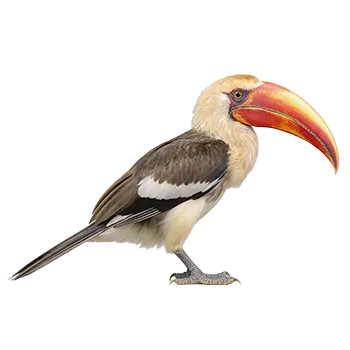

Why Enrichment Matters

The Red-Billed Hornbill is an intelligent, inquisitive species that devotes a large portion of its waking hours to foraging, exploring, and interacting with its environment. In the wild, these birds may cover significant distances in a single day, probing bark crevices for insects, flipping leaf litter on the ground, investigating fruiting trees, and engaging in social displays with conspecifics. A captive hornbill deprived of outlets for these deeply ingrained behaviors will develop stereotypic patterns such as repetitive pacing, excessive preening, feather damage, and aggression, all signs that the bird's psychological needs are not being met.

Enrichment is not a luxury or an afterthought in hornbill husbandry but a core requirement on par with proper nutrition and adequate housing. The goal of an enrichment program is to give the bird opportunities to perform species-typical behaviors at a frequency and intensity that approximates what it would experience in the wild. This means providing objects and challenges that reward manipulation, exploration, and problem-solving, and it means changing those offerings frequently enough that the bird never runs out of novel stimuli to investigate.

The consequences of inadequate enrichment extend beyond behavioral problems. Chronically bored or stressed hornbills often show suppressed immune function, poor feather condition, and reduced interest in food, all of which can cascade into serious health issues over time. Breeding pairs that lack sufficient enrichment may fail to initiate nesting behavior or may abandon eggs and chicks under the stress of an under-stimulating environment. Investing in a thoughtful, rotating enrichment program pays dividends in the bird's physical health, behavioral repertoire, and reproductive success.

Effective enrichment for a Red-Billed Hornbill must account for the species' particular style of interacting with objects. Unlike parrots, which manipulate items primarily with their feet and beak in close coordination, hornbills use their long, curved bill as a probe, lever, and tossing instrument. They pick up objects and fling them, hammer at surfaces with the bill tip, and probe into crevices and openings. Enrichment devices designed for parrots often fail for hornbills because they require the dexterous foot manipulation that hornbills do not naturally employ. The most successful hornbill enrichment targets the bill-dominant interaction style and rewards the bird's natural tossing and probing behaviors.

Foraging Toys and Puzzle Feeders

Foraging enrichment is the single most important category of toys for a Red-Billed Hornbill because it directly replaces the foraging effort the bird would invest in the wild. A wild hornbill may spend several hours each day searching for food, and collapsing that effort into a dish of pellets and a bowl of fruit leaves the bird with enormous amounts of unstructured time. Foraging toys extend feeding time, require cognitive engagement, and reward the bird with food items for solving mechanical challenges, creating a positive feedback loop that sustains the bird's interest throughout the day.

Simple foraging devices are the best starting point for hornbills new to enrichment. A shallow tray filled with clean river stones, shredded paper, or dried leaves with insects and pellet pieces scattered throughout forces the bird to sift and probe to find food, directly mimicking its natural leaf-litter foraging behavior. This requires no specialized equipment and can be assembled from materials available at any garden center. The difficulty can be adjusted by increasing the depth of the substrate or using larger concealing objects as the bird becomes more proficient.

Commercial puzzle feeders designed for parrots can be adapted for hornbill use with some modifications. Acrylic foraging wheels, sliding-door feeders, and stackable foraging towers all present food behind barriers that the bird must move or manipulate to access the reward. When selecting these products for a hornbill, choose models with large openings that accommodate the hornbill's bill rather than designs that require foot-held manipulation. Feeders that hang from chains or hooks and swing when touched are particularly engaging for hornbills, as the motion adds an additional challenge and sensory element to the foraging task.

DIY foraging devices often outperform commercial products for hornbills because they can be tailored to the species' specific interaction style. A length of bamboo tube sealed at both ends with crumpled paper and filled with insects creates a destructible puzzle that rewards persistent bill probing. Paper bags filled with shredded paper and food items can be hung from perches for the bird to tear open. Cardboard egg cartons with treats hidden in the individual cups and sealed shut with additional paper give the bird multiple compartments to investigate. The disposable nature of these items means they can be refreshed daily without significant cost, ensuring the bird encounters a genuinely new challenge each morning.

Destructible and Manipulable Toys

Red-Billed Hornbills have a strong drive to manipulate, dismantle, and destroy objects in their environment, and providing appropriate outlets for this behavior prevents the bird from redirecting its destructive energy toward perches, nest boxes, or aviary fittings. Destructible toys satisfy the bird's need to exert physical effort on objects and provide the rewarding sensory feedback of materials yielding to bill pressure. The ideal destructible toy is made from safe, non-toxic materials, presents enough resistance to sustain the bird's interest for a meaningful period, and is inexpensive enough to be replaced frequently.

Softwood blocks and slices are among the most effective destructible toys for hornbills. Untreated balsa, yucca, and soft pine blocks can be drilled with holes, strung on stainless steel wire or vegetable-tanned leather strips, and hung at bill height within the aviary. The bird will hammer, chip, and splinter the wood over the course of hours or days, depending on the hardness of the material and the bird's enthusiasm. Softwood toys sized for large parrots are readily available from avian product retailers and are generally safe for hornbill use, provided they do not contain dyed components, metal clips that could be swallowed, or string elements that pose an entanglement risk.

Woven and braided natural fiber toys provide a different tactile experience. Products made from palm leaf, seagrass, corn husk, or abaca fiber can be shredded and pulled apart by the hornbill's bill, scattering pieces across the enclosure floor and giving the bird the satisfaction of systematic dismantlement. These materials are digestible in small quantities and do not pose the impaction risk associated with synthetic fibers. Woven balls, mats, and hanging clusters of braided strips are all suitable forms, and they can be enhanced by tucking treats into the weave to combine destructive play with foraging motivation.

Pinecones and dried gourds offer free, renewable enrichment from the natural environment. Large pinecones with seeds still embedded between the scales invite the hornbill to probe and extract food, combining foraging and manipulation in a single item. Dried gourds with holes drilled in the shell and treats placed inside function as natural puzzle toys that the bird must work to empty. Both items should be sourced from pesticide-free environments, rinsed, and thoroughly dried before being placed in the aviary. Rotating these natural objects on a weekly basis keeps the bird engaged without creating monotony.

The key principle with destructible toys is that they are consumed by use and must be replenished regularly. A bare aviary stripped of enrichment items signals husbandry neglect and leads directly to the behavioral problems enrichment is designed to prevent. Maintaining a stock of ready-to-deploy destructible toys ensures the keeper can refresh the aviary quickly and consistently, even on busy days when elaborate preparation is not practical.

Motion and Sensory Toys

Toys that incorporate movement, sound, or visual novelty tap into the Red-Billed Hornbill's curiosity and startle-recovery response, providing stimulation that static objects cannot match. Hornbills in the wild constantly process a dynamic sensory environment filled with moving prey, shifting branches, other animals, and changing light patterns. Introducing controlled sensory variety into the captive environment helps replicate this dynamism and keeps the bird alert, responsive, and engaged.

Swinging and pendulum-style toys attract hornbill attention because the motion they produce in response to the bird's interaction creates an unpredictable feedback loop. A stainless steel ring or hardwood block suspended on a short chain from the aviary ceiling swings and rotates when the bird strikes or pushes it, and many hornbills will bat at such objects repeatedly, apparently fascinated by the resulting movement. Wiffle balls and lightweight plastic cat balls hung in mesh bags provide a similar interactive motion response and can be enhanced by placing a small bell or a few pebbles inside to add auditory feedback.

Mirrors and reflective surfaces generate strong behavioral responses in hornbills, though their use requires careful observation. Some individual birds enjoy interacting with their reflection, performing display behaviors and vocalizing as though engaging with a conspecific. Others become stressed or agitated by the perceived intruder and may show escalating aggression toward the mirror. A small, unbreakable mirror introduced for brief supervised sessions allows the keeper to gauge the individual bird's response before deciding whether to include reflective enrichment as a regular fixture. If the bird shows signs of stress, the mirror should be removed promptly.

Water features provide multi-sensory enrichment that many hornbills find irresistible. A shallow dish of water with a slow drip from a bottle or tubing creates gentle ripple patterns and a soft auditory backdrop that draws the bird in for investigation. Many Red-Billed Hornbills will bathe in shallow water features, dipping their heads and wings and flapping to distribute water across their plumage. A bathing opportunity that doubles as a visual and auditory enrichment element is an efficient use of aviary space and addresses multiple welfare needs simultaneously.

Social and Training-Based Enrichment

The Red-Billed Hornbill is a social species that forms strong pair bonds and engages in cooperative behaviors in the wild, including shared foraging, mutual preening, and coordinated nest defense. For singly housed birds or those whose primary social companion is a human keeper, interactive enrichment that involves direct engagement with the keeper fulfills a portion of the bird's social needs that no inanimate toy can replicate.

Target training is one of the most productive forms of social enrichment for captive hornbills. Using a simple target stick, usually a dowel with a colored tip, the keeper teaches the bird to touch the target on cue in exchange for a food reward. This basic behavior opens the door to more complex training sequences including station training, voluntary crate entry, voluntary weighing, and cooperative veterinary behaviors. Each training session provides cognitive stimulation, social interaction, and physical activity within a structured, predictable framework that reduces the bird's overall stress levels.

Training sessions for hornbills should be kept short, typically three to five minutes, and should end on a successful repetition to maintain the bird's motivation. Longer sessions risk mental fatigue and declining performance, which can frustrate both bird and trainer. Multiple short sessions distributed throughout the day are more effective than a single long session and provide regular social contact points that break up the bird's daily routine. The treats used during training should be high-value items such as waxworms, mealworms, or small fruit pieces that the bird does not receive at other times, preserving their reinforcing power.

For paired hornbills, enrichment devices that require cooperative interaction can strengthen the pair bond and provide social stimulation simultaneously. A foraging challenge positioned between the two birds' preferred perching areas encourages them to approach and work the device together. Nesting material provision during the breeding season doubles as enrichment, as both members of the pair engage actively in transporting and arranging materials. Observing the pair's natural social behaviors and providing opportunities to express them within the captive environment is one of the most underutilized forms of enrichment in hornbill keeping.

Enrichment Rotation and Scheduling

A static enrichment setup, no matter how elaborate at first introduction, loses its stimulating value as the bird habituates to every object in its environment. Habituation is a normal neurological process in which repeated exposure to a stimulus reduces the behavioral response it generates, and hornbills habituate relatively quickly due to their high baseline curiosity and intelligence. The solution is a structured rotation system that introduces, removes, and cycles enrichment items on a regular schedule, ensuring the bird encounters novel or semi-novel stimuli frequently enough to sustain engagement.

A practical rotation system divides the enrichment inventory into four or five groups, with one group deployed in the aviary at any given time and the remaining groups stored out of the bird's sight. Each group stays in the aviary for three to five days before being replaced by the next group in the cycle. By the time a group returns after cycling through all the others, enough time has passed that the items feel fresh again to the bird. This approach requires a modest initial investment in enrichment items but dramatically extends the effective life of each item and keeps the bird's environment perpetually interesting.

Scheduling enrichment delivery at different times of day adds temporal unpredictability that further prevents habituation. A foraging tray introduced at dawn one day and at midday the next disrupts the bird's expectations and encourages vigilant attention to its environment throughout the day. Some keepers use a randomized schedule generated by a simple calendar or app to eliminate unconscious patterns in their enrichment timing. The goal is for the bird to understand that interesting things can appear at any moment, which more closely approximates the unpredictability of the wild environment.

Record-keeping supports continuous improvement of the enrichment program. A simple log noting which items were deployed on which dates, and brief observations of the bird's response, duration of engagement, and any signs of fear or disinterest, builds a data set over time that reveals the bird's preferences, habituation rates, and the effectiveness of different enrichment categories. Items that consistently fail to generate engagement can be retired or modified, while items that produce sustained interest can be replicated in variations. This evidence-based approach transforms enrichment from guesswork into a targeted welfare intervention.

Seasonal variation in enrichment mirrors the ecological shifts that wild hornbills experience throughout the year. During the species' natural breeding season, nest-related enrichment items such as sealing materials, fibrous bedding, and cavity-inspection opportunities are particularly relevant. During the non-breeding season, emphasis can shift toward foraging complexity and physical activity devices. Aligning the enrichment program with the bird's natural behavioral calendar respects its evolved rhythms and provides the most contextually appropriate stimulation at each stage of the annual cycle.

Safety Considerations for Hornbill Toys

The physical characteristics of the Red-Billed Hornbill's bill and feeding behavior create a distinct set of safety hazards that differ from those typically associated with parrot toys. The hornbill's long, decurved bill can reach into openings and crevices that would be inaccessible to a shorter-billed species, and the bird's habit of tossing and flipping objects means items can be launched with surprising force. Every toy or enrichment device placed in a hornbill enclosure must be evaluated against these species-specific risks before the bird is allowed unsupervised access.

Small parts that could be swallowed are the primary concern. Hornbills do not chew food in the way parrots do but instead swallow items whole after positioning them at the tip of the bill and tossing them backward into the throat. Any toy component small enough to be swallowed, including beads, bells under a certain diameter, plastic connector pieces, and metal hardware, poses a choking or intestinal obstruction hazard. The threshold size for safe components in hornbill toys is approximately the diameter of the bird's gape, which for a Red-Billed Hornbill is roughly one inch. Anything smaller should be securely enclosed within a larger structure or eliminated from the design entirely.

Entanglement hazards require vigilant monitoring. String, twine, thin rope, fabric strips, and frayed fiber ends can loop around the bird's bill, toes, or wings and tighten under movement, potentially causing circulation loss, tissue damage, or panic-induced injury. Cotton and sisal rope toys popular with parrot owners are particularly dangerous for hornbills because the long bill can insert deeply into the weave and become trapped. Any fiber-based enrichment item should be inspected daily for fraying, and items that have begun to produce loose threads or loops should be replaced immediately.

Toxic materials are a concern both in commercial products and in DIY enrichment items. Toys containing zinc-plated hardware, lead-weighted components, or chromium-dyed leather introduce heavy metal exposure through oral contact. Dyes, paints, and adhesives used in some commercially available bird toys may contain volatile compounds that off-gas in enclosed spaces. Natural items sourced from the environment, such as branches, pinecones, and leaves, must come from species known to be non-toxic to birds and from areas free of pesticide application. A general safety rule is that if the material cannot be positively identified as bird-safe, it should not enter the enclosure.

Supervised introduction of new enrichment items is a best practice that allows the keeper to observe the bird's initial response and identify potential safety issues before they cause harm. Some hornbills react to unfamiliar objects with intense curiosity and immediate physical engagement, which can be rough enough to break poorly constructed items or dislodge components that seemed secure during initial inspection. Watching the bird interact with a new item for at least fifteen to twenty minutes on the first day provides a window to catch problems early and remove the item if necessary.

Always consult a qualified professional before making any health-related decisions. This content is provided for informational reference only and should not replace professional guidance specific to your animal.