
Nutritional Needs

Golden Pheasants (Chrysolophus pictus) are ground-foraging omnivores native to the mountainous forests of central and western China. In the wild, their diet consists of seeds, grain, berries, tender shoots, leaves, and a significant proportion of invertebrates including beetles, spiders, and various larvae. Replicating this dietary breadth in captivity is central to maintaining the species' legendary plumage color, supporting reproductive health, and preventing the metabolic disorders that commonly afflict poorly fed captive pheasants.

Protein requirements shift substantially across the year. During the breeding season, which typically runs from late March through July, Golden Pheasants need elevated protein levels in the range of twenty to twenty-eight percent of total diet to support egg production in hens and the metabolic demands of display behavior in cocks. Outside the breeding season, protein can drop to around fourteen to sixteen percent. Feeding a single unchanging diet year-round either over-stresses the kidneys during maintenance periods or under-delivers during breeding, making seasonal feed adjustment a cornerstone of responsible pheasant husbandry.

Calcium and phosphorus balance matters enormously for this species, particularly for laying hens. A ratio of roughly two parts calcium to one part phosphorus supports eggshell formation without disrupting the absorption of other minerals. Cocks have lower calcium requirements but still benefit from adequate mineral availability for feather development and skeletal maintenance. Vitamin D3 plays a critical supporting role in calcium metabolism, and birds housed in aviaries with limited direct sunlight exposure may need dietary D3 supplementation to avoid deficiency.

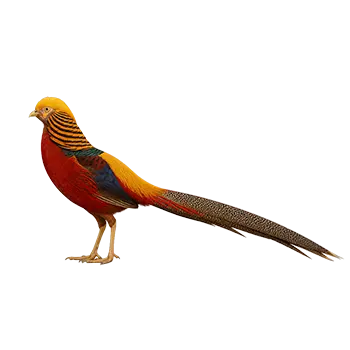
Carotenoid intake directly influences the brilliance of the Golden Pheasant's signature plumage. The reds, oranges, and yellows that define the male's crest, rump, and body feathering are pigment-dependent, and birds fed carotenoid-poor diets will produce noticeably duller feathers over successive molts. Natural carotenoid sources such as marigold petals, spirulina, red pepper, and dark leafy greens should feature in the diet regularly. Some commercial game bird feeds include carotenoid supplements, but whole-food sources provide a broader spectrum of pigment compounds and are generally better utilized by the bird's metabolism.

What to Look For

The backbone of a captive Golden Pheasant's diet should be a commercially formulated game bird feed rather than a generic wild bird seed mix or a parrot pellet. Game bird feeds are specifically engineered for gallinaceous species and account for their distinct amino acid profiles, energy requirements, and digestive physiology. When evaluating commercial feeds, check the guaranteed analysis for protein content that matches the bird's current seasonal needs, and look for feeds where whole grains, soybean meal, or other recognizable protein sources lead the ingredient list.

Grain quality is an important differentiator among commercial feeds. Feeds built on cracked corn alone provide energy but lack the amino acid diversity that Golden Pheasants need. Superior formulations incorporate wheat, milo, oats, and millet alongside corn, creating a more complete amino acid profile without requiring as much supplemental protein from animal-derived ingredients. The presence of ground limestone or oyster shell in the feed indicates attention to calcium content, which is a positive sign.

Medication status is a critical label detail. Many commercial game bird feeds are medicated with amprolium or other coccidiostats intended for commercial poultry or game bird operations raising birds for release. Medicated feeds are generally unnecessary for ornamental Golden Pheasants kept in well-maintained aviaries and can mask early signs of parasitic infection that would otherwise prompt appropriate veterinary treatment. Unless a veterinarian specifically recommends a medicated feed for a documented coccidiosis problem, choose unmedicated formulations.

Feed form matters for Golden Pheasants. These birds are natural ground feeders that pick individual items from the forest floor, and they tend to interact best with crumbled or small-pelleted feeds rather than mash. Mash feeds generate excessive dust, lead to selective feeding where birds pick out preferred particles and leave the rest, and waste more easily in outdoor aviaries. Crumbles sized between two and four millimeters are generally the most efficient and best-accepted form for adult Golden Pheasants.

Recommended Feed Types

Game bird maintenance feeds with protein levels around fourteen to sixteen percent are appropriate for the non-breeding months, roughly August through February. These feeds provide adequate nutrition for feather maintenance during and after the autumn molt without the excess protein that can stress the renal system over extended periods. A quality maintenance feed should also contain balanced vitamin and mineral premixes, including vitamins A, D3, E, and the B-complex group.

Game bird breeder feeds step up the protein to twenty to twenty-eight percent and increase calcium content to support egg formation. Transitioning to a breeder feed four to six weeks before the anticipated start of the breeding season gives the hens time to build calcium reserves and adjust metabolically. Some keepers blend breeder and maintenance feeds during the transition rather than switching abruptly, which can reduce the digestive adjustment period.

Game bird starter feeds, formulated at twenty-four to thirty percent protein in very fine crumble form, are essential for Golden Pheasant chicks during the first six to eight weeks of life. Chick mortality in captive pheasants is often linked to inadequate starter nutrition, so this is not a place to economize. After the starter phase, a grower feed at around twenty percent protein bridges the gap between starter and maintenance rations until the birds reach maturity.

Some specialty aviculture suppliers produce pheasant-specific feeds that account for the particular nutritional profile of ornamental pheasant species as distinct from ring-necked pheasants raised for sport. These feeds typically include enhanced carotenoid levels and adjusted mineral ratios. While not universally available, they represent the most tailored commercial option for serious Golden Pheasant keepers and are worth sourcing if accessible in your region.

Fresh Foods and Forage

Fresh foods and natural forage materials constitute an essential component of the Golden Pheasant diet, providing nutritional variety, behavioral enrichment, and micronutrients that commercial feeds cannot fully replicate. The daily fresh food offering should represent roughly twenty to thirty percent of total intake by volume, with the balance coming from the formulated base diet.

Greens form the largest category of appropriate fresh foods. Romaine lettuce, dandelion greens, chickweed, clover, kale, and spinach are all readily accepted by most Golden Pheasants. Dandelion and chickweed are particularly valuable because they can be grown or foraged easily and are nutritionally dense. Spinach should be offered in moderation due to its oxalic acid content, which can bind calcium and reduce its absorption. Rotating green offerings daily encourages a broad intake pattern and prevents fixation on a single type.

Fruits and vegetables beyond greens add important diversity. Finely chopped carrots, peas, corn kernels, blueberries, grapes cut in half, chopped apple, and diced melon are generally well-received. Orange and red vegetables such as bell peppers, sweet potato, and butternut squash provide beta-carotene and other carotenoids that support plumage pigmentation. Fruits should be offered in smaller quantities than vegetables due to their sugar content, and all fresh foods should be removed from the aviary before they spoil, typically within a few hours in warm weather.

Live insects and invertebrates represent the most natural protein supplement available. Mealworms, waxworms, crickets, and earthworms are all excellent choices that also provide significant behavioral enrichment, as the birds actively hunt and chase live prey. During the breeding season, increasing the live food offering supports the elevated protein demands of egg production and chick rearing. Dried insects are a convenient alternative when live sources are unavailable, though they lack the enrichment value of live prey.

Treats and Supplements

Treats for Golden Pheasants should serve a functional role beyond simple indulgence. Scatter-fed treats encourage natural foraging behavior, and selectively chosen treats can deliver targeted nutritional benefits. Whole sunflower seeds, safflower seeds, and small amounts of raw unsalted peanuts are high-value treats that most Golden Pheasants find irresistible. Because of their fat density, these items should comprise no more than five percent of the total daily diet to avoid obesity, which reduces breeding success and shortens lifespan.

Grit is a dietary essential rather than a supplement in the traditional sense. As gallinaceous birds, Golden Pheasants possess a muscular gizzard that grinds food using small stones and grit particles. Without access to appropriately sized insoluble grit, the birds cannot mechanically process whole grains and seeds efficiently, leading to poor nutrient extraction and digestive discomfort. Commercial poultry grit in the appropriate size grade should be available at all times in a separate dish. Soluble grit in the form of crushed oyster shell serves the dual purpose of providing calcium and aiding digestion.

Mineral supplements beyond what the base feed provides may be warranted in certain situations. Breeding hens benefit from supplemental calcium in the form of crushed oyster shell or a liquid calcium product added to the water supply during the laying period. A broad-spectrum avian mineral supplement can be offered free-choice in a separate dish, allowing birds to self-regulate their mineral intake based on physiological need.

Vitamin supplementation should be approached conservatively. A well-formulated game bird feed combined with regular fresh food offerings generally meets all vitamin requirements. However, birds recovering from illness, those kept in low-light conditions without adequate UV exposure, or birds on a limited diet may benefit from a water-soluble avian multivitamin administered periodically. Over-supplementation, particularly of fat-soluble vitamins A and D, carries a genuine risk of toxicity and should be avoided unless directed by an avian veterinarian.

Foods to Avoid

Several common food items are harmful or outright toxic to Golden Pheasants and must be excluded from the diet entirely. Avocado tops the list of dangerous foods, as persin, the toxin present throughout the fruit, is lethal to birds even in small quantities. All parts of the avocado plant, including the flesh, skin, pit, and leaves, must be kept away from the aviary. Chocolate and anything containing caffeine are similarly toxic, causing cardiac and neurological symptoms that can be fatal.

Raw dried beans contain phytohaemagglutinin, a lectin that is highly toxic to birds. Kidney beans are the most dangerous, but all raw legumes pose some risk. Thorough cooking destroys the lectin and renders beans safe, so cooked beans can be offered as part of the fresh food rotation, but uncooked beans must never be accessible to the birds. This is particularly relevant for keepers who store dry feed ingredients near the aviary.

Onions and garlic in any form, whether raw, cooked, or powdered, contain sulfur compounds that damage avian red blood cells and can lead to hemolytic anemia with repeated exposure. Even small amounts incorporated into table scraps or prepared foods can accumulate and cause harm over time. Rhubarb leaves contain oxalic acid at concentrations toxic to birds, and the seeds and pits of stone fruits and apples contain amygdalin, a cyanide precursor that should be removed before offering these fruits.

Processed human foods present a broad category of risk. Salty snacks, sugary foods, fried items, and anything containing artificial preservatives or flavor enhancers are inappropriate for pheasants. Bread and pasta, while not toxic, provide empty calories with minimal nutritional value and can contribute to crop impaction if consumed in quantity. Dairy products are poorly tolerated by birds, which lack the enzyme lactase, and can cause digestive upset. The safest approach is to limit the diet to commercial game bird feeds, fresh produce, live insects, and purpose-made avian treats.

Feeding Schedule and Practices

Golden Pheasants thrive on a predictable feeding routine that aligns with their natural activity patterns. These birds are most active during the early morning and late afternoon, and feeding during these windows encourages natural behavior and maximizes food intake before the overnight fasting period. A morning offering of fresh foods alongside a replenished base diet, followed by a late afternoon scatter-feed of whole grains or treat items, provides a rhythm that supports both nutrition and behavioral health.

The base diet of game bird feed should be available continuously in a sturdy, covered feeder that protects the food from rain, ground moisture, and contamination by wild bird droppings. Covered feeders also reduce waste from the birds billing food out of open dishes, a common behavior in pheasants that can result in significant feed loss. Positioning the feeder in a sheltered area of the aviary, elevated slightly off the ground on a platform or low table, helps keep the feed clean and dry.

Fresh foods should be offered in a separate shallow dish placed at ground level, reflecting the Golden Pheasant's natural ground-foraging habit. Remove uneaten fresh food within two to four hours to prevent bacterial growth and insect attraction, particularly during warm weather. In cold weather, fresh food can remain somewhat longer, but should still be cleared before the end of the day. Some keepers scatter a portion of the fresh food offering directly on clean ground or among leaf litter to encourage active foraging rather than passive dish feeding.

Water management is as important as food selection. Clean, fresh water must be available at all times in a container that the birds cannot easily foul with substrate or droppings. Automatic poultry waterers with nipple or cup dispensers minimize contamination and reduce the labor of daily water changes. During freezing weather, heated waterers or frequent water replacement is necessary to ensure continuous access. Water containers should be cleaned and disinfected at least weekly to prevent biofilm accumulation and pathogen growth.

Always consult a qualified professional before making any health-related decisions. This content is provided for informational reference only and should not replace professional guidance specific to your animal.