
Understanding Enrichment Needs

Enrichment for Golden Pheasants differs fundamentally from enrichment for companion parrots and other hook-billed birds. Parrots are highly manipulative birds that use their feet and beaks as tools to interact with puzzles, swings, and destructible toys. Golden Pheasants are gallinaceous ground birds whose behavioral repertoire centers on scratching and pecking at substrate, foraging through leaf litter and vegetation, dust-bathing, exploring their environment on foot, and engaging in complex social and courtship displays. Effective enrichment for this species targets these natural behaviors rather than attempting to impose parrot-style interaction patterns.

In the wild, Golden Pheasants spend the majority of their waking hours foraging. They scratch through leaf litter, turn over debris, and pick individual food items from the ground and low vegetation with remarkable selectivity. This foraging behavior serves not only nutritional needs but also critical psychological functions, occupying the bird's attention, providing decision-making opportunities, and creating a sense of agency within its environment. In captivity, where food is typically offered in a dish, the foraging drive has no outlet unless the keeper deliberately creates opportunities for it.

Boredom and understimulation in captive pheasants manifest differently than in parrots. Rather than feather plucking or screaming, understimulated pheasants tend to develop stereotypic pacing along aviary walls, excessive nervousness and startle responses, aggression toward enclosure mates, and a general dullness in behavior and appearance. Males may stop performing display behaviors, and hens may show reduced reproductive output. These behavioral indicators often precede physical health problems and should be treated as early warning signs that the bird's environmental needs are not being met.

The most effective enrichment programs for Golden Pheasants are built on variety and unpredictability. Rotating enrichment items, changing the layout of visual barriers and cover within the aviary, and varying the presentation of food prevent the birds from habituating to their environment and maintain the exploratory behavior that characterizes a psychologically healthy pheasant.

Foraging Enrichment

Foraging enrichment is the single most impactful category of environmental enhancement for captive Golden Pheasants. Scatter feeding, where portions of the daily grain ration or treat items are broadcast across the aviary floor rather than placed in a dish, transforms a passive eating event into an active foraging session that can occupy the birds for hours. Scattering feed into clean leaf litter, through mulch, or among rocks and logs further increases the time and effort required to locate each morsel, closely approximating the wild foraging experience.

Leaf litter itself serves as one of the simplest and most effective foraging substrates. Collecting dry, pesticide-free leaves from deciduous trees and spreading them several inches deep across sections of the aviary floor gives the birds a medium to scratch through and explore. As the litter decomposes, it attracts small invertebrates that provide additional foraging incentive. Replenishing the leaf litter regularly maintains its depth and freshness. Oak, beech, maple, and birch leaves are all suitable choices, while leaves from walnut trees should be avoided due to their juglone content, which can be irritating to some bird species.

Commercial foraging devices designed for poultry and game birds can be adapted for Golden Pheasant use. Treat balls and foraging cylinders that dispense food as the bird pecks or pushes them encourage problem-solving and extended foraging. Hanging vegetable dispensers, where a head of lettuce or a bundle of greens is suspended from a chain or placed in a wire basket at ground level, encourage the birds to work for their fresh food rather than consuming it passively from a dish. Kabob-style skewers mounted at bird height can hold chunks of fruit and vegetable that the birds peck at over time.

Seasonal foraging opportunities add natural variety to the enrichment calendar. In spring, scattering sprouted seeds or placing sod squares in the aviary provides a living foraging substrate. Summer allows the introduction of edible plants such as nasturtiums, sunflowers, and clover grown in pots and placed in the enclosure for the birds to browse. Autumn brings a natural supply of fallen leaves and seed heads that can be gathered and distributed. Even winter offers options, as hay or straw bales placed in the aviary encourage scratching and exploration while providing insulating windbreaks.

Environmental Enrichment

Environmental enrichment addresses the physical complexity of the aviary space itself. Golden Pheasants feel most secure and exhibit the richest behavioral repertoire in environments that offer a mosaic of open areas, dense cover, visual barriers, and elevated vantage points. A monotonous, featureless enclosure produces monotonous, featureless behavior. Creating zones within the aviary that serve different behavioral functions transforms the space from a holding pen into a functioning habitat.

Visual barriers are among the most important environmental enrichment elements for Golden Pheasants. These can be constructed from bundles of brush or branches wired to aviary walls or freestanding frames, potted shrubs or ornamental grasses placed on the aviary floor, burlap or shade cloth panels stretched between posts, or stacks of logs and large rocks arranged to break sight lines. Visual barriers serve multiple functions: they reduce aggression by allowing subordinate birds to move out of the dominant bird's line of sight, they provide security for nervous individuals, and they create distinct microhabitats within the enclosure that encourage exploration.

Natural perching and climbing structures enrich the three-dimensional space of the aviary. While Golden Pheasants are primarily ground-dwelling, they do roost off the ground at night and will use low branches and elevated platforms during the day for observation and rest. Placing natural branches with forks and varying diameters at different heights encourages the birds to navigate vertical space. Fallen logs positioned on the aviary floor provide both perching surfaces and visual barriers, and the bark and crevices attract insects that the birds will hunt.

Planted areas within the aviary offer the most naturalistic form of environmental enrichment, though they require ongoing maintenance. Dense plantings of non-toxic shrubs such as privet, boxwood, or juniper provide cover and nesting sites. Ornamental grasses such as miscanthus or switchgrass grow quickly, tolerate bird traffic moderately well, and create the kind of dense undergrowth that Golden Pheasants naturally gravitate toward. Containerized plants can be rotated in and out of the aviary, allowing damaged plants to recover while fresh ones are introduced.

Changing the layout of the aviary interior on a periodic basis prevents habituation and stimulates renewed exploration. Moving visual barriers to new positions, rearranging logs and branches, introducing a new planted container, or placing novel objects such as a shallow pan of clean sand for bathing in a different location every few weeks keeps the environment fresh. This does not require major renovations; even minor changes are registered by the birds and provoke investigative behavior.

Dust Bathing and Water Features

Dust bathing is a critical maintenance behavior for Golden Pheasants that serves both physical and behavioral health functions. During a dust bath, the bird works fine substrate material through its feathers using vigorous wriggling and flicking motions. This process helps control ectoparasites such as feather lice and mites, absorbs excess oil from the plumage, and removes dead skin and feather debris. Birds deprived of dust-bathing opportunities develop deteriorating feather condition over time and may show signs of skin irritation from uncontrolled parasite loads.

Providing a dedicated dust-bathing area within the aviary ensures that the birds always have access to an appropriate substrate for this behavior. A shallow container such as a wooden tray, a plastic mortar tub, or a section of the aviary floor bordered by logs or landscape timbers and filled with fine sand, dry soil, or a mixture of sand and food-grade diatomaceous earth makes an effective bathing station. The substrate should be fine enough to work through feathers easily but not so powdery that it creates a persistent dust cloud that could irritate respiratory membranes. A depth of three to four inches allows the birds to settle in comfortably.

Maintaining the dust bath area is straightforward but essential. The substrate should be raked to remove droppings daily and topped off with fresh material as it becomes compacted or depleted. In wet weather, the bathing area needs protection from rain, either by positioning it under a covered section of the aviary or by covering it with a removable lid. Wet substrate is useless for dust bathing and can harbor pathogenic organisms. Some keepers maintain two bathing stations and alternate them, allowing one to dry while the other is in use.

Shallow water features add another dimension of enrichment and serve practical purposes as well. A low-profile basin, terracotta saucer, or shallow pond liner sunk into the aviary floor and filled with an inch or two of clean water provides a wading and drinking opportunity that many Golden Pheasants readily use, particularly in warm weather. Moving water from a small recirculating pump or dripper attracts the birds' attention and encourages drinking. Any water feature must be kept scrupulously clean to prevent becoming a breeding site for mosquitoes or a source of bacterial contamination, and it should be shallow enough that birds cannot submerge beyond their legs.

Social and Sensory Enrichment

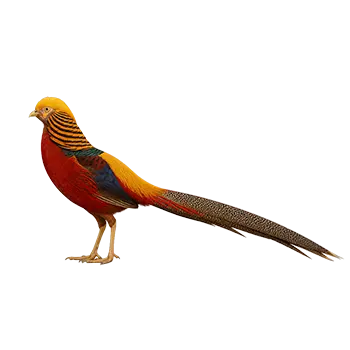
Golden Pheasants are social birds whose behavioral repertoire is most fully expressed in the presence of conspecifics. The male's elaborate courtship display, which involves fanning the golden crest, spreading the cape of orange and black barred feathers, and performing a ritualized lateral dance around the hen, is one of the most spectacular sights in aviculture and is only performed in a social context. Housing Golden Pheasants in pairs or small groups where space permits is itself a form of enrichment that stimulates natural social behaviors including courtship, pair bonding, hierarchical negotiation, and cooperative vigilance.

Visual contact with other bird species housed in adjacent aviaries can provide social stimulation without the risks of mixed-species housing. Golden Pheasants are generally observant of activity in neighboring enclosures and will respond to alarm calls from other species, which exercises their vigilance and communication behaviors. However, proximity to aggressive or very active species can also be a source of chronic stress, so the temperament of neighboring birds should be considered when positioning aviaries.

Auditory enrichment, including natural ambient sounds, can subtly enhance the environmental quality of an aviary. Golden Pheasants are attentive to environmental sounds and respond to birdsong, wind, and rainfall patterns. In aviaries located in quiet settings away from natural bird populations, some keepers play recordings of forest ambiance or birdsong at moderate volume during daylight hours. The effectiveness of recorded sound as enrichment is debated, but anecdotal reports suggest that it can increase activity levels and vocalizations in some individuals.

Novel objects introduced periodically stimulate investigation and exploration. Unlike parrots, Golden Pheasants do not manipulate objects with their feet, but they will approach, inspect, and peck at unfamiliar items placed in their enclosure. Small mirrors positioned at ground level, colorful but non-toxic garden ornaments, bundles of dried herbs or flowers, and piles of clean pinecones all serve as novel objects that provoke curiosity without posing safety risks. Each novel item should be observed for the first few minutes after introduction to ensure no bird is excessively frightened by it, and items should be removed and rotated rather than left permanently to lose their novelty.

Seasonal and Breeding Enrichment

The annual cycle of the Golden Pheasant creates natural opportunities for targeted enrichment that aligns with the birds' changing behavioral priorities. Matching enrichment strategies to the seasonal behavioral profile ensures that the birds' most pressing drives are addressed at the appropriate time, rather than applying a static enrichment program year-round.

During the breeding season from late March through July, enrichment should focus on facilitating natural reproductive behaviors. Providing multiple potential nesting sites gives the hen the opportunity to select the location that feels most secure, which increases the likelihood of successful laying and incubation. Nesting shelters can be constructed from wooden half-barrels, dense shrub plantings, bundles of brush arranged to create small alcoves, or commercial nesting boxes placed in secluded corners of the aviary. Offering a variety of nesting materials such as dried grass, straw, pine needles, and fallen leaves allows the hen to construct her nest according to her own preferences.

Male display behavior during breeding season is enriched by ensuring adequate open floor space where the cock can perform his courtship dance without obstruction. The full Golden Pheasant display requires room for the male to circle the hen while spreading his cape and crest, and aviaries that are too cluttered or narrow suppress this behavior. Maintaining clear sight lines between the cock and hen during the courtship period while also providing retreat areas for the hen when she is not receptive balances the social dynamics of breeding pairs.

The post-breeding molt from late summer through autumn is a physiologically demanding period when enrichment should shift toward reducing stress and supporting feather regrowth. Minimizing disturbance, avoiding unnecessary changes to the aviary layout, and increasing access to protein-rich foods and quiet resting areas supports the birds through this vulnerable phase. Dust bathing access becomes particularly important during the molt, as it helps maintain the condition of incoming feathers and the skin beneath them.

Winter enrichment focuses on maintaining activity levels during shorter days and colder temperatures. Cold-hardy Golden Pheasants remain active year-round, but reduced daylight and inclement weather naturally restrict their activity period. Scatter feeding becomes more important during winter because it extends the time birds spend foraging during the limited daylight hours. Providing hay bales, straw-stuffed baskets, or piles of dried leaves inside the sheltered area of the aviary gives the birds foraging and exploration opportunities even when conditions outdoors are inhospitable.

Safety Considerations

All enrichment items introduced into a Golden Pheasant aviary must be evaluated for safety before use. The primary hazards are ingestion of toxic materials, entanglement, physical injury from sharp edges or unstable structures, and introduction of pathogens or parasites. A thoughtful approach to enrichment safety prevents well-intentioned additions from becoming sources of harm.

Material toxicity is the first screening criterion. Any wood, plant, or manufactured item placed in the aviary must be free of toxic substances. Treated lumber, painted surfaces, pressure-treated wood, and items coated with varnish or lacquer are all potentially hazardous because birds peck at and ingest fragments of everything in their environment. Natural wood from non-toxic species such as apple, willow, oak, and maple is safe, while wood from cherry, yew, and red maple should be avoided due to known toxicity concerns. Commercially manufactured poultry and game bird enrichment products are generally formulated with avian safety in mind, but items marketed for other species should be evaluated individually.

Entanglement risk requires particular attention with ground-dwelling birds. Loose strings, frayed rope, thin wire, and stretchy mesh can trap feet, toes, and legs, leading to injury or restricted circulation that causes tissue death. Any rope or fiber-based enrichment should be examined regularly for fraying, and items that are showing wear should be removed immediately. Sisal and jute break down relatively safely compared to synthetic fibers, which can tighten around a limb and are almost invisible once embedded in feathers.

Structural stability of enrichment items is important because pheasants are easily startled and react with sudden, explosive flight. An enrichment item that topples when a bird bumps it during a startle response adds to the chaos and can cause physical injury. Heavy items should be positioned where they cannot fall on birds, tall items should be anchored or braced, and anything suspended from the aviary roof should be attached with hardware rather than friction knots that could fail under sudden load.

Hygiene considerations govern how long enrichment items remain in the aviary and how they are maintained. Natural materials such as leaf litter, branches, and hay decompose and accumulate pathogens over time. Rotating natural enrichment regularly, removing items that have become heavily soiled, and disinfecting durable items such as ceramic dishes, plastic containers, and metal feeders between uses prevents the enrichment program from becoming a vector for disease. Any enrichment item sourced from outdoors should be inspected for parasites, insect pests, and fungal contamination before being introduced to the aviary.

Always consult a qualified professional before making any health-related decisions. This content is provided for informational reference only and should not replace professional guidance specific to your animal.