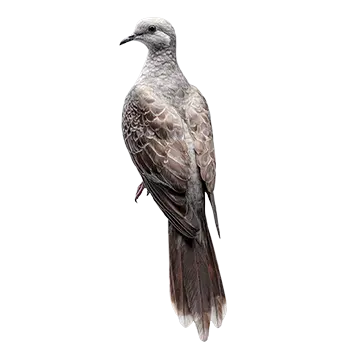

The Cape Dove, also known as the Namaqua Dove, is one of the smallest members of the dove family and a committed granivore in its native sub-Saharan habitat. In the wild, this species feeds almost exclusively on tiny grass seeds and weed seeds gathered from the ground, supplementing occasionally with small insects during the breeding season when protein demands increase. This dietary profile sets it apart from larger doves and pigeons that may consume a broader range of plant material. Any feeding strategy in captivity must respect this granivorous foundation while compensating for the reduced diversity and foraging opportunity that captive life imposes.
Because of its small body size, the Cape Dove has a relatively fast metabolism and limited fat reserves compared to heavier dove species. This means it cannot tolerate prolonged periods without food as well as a Ringneck Dove or a Diamond Dove might. Consistent access to a quality seed base is not optional for this species; it is a physiological necessity. Even a twelve-hour gap during waking hours without food access can place metabolic stress on a healthy adult Cape Dove, and the effects are amplified in juveniles, molting birds, or breeding hens.
Calcium and phosphorus balance is a key nutritional consideration for captive Cape Doves, particularly for breeding pairs. Hens producing eggs require a significant calcium reservoir, and a seed-only diet rarely delivers adequate calcium without supplementation. Phosphorus is generally abundant in seeds, so the greater challenge is ensuring that calcium intake keeps pace. An imbalanced calcium-to-phosphorus ratio over time can result in soft-shelled eggs, egg binding, and skeletal weakness.
Vitamin D3 plays a critical role in calcium metabolism for all birds, and Cape Doves are no exception. In the wild, these doves spend long hours in direct sunlight on open ground, synthesizing vitamin D3 through the uropygial gland and skin exposure. Captive birds kept indoors often receive insufficient ultraviolet light, which limits their ability to metabolize calcium regardless of how much is present in the diet. This interplay between lighting and nutrition is one of the most underappreciated aspects of Cape Dove husbandry and directly influences food and supplement choices.