Cape Dove Species Guide - Furry Critter Network

Cape Dove

Quick Facts

🔬 Scientific Name
Oena capensis
📊 Care Level
Moderate
😊 Temperament
Gentle, Peaceful
📏 Adult Size
7-9 inches (including tail)
⏱️ Lifespan
10-15 years
🔊 Noise Level
Quiet
🗣️ Talking Ability
None
🍽️ Diet Type
Seed-based
🌍 Origin
Sub-Saharan Africa, Arabian Peninsula, Madagascar
🏠 Min Cage Size
36x24x36 inches
📐 Size
Small

Cape Dove - Names & Recognition

The Cape Dove carries several common names that reflect its geographic origins and distinctive appearance. Most widely known as the Namaqua Dove, this name honors the Namaqualand region of southern Africa, a unique dry area where these birds thrive. The species was first described scientifically by Carl Linnaeus in 1766, who gave it the binomial name Columba capensis, meaning \"dove of the Cape,\" referring to the Cape of Good Hope in South Africa where the type specimen was collected.

Today, the species is classified in its own monotypic genus, Oena, introduced by English naturalist William Swainson in 1837. The genus name derives from the Ancient Greek word \"oinas,\" meaning pigeon. Alternative common names include Masked Dove, referencing the male's striking black facial markings, and Long-tailed Dove, describing the bird's most distinctive physical feature. In various regions, it may also be called the Long-tailed Namaqua Dove or simply the Namaqua.

The species has two recognized subspecies. The nominate subspecies, O. c. capensis, ranges across most of Sub-Saharan Africa, the Arabian Peninsula, southern Israel, southwestern Jordan, and the island of Socotra. The second subspecies, O. c. aliena, is endemic to Madagascar and shows subtle differences including darker crowns and upperparts, whiter necks and breasts, and narrower facial markings. Regional language names include Namakwaduif in Afrikaans, Kaptäubchen in German, Tourtelette masquée in French, and Tortolita rabilarga in Spanish, all reflecting the bird's widespread recognition across multiple cultures and continents.

Cape Dove Physical Description

The Cape Dove is a diminutive member of the pigeon family, comparable in size to a large sparrow, measuring approximately 7 to 9 inches in total length, with much of this length attributed to its remarkably long, graduated tail. This small dove typically weighs between 1.2 to 1.4 ounces, making it one of the lighter dove species in aviculture. The Cape Dove's most striking feature is its pronounced sexual dimorphism, making males and females easily distinguishable at a glance.

Adult males present a stunning appearance with a bold black facial mask that covers the forehead, lores, cheeks, throat, and upper breast, creating a dramatic contrast against the bird's predominantly grey plumage. The beak is distinctively bi-colored, featuring a bright yellow tip with a vibrant red or purplish-orange base. The head and nape are soft grey, transitioning to brownish-grey on the back and wings. The underparts shade from grey on the chest to white or pale cream on the belly and undertail coverts. In flight, the wings reveal beautiful chestnut or rufous primary feathers that flash spectacularly against the otherwise muted palette.

The most characteristic feature shared by both sexes is the elongated black tail with white outer tail feathers visible during flight. The lower back and rump are marked with distinctive white and darker contrasting bands that are particularly noticeable when the bird takes flight. Females lack the dramatic black facial markings of males, instead presenting a plain grey-brown head that gives them a much more subdued appearance. Their beaks are dark grey or blackish with a red base, and their overall plumage is slightly paler and less contrasted than the male's. Female tails are notably shorter than those of males, though still proportionally long for the bird's body size.

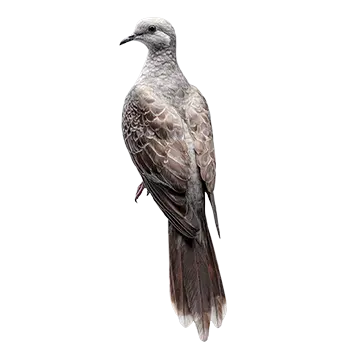
Juvenile Cape Doves resemble adult females in their lack of black facial markings but are distinguished by heavy buff-colored spotting and dark brown barring across their wings and shoulders. Young males begin developing the characteristic black chest feathers at around three months of age, gradually acquiring the full adult plumage over several months. The bird's eye color is dark brown in both sexes, surrounded by a thin ring of bare skin that appears red in males and grey in females.

Affection Level
Cape Doves are moderately affectionate birds that become tame with patient handling. Single birds bond well with their owners and crave attention, though they are not as demonstratively affectionate as parrots. They appreciate gentle interaction and become comfortable perching near their caretakers once trust is established.
Sociability
These doves thrive in social settings and should not be kept in isolation. They do well in pairs or small colonies with other gentle species like finches and waxbills. Cape Doves need companionship and will suffer if kept alone without adequate human interaction and enrichment throughout the day.
Vocalization
Cape Doves are exceptionally quiet birds, making them ideal for apartments and noise-sensitive environments. Their soft cooing is pleasant and unobtrusive, rarely causing disturbance. They produce gentle sounds during courtship but are among the quietest dove species available in aviculture.
Intelligence
Cape Doves demonstrate basic intelligence typical of small dove species. They recognize their caretakers, learn feeding routines, and can navigate their environment effectively. While not problem-solvers like parrots, they show awareness of their surroundings and can be conditioned to respond to basic cues with patience.
Exercise Needs
These active ground-dwelling birds require substantial flight space and daily exercise. They are fast, agile flyers that need room to move horizontally rather than vertically. Daily out-of-cage flight time in a bird-proofed area or a spacious aviary is essential for maintaining physical health and natural behaviors.
Maintenance Level
Cape Doves require moderate maintenance with specific needs for warm, dry conditions. They need daily cage cleaning due to ground-feeding habits, regular provision of fresh seed and greens, and attention to temperature requirements. In cold or wet climates, they demand additional heating and shelter considerations.
Trainability
Cape Doves have limited trainability compared to parrots. They can become hand-tame and learn to step up with patient training, but are not suitable for trick training. Their nervous nature requires gentle, consistent handling to build trust. They respond best to routine-based training approaches.
Independence
Cape Doves balance independence with social needs. They can entertain themselves foraging and exploring for periods but require companionship to thrive. Pairs become more self-sufficient but still benefit from human interaction. Single birds need regular attention to prevent loneliness and behavioral issues.

Natural Habitat & Range

The Cape Dove enjoys one of the most extensive ranges of any African dove species, occurring throughout most of Sub-Saharan Africa from Senegal and Ethiopia in the north to South Africa in the south. The species has also expanded beyond the African continent, establishing populations in the Arabian Peninsula, including Yemen, Saudi Arabia, and Oman, as well as in southern Israel and southwestern Jordan. A distinct subspecies inhabits the island of Madagascar, and vagrant individuals have been recorded as far afield as Pakistan and India, demonstrating the species' remarkable dispersal capabilities.

In the wild, Cape Doves show a strong preference for hot, dry, semi-arid environments, particularly favoring open thornveld and scrubland with scattered acacia trees and bushes. They thrive in areas with short thorn scrub vegetation interspersed with open sandy or bare ground where they can forage effectively. The species generally avoids dense forests and very wet tropical regions, instead inhabiting savanna woodlands, Karoo shrublands, dry grasslands with scattered trees, and semi-desert areas. They are most commonly found from sea level to approximately 2,000 meters elevation, though in some regions they occur at higher altitudes.

Interestingly, Cape Doves have adapted well to human-modified landscapes and are frequently encountered around farmsteads, rural homesteads, and the edges of human settlements in arid and semi-arid regions, though they remain less associated with urban environments than many other dove species. The provision of artificial watering points across their range has likely benefited the species, allowing them to exploit drier habitats. Recent evidence suggests that Cape Doves are expanding their range in certain areas, including southern Morocco where breeding has only recently been confirmed, parts of southern Africa, and increasingly in Middle Eastern countries.

In their natural habitat, Cape Doves are highly terrestrial, spending most of their time foraging on the ground for the tiny seeds of grasses, sedges, and weeds that comprise their diet. They are remarkable flyers, capable of extremely rapid, direct flight with clipped wing beats, staying low to the ground when disturbed. When flushed, they produce a distinctive wing noise and display their characteristic white rump bands and long tail. While typically encountered singly or in pairs during the breeding season, Cape Doves can congregate in large numbers at reliable water sources, with groups of 50 birds per hour arriving at popular waterholes and total gatherings sometimes exceeding several hundred individuals. The species is generally sedentary in the more mesic parts of its range but shows nomadic tendencies in the driest regions, moving in response to rainfall and food availability.

Temperament

The Cape Dove is renowned among aviculturists for its exceptionally gentle and peaceful temperament, making it a delightful addition to mixed aviaries and a rewarding species for dedicated bird keepers. These birds embody tranquility, moving about their environment with graceful, unhurried movements and rarely displaying aggressive behavior toward other birds or their caretakers. However, their calm demeanor should not be mistaken for lack of personality, as Cape Doves can be quite engaging when properly socialized and given appropriate attention.

In captivity, single Cape Doves become remarkably tame with patient, consistent handling, developing strong bonds with their owners and actively seeking human companionship. These birds crave attention and interaction, and should never be isolated or neglected, as they need to feel like part of the family unit to thrive emotionally. Hand-raised or well-socialized Cape Doves will approach their caretakers, perch contentedly nearby, and become comfortable being gently handled. However, they are not as demonstratively affectionate as parrots, preferring quiet companionship to active play.

Cape Doves are inherently social creatures that do best when kept in compatible pairs or small groups with other gentle, non-aggressive species. In an aviary setting with small finches, waxbills, and similar peaceful birds, Cape Doves prove inoffensive and cooperative neighbors, rarely competing aggressively for resources. However, they can be territorial toward other Cape Doves if space is limited, and multiple pairs should only be housed together in large aviaries with abundant space and nest sites. Males may display mild territorial behavior during breeding season but lack the aggressive intensity seen in many other dove species.

One distinctive behavioral characteristic of Cape Doves is their love of warmth and sunshine. In suitable climates, these birds spend considerable time sunbathing in exposed sandy areas, spreading their wings and fluffing their feathers to soak up the warmth. This sun-loving behavior is not merely enjoyable for the birds but appears to be essential for their psychological well-being. They are most active during the warmer hours of the day, foraging energetically on the ground and displaying their characteristic quick, darting flight patterns when moving between perches.

Cape Doves are exceptionally quiet birds, producing only soft, gentle cooing sounds that are pleasant and unobtrusive. Their vocalizations consist mainly of low-pitched, melodious coos used during courtship and territorial displays. This makes them ideal for apartment living or situations where noise is a concern. Unlike many dove species that can become vocal early in the morning, Cape Doves remain consistently quiet throughout the day and night.

One behavioral quirk that caretakers should be aware of is the Cape Dove's tendency to sleep outside of sheltered areas, even in captivity. They are particularly susceptible to disturbances at night, and nighttime predator threats or even perceived threats from cats or other animals can cause significant stress, evidenced by damaged head feathers from panicked reactions. Providing a secure, quiet sleeping area protected from nighttime disturbances is essential for their wellbeing. Cape Doves are also notably nervous birds that startle easily, and their extremely fast flight response can lead to injuries if they panic in confined spaces, making a spacious, well-designed enclosure particularly important for this species.

Care Requirements

Proper housing is essential for Cape Dove health and wellbeing, with specific requirements that differ from those of parrots and other commonly kept pet birds. Unlike parrots that climb cage bars, Cape Doves move primarily by flying back and forth horizontally and walking on the ground, making cage width and floor space more important than height. For a single Cape Dove or a pair, the minimum cage dimensions should be 36 inches in length, 24 inches in width, and 36 inches in height, though larger is always better. These active birds truly thrive in aviary settings rather than cages, where they can exhibit natural flight behaviors and ground-foraging activities.

For aviaries, minimum dimensions for the first pair should provide at least 7,200 square centimeters of floor space with a height of at least 60 centimeters, adding approximately 3,600 square centimeters per additional bird. The aviary should be constructed with secure wire mesh with bar spacing under 3/8 inch to prevent escapes and protect against predators. Cape Doves are particularly vulnerable to predation and nighttime disturbances, so outdoor aviaries must be predator-proof with consideration given to protection from cats, rats, hawks, and other potential threats.

Cage or aviary placement is critical for this sun-loving species. Cape Doves thrive in warm, sunny conditions and benefit tremendously from access to natural, unfiltered sunlight for at least several hours daily. Indoor birds absolutely require full-spectrum UV lighting to synthesize vitamin D3 and maintain proper calcium metabolism and overall health. Position housing in a location that receives morning sun but also provides shaded retreats where birds can escape heat if needed. Avoid placing cages near drafty windows, doors, heating vents, or air conditioning units, as Cape Doves are sensitive to temperature fluctuations and drafts.

The floor covering is particularly important for these ground-dwelling birds. Use coarse sand or fine gravel rather than newspaper or cage paper, as Cape Doves spend considerable time foraging on the ground and benefit from a substrate that allows natural behaviors. The substrate also aids in the breakdown of ingested seeds in their crop. Scatter a few flat rocks or stumps at ground level, as these birds enjoy perching on such features. Some open sandy areas should be provided where birds can dust bathe and sunbathe comfortably.

Perch selection differs from parrot requirements. Provide multiple perches of varying diameters and materials at different heights to promote good foot health. Natural branch perches are ideal, offering varied gripping surfaces. However, avoid overcrowding the space with too many perches, as Cape Doves need clear flight paths. Never position perches directly over food or water dishes, as droppings will contaminate these essential resources.

Toys and enrichment for Cape Doves focus on foraging rather than destruction-play. These birds do not typically chew toys like parrots, so avoid providing items they might ingest. Instead, scatter seed in clean sand or provide safe foraging trays where they can search for food naturally. Some Cape Doves enjoy shallow dishes of water for bathing, while others prefer gentle misting. Provide bathing opportunities 2-3 times weekly, adjusting based on individual preferences.

Temperature management is perhaps the most critical aspect of Cape Dove care. These birds are adapted to hot, dry climates and struggle in cold, damp conditions. The ideal temperature range is 65-75°F, but they tolerate and even prefer warmer temperatures up to 85°F. In climates with cold, wet winters, Cape Doves require supplemental heating and must be protected from moisture. Birds housed outdoors in temperate climates should have access to heated shelters during cold weather. High humidity combined with cool temperatures is particularly problematic and should be avoided. Many breeders report that Cape Doves that look healthy in warm, dry climates appear stressed and in poor condition when kept in cool, humid environments.

Cleaning protocols are essential given the bird's ground-dwelling habits. The cage or aviary floor should be cleaned daily or every other day to prevent the buildup of droppings that can harbor bacteria and parasites. Food and water dishes require daily cleaning and refilling. Perches should be scraped and cleaned weekly. Complete cage disinfection should occur monthly using bird-safe cleaning products. When using outdoor aviaries, periodic soil replacement or treatment may be necessary to prevent parasite buildup.

Safety considerations include eliminating access to toxic materials. Cape Doves should never be exposed to nonstick cookware fumes (Teflon/PTFE), as these are rapidly fatal to birds. Avoid aerosol sprays, scented candles, air fresheners, and strong cleaning chemicals near bird housing. Plants in or near aviaries should be carefully selected, as Cape Doves may occasionally nibble vegetation, and many common ornamental plants are toxic to birds. Keep housing away from tobacco smoke and vehicle exhaust. Ensure adequate ventilation while avoiding direct drafts.

Feeding & Nutrition

Cape Doves are primarily granivorous in the wild, feeding almost exclusively on tiny seeds collected from the ground. Their natural diet consists of seeds from various grasses, sedges, and weeds, typically seeds much smaller than those consumed by larger dove species. Understanding and replicating this natural diet in captivity is essential for maintaining optimal health in these delicate birds.

The foundation of a captive Cape Dove diet should be a high-quality mixed seed blend designed specifically for small doves and finches. The ideal mixture contains various types of millet (white, yellow, red, and Japanese millet), plain canary seed, and small amounts of other tiny seeds. Avoid seed mixes containing large seeds like corn or sunflower, as these are not appropriate for this species. Some specialized dove and quail blends or Australian finch mixes work well. The seed should be fresh, properly stored in airtight containers in a cool, dry location, and free from dust, mold, or insect contamination. Moldy seed poses serious health risks, particularly respiratory fungal infections.

While seeds form the diet's foundation, they are not nutritionally complete on their own. Fresh greens should be offered regularly to provide essential vitamins, minerals, and variety. Appropriate greens include finely chopped milk thistle, endive, dandelion greens, chickweed, and seeding grasses. Spinach and kale can be offered occasionally but should not dominate the green portion of the diet due to oxalate content that can interfere with calcium absorption. Wash all greens thoroughly and offer them fresh, removing any uneaten portions after several hours to prevent spoilage.

Mineral supplementation is crucial for Cape Doves. Provide cuttlebone, shell grit, and mineral blocks continuously. These not only supply calcium essential for bone health and egg production but also provide the grit necessary for grinding seeds in the bird's gizzard. Unlike parrots that hull seeds with their beaks, doves swallow seeds whole and require indigestible grit to break down seed hulls mechanically. However, grit should be offered in moderation in a separate dish rather than mixed with food, as overconsumption can cause crop or intestinal impaction.

Some aviculturists recommend offering digestible grit or calcium supplements separately to ensure adequate calcium intake, particularly for breeding pairs. Crushed eggshell, which can be baked and powdered, provides an excellent natural calcium source. During breeding season, protein supplementation becomes important, and a small amount of well-cooked, finely chopped hard-boiled egg or commercial egg food can be offered several times weekly to support egg production and chick development.

Fresh, clean water must be available at all times and should be changed daily. Water dishes should be thoroughly cleaned each day to prevent bacterial growth. Some keepers add vitamin and mineral supplements to drinking water, though opinions vary on this practice, as supplemented water requires more frequent changing and some birds may drink less if they detect additives. If using water supplements, follow manufacturer recommendations carefully to avoid overdosing.

Charcoal pieces can be offered occasionally and may help with digestive health, particularly if birds have consumed something slightly spoiled. However, charcoal should not be a daily food item but rather an occasional supplement. Some Cape Doves enjoy small amounts of soft fruits such as finely chopped apple, pear, or berries, though these should be considered occasional treats rather than dietary staples. Always remove uneaten fresh foods within a few hours to prevent bacterial growth.

Foods to strictly avoid include avocado, which is highly toxic to birds, chocolate, caffeine, alcohol, salt, sugar, and high-fat processed human foods. Onions and garlic, while debated in bird nutrition, are best avoided as potentially problematic. Never feed birds from your mouth or allow them to share food from your plate, as human saliva contains bacteria potentially harmful to birds.

Portion control is important to prevent obesity and ensure a balanced diet. Seed dishes should be kept three-quarters full and refreshed daily, removing hulls and debris. In aviaries with multiple birds, monitor feeding behavior to ensure all individuals have adequate access to food and that dominant birds are not monopolizing resources. Scatter feeding on clean substrate can encourage natural foraging behavior and ensure all birds get their share.

Seasonal dietary adjustments may benefit Cape Doves. During breeding season, increase protein availability through egg food supplementation and ensure abundant calcium. In colder weather, birds may require slightly more food to maintain body temperature. However, dramatic diet changes should be introduced gradually to avoid digestive upset. Fresh sprouted seeds can provide an excellent nutrition boost, offering increased vitamin content and greater digestibility, though sprouted seeds must be carefully prepared and handled to prevent bacterial or fungal contamination.

Cape Dove Health & Lifespan

Cape Doves are generally hardy birds when provided with appropriate care, though they do have specific health vulnerabilities that responsible owners must understand. These small doves can live 10 to 15 years with proper husbandry, making them a long-term commitment for dedicated aviculturists. Their health is heavily dependent on environmental conditions, particularly temperature and humidity, with birds maintained in cold, wet climates being significantly more prone to health issues than those kept in warm, dry conditions that mimic their natural habitat. Respiratory infections represent one of the most common health concerns in Cape Doves, particularly when birds are housed in damp, poorly ventilated, or excessively cold conditions. Aspergillosis, a fungal respiratory disease caused by inhaling Aspergillus spores from moldy seed, bedding, or damp environments, can be particularly devastating to this species. Affected birds may show labored breathing, tail bobbing, loss of voice, and general lethargy. Prevention through proper ventilation, dry housing conditions, and fresh, high-quality seed is far more effective than treatment. Canker, a protozoal infection caused by Trichomonas, can affect Cape Doves, manifesting as yellowish, cheesy lesions in the mouth and throat that can become fatal if left untreated.

Feather plucking and poor feather condition are less common in Cape Doves than in parrots but can occur due to stress, boredom, parasites, or nutritional deficiencies. Providing environmental enrichment, proper diet, opportunities for bathing, and addressing any underlying health issues are key to maintaining good plumage. Nutritional deficiencies can manifest in various ways, including poor feather quality, weak bones, reproductive problems, and compromised immune function. A diet consisting solely of seeds, particularly without appropriate supplementation, can lead to calcium deficiency, vitamin A deficiency, and obesity. Regular veterinary checkups with an avian veterinarian familiar with dove species are crucial for maintaining Cape Dove health. Annual wellness exams allow for early detection of problems before they become severe. Proper diet and nutrition, including a quality seed mixture supplemented with greens, appropriate grit, and mineral supplementation, support immune system health and overall vitality. Environmental enrichment through foraging opportunities, appropriate perches, safe toys, and social interaction prevents stress-related behavioral and health problems. Cage cleanliness cannot be overemphasized, as Cape Doves spend much of their time on the ground where they can be exposed to fecal contamination if hygiene is poor. UV lighting benefits vitamin D synthesis, which is essential for calcium absorption and bone health, particularly important for breeding females. Maintaining warm, dry housing conditions that approximate the species' natural arid habitat is perhaps the single most important factor in preventing health issues in this species, as cold, damp environments are associated with a host of respiratory and general health problems in captive Cape Doves.

Common Health Issues

  • Their health is heavily dependent on environmental conditions - Particularly temperature and humidity, with birds maintained in cold, wet climates being significantly more prone to health issues than those kept in warm, dry conditions that mimic their natural habitat.\n\nRespiratory infections represent one of the most common health concerns in Cape Doves, particularly when birds are housed in damp, poorly ventilated, or excessively cold conditions.
  • Aspergillosis, a fungal respiratory disease caused by inhaling Aspergillus spores from moldy seed - Bedding, or damp environments, can be particularly devastating to this species.
  • External parasites such as lice can also affect feather quality and overall condition.\n\nPsittacosis - Also known as Chlamydiosis, is a bacterial infection that can affect all bird species including doves, causing respiratory symptoms, conjunctivitis, lethargy, and digestive upset.
  • Salmonella is another bacterial infection that Cape Doves can harbor and potentially transmit to humans - Reinforcing the importance of good sanitation practices.\n\nFeather plucking and poor feather condition are less common in Cape Doves than in parrots but can occur due to stress, boredom, parasites, or nutritional deficiencies.
  • Maintaining warm - Dry housing conditions that approximate the species' natural arid habitat is perhaps the single most important factor in preventing health issues in this species, as cold, damp environments are associated with a host of respiratory and general health problems in captive Cape Doves..

Preventive Care & Health Monitoring

  • Salmonella is another bacterial infection that Cape Doves can harbor and potentially transmit to humans - Reinforcing the importance of good sanitation practices.\n\nFeather plucking and poor feather condition are less common in Cape Doves than in parrots but can occur due to stress, boredom, parasites, or nutritional deficiencies.
  • Providing environmental enrichment - Proper diet, opportunities for bathing, and addressing any underlying health issues are key to maintaining good plumage.
  • Nutritional deficiencies can manifest in various ways - Including poor feather quality, weak bones, reproductive problems, and compromised immune function.
  • A diet consisting solely of seeds - Particularly without appropriate supplementation, can lead to calcium deficiency, vitamin A deficiency, and obesity.\n\nRegular veterinary checkups with an avian veterinarian familiar with dove species are crucial for maintaining Cape Dove health.
  • Annual wellness exams allow for early detection of problems before they become severe. - Annual wellness exams allow for early detection of problems before they become severe.
  • Proper diet and nutrition - Including a quality seed mixture supplemented with greens, appropriate grit, and mineral supplementation, support immune system health and overall vitality.

Training & Vocalization

Cape Doves present unique considerations when it comes to training and vocalization compared to more commonly kept pet bird species. Their training potential is limited compared to parrots and other highly intelligent species, but with patience and understanding of their nature, these gentle birds can become tame and responsive to basic handling.

Trainability in Cape Doves is fundamentally different from parrot training. These birds do not have the cognitive capacity for complex trick training or the physical dexterity for behaviors like retrieving objects or solving puzzles. However, they can be successfully hand-tamed through patient, consistent, gentle handling over time. The key to training Cape Doves lies in building trust rather than teaching specific behaviors. Start training sessions when birds are young, as hand-raised chicks become significantly tamer than parent-raised individuals.

The foundation of Cape Dove training is desensitization to human presence. Begin by spending quiet time near the cage or aviary, speaking softly and moving slowly. Abrupt movements and loud noises will set back progress significantly. Once birds tolerate close proximity, gradually work toward offering treats like favorite seeds or spray millet by hand. Position your hand just inside the cage door, allowing the bird to approach at its own pace. Never grab or chase the bird, as this destroys trust and can cause injury due to their panic response.

Step-up training is achievable with patient Cape Doves. Position a finger or small perch at chest level just above the bird's feet, gently pressing against the lower chest while giving a consistent verbal cue like \"step up.\" Reward successful attempts immediately with verbal praise and a favored treat. Training sessions should be brief, perhaps 5-10 minutes, conducted daily at a consistent time when birds are alert but calm. Evening sessions often work well as birds are naturally more settled.

Recall training is challenging but possible in a controlled environment. Start with very short distances in a confined, bird-safe room, using favored food rewards. Call the bird's name or use a consistent sound, rewarding any movement toward you. Gradually increase distance as success improves. However, free-flight recall is not recommended for Cape Doves due to their extremely fast, panic-prone flight response and limited homing instinct.

Socialization is more important than formal training for Cape Doves. Birds that are regularly, gently handled from a young age become comfortable with human interaction and necessary husbandry procedures like nail trimming or health checks. Hold training sessions in quiet environments free from distractions, other pets, or loud noises that could frighten these sensitive birds.

Vocalization in Cape Doves is minimal and generally pleasant. These are among the quietest of all dove species, producing only soft, low-pitched cooing sounds. Males coo more frequently than females, particularly during breeding season as part of courtship displays. The typical vocalization is a gentle, repetitive coo that is barely audible beyond the immediate vicinity. Unlike many dove species that produce loud, booming calls at dawn, Cape Doves remain consistently quiet throughout the day and night.

Their quiet nature makes Cape Doves ideal for apartment living, noise-sensitive situations, or households with small children who may be frightened by loud bird calls. You will rarely, if ever, hear screaming, screeching, or the repetitive loud calling common in many parrot species. The soft cooing sounds they do produce are generally considered soothing rather than annoying. During breeding season, males may increase their cooing frequency, but even then, the volume remains remarkably low.

Cape Doves have no talking or mimicry ability whatsoever. Unlike some parrot species that can learn to imitate human speech or environmental sounds, Cape Doves lack both the cognitive capacity and the physical vocal apparatus for mimicry. Their vocalizations are limited to their natural, species-specific soft cooing sounds. Prospective owners seeking a bird with talking ability should look to parrot species rather than Cape Doves.

Behavioral challenges in Cape Doves typically stem from fear rather than aggression or dominance issues common in parrots. Taming fearful birds requires extreme patience and cannot be rushed. Forced handling will backfire severely, potentially causing injury as panicked birds fly into cage walls or attempt to escape at all costs. Instead, allow fearful birds to acclimate at their own pace, gradually building positive associations with human presence through food rewards and quiet observation.

Territorial behavior during breeding season may manifest as males chasing females or defending nest sites from perceived threats. This is normal species behavior and typically not problematic unless space is too limited. Provide adequate space and multiple nest site options in aviaries housing multiple pairs. Breeding pairs should generally be separated from non-breeding birds during nesting to reduce stress.

Positive reinforcement is the only appropriate training method for Cape Doves. Punishment, loud voices, or negative reinforcement will not produce desired results and will severely damage the human-bird relationship. These sensitive birds respond to patience, consistency, quiet handling, and food rewards. Never withhold food as a training strategy, as small birds have high metabolisms and cannot safely skip meals. Training treats should be supplementary to normal diet, not replacement for regular feeding.

Children & Other Pets

Cape Doves can be suitable for families with older, responsible children, but they are not ideal first birds for young children or households with very active, noisy environments. These delicate, nervous birds require gentle handling, quiet surroundings, and understanding of their specific behavioral needs, making them better suited to mature bird enthusiasts or families with older children who can respect the bird's sensitive nature.

For families with children, age and maturity level are critical considerations. Children under 8 years old generally lack the fine motor control and behavioral restraint necessary to interact safely with Cape Doves. Young children's sudden movements, loud voices, and tendency to grab or handle pets roughly can terrify these birds, causing injury through panic flight responses or long-term behavioral problems from chronic stress. Children aged 8-12 may be appropriate companions under direct adult supervision, provided they have been thoroughly educated about proper bird handling and respect for the bird's space. Teenagers who demonstrate genuine interest and responsibility can become excellent Cape Dove caretakers, learning valuable lessons about avian husbandry and the responsibilities of pet ownership.

Adult supervision is absolutely mandatory for all interactions between children and Cape Doves, regardless of the child's age or experience level. Children must be taught to approach the bird calmly, speak in quiet voices, avoid sudden movements, and never grab or chase the bird. They should learn to read bird body language indicating stress or fear, such as alarm posturing, freezing, or attempts to flee. Teaching children to offer treats from an open hand and allow the bird to approach voluntarily builds positive associations and appropriate interaction patterns.

Cape Doves are best housed in locations where they have visual contact with family activities but are protected from excessive noise and chaos. Avoid placing cages in children's bedrooms where sleep schedules and activity levels may disrupt the bird's routine, or in high-traffic family rooms where constant activity causes stress. A quiet corner of a living area where the bird can observe family life while having the option to retreat to quieter perches works well.

Compatibility with other household pets varies dramatically depending on the species involved. Cape Doves can coexist successfully with other gentle, non-aggressive bird species in appropriately sized aviaries. They are reported to do well with small finches, waxbills, canaries, and other peaceful aviary birds, showing little aggression toward tankmates. However, they should not be housed with larger, more aggressive dove species or any parrot species, as they cannot defend themselves and may be bullied or injured. When introducing Cape Doves to mixed aviaries, provide ample space, multiple feeding stations, several nest site options, and careful monitoring to ensure all birds receive adequate resources without competition.

Housing multiple Cape Dove pairs together is possible in spacious aviaries but requires careful management. In limited space, Cape Doves become territorial, particularly during breeding season. Single pairs per enclosure are recommended unless the aviary is quite large with abundant nest sites and visual barriers. Males may chase and display toward each other, but serious fighting is uncommon if space allows each pair to establish territory.

Cape Doves are absolutely incompatible with predatory pets. Dogs and cats pose extreme risks and should never have unsupervised access to birds. Even the most well-trained dog or seemingly disinterested cat possesses predatory instincts that can be triggered by a bird's sudden flight or distressed behavior. A playful paw swipe from a cat can be fatal to a small dove, and even a dog's excited bark can cause a Cape Dove to panic and injure itself. If dogs or cats are present in the household, the bird's enclosure must be in a room that can be completely secured when birds are out for exercise, or birds should only receive out-of-cage time in rooms from which dogs and cats are completely excluded.

Nighttime predator prevention is particularly important for Cape Doves due to their tendency to sleep outside of sheltered areas and their vulnerability to nocturnal disturbances. Indoor cats prowling near cages at night can cause severe stress even without physical contact. The sight, sound, or scent of a predator can cause such panic that birds injure themselves attempting to escape. Damaged feathers on the head are often telltale signs of nighttime predator disturbance. Ensure cages or aviaries are completely predator-proof, with secure latches that curious paws cannot open.

Small mammals like ferrets, rats, and rabbits should be considered incompatible with Cape Doves. Even if the mammals are caged, their presence may stress the birds. Never allow small mammals to roam freely in rooms where birds are present. Similarly, reptiles such as snakes or large lizards trigger natural prey responses in birds and should be housed in completely separate areas of the home.

Risk factors for households with Cape Doves include environmental hazards that other pets might create. Dogs may knock over cages, cats may attempt to access aviaries, and the general chaos of multiple pets can create chronic stress for sensitive doves. Households with one or two calm, well-trained dogs or cats that can be reliably managed are much better suited to Cape Dove keeping than homes with multiple excitable pets.

Educating all family members about Cape Dove needs prevents accidents and ensures proper care. Children and adults alike should understand basic avian health signs, recognize stress behaviors, know what foods are toxic, and understand the risks posed by Teflon cookware, open windows, ceiling fans, and other household hazards. Family meetings to review bird care protocols and discuss any concerns help maintain consistent, appropriate care and prevent misunderstandings that could compromise the bird's wellbeing. Successfully integrating Cape Doves into family life requires commitment from all household members to prioritize the bird's sensitive nature and specific requirements.