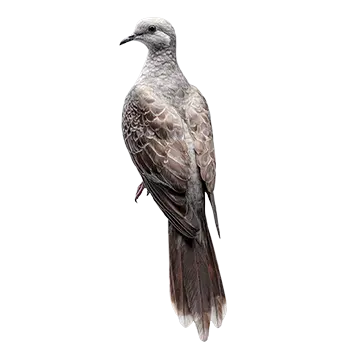

The Cape Dove is a small, active bird that requires more horizontal flight space than its compact body size might suggest. In the wild, this species spends the majority of its time on the ground or making swift, low-altitude flights across open terrain. Captive housing must accommodate this flight style, which favors length and width over height. A tall, narrow cage that would suit a climbing parrot is poorly matched to a Cape Dove's movement patterns. Instead, the enclosure should prioritize floor area and horizontal distance, allowing the bird to fly in straight lines and land at ground level comfortably.
Temperature tolerance is an important housing consideration for this species. Cape Doves originate from the warm, arid regions of sub-Saharan Africa and are less tolerant of cold than many commonly kept dove species. Indoor housing should maintain ambient temperatures above sixty-five degrees Fahrenheit, and outdoor housing in temperate climates requires a heated shelter or seasonal relocation indoors. Drafts are particularly dangerous for this small-bodied species, as they accelerate heat loss from a bird that already has limited thermal mass. Any enclosure placement should account for proximity to windows, doors, air conditioning vents, and other draft sources.
Cape Doves are ground-oriented feeders and foragers, which means the floor of the enclosure receives heavy use and must be designed for easy cleaning and safe footing. Smooth, slippery cage bottoms can cause foot and leg injuries in a bird that spends significant time walking. Appropriate substrates, discussed in detail below, protect foot health and support natural foraging behavior. The enclosure floor should also be accessible enough for the keeper to clean and replace substrate without excessive disturbance to the bird.
Because Cape Doves are relatively timid and easily startled, enclosure placement within the home matters considerably. A cage positioned in a high-traffic area with unpredictable movement and noise will produce a chronically stressed bird that never fully settles. A quieter location with a wall behind at least one side of the enclosure gives the bird a sense of security. The enclosure should still receive natural light and allow the bird to observe household activity at a comfortable distance, as total isolation is equally detrimental to wellbeing.