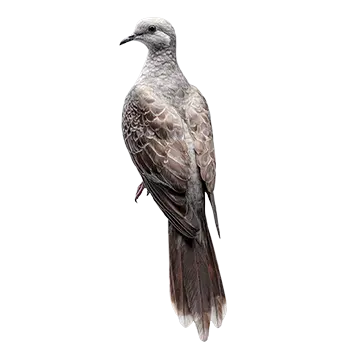

Technology in Cape Dove Care

Technology products for Cape Dove care occupy a different niche than the high-tech solutions marketed for parrot owners. Cape Doves do not interact with touchscreens, respond to voice-activated devices, or benefit from the sophisticated puzzle feeders that technology-enabled parrot products often incorporate. The value of technology for Cape Dove keepers lies primarily in environmental monitoring, remote observation, automation of routine tasks, and data collection that supports health management. These tools extend the keeper's awareness and control over the bird's environment without requiring direct physical interaction that can stress a shy species.

The small body size and timid nature of the Cape Dove make certain categories of technology particularly relevant. Environmental parameters that a larger, hardier bird might tolerate without issue, such as minor temperature drops, humidity swings, or air quality changes, can have disproportionate effects on a bird weighing under fifty grams. Technology that alerts the keeper to environmental shifts before they become dangerous is especially valuable for this species. Similarly, remote observation tools allow the keeper to monitor behavior and wellness without the disturbance that physical presence sometimes causes in nervous birds.

Adopting technology for bird care should be guided by practical benefit rather than novelty. Every device added to the bird's environment carries potential drawbacks, including electrical hazards, electromagnetic emissions, noise, and visual disruption. A blinking LED indicator, a quiet motor hum, or a device that clicks when cycling on and off may seem trivial to the keeper but can register as a persistent stressor for a prey species attuned to detecting subtle environmental changes. Evaluating each potential technology addition through the lens of the bird's sensory experience, not just the keeper's convenience, ensures that technology serves the animal's welfare rather than undermining it.

The technology categories most applicable to Cape Dove care include environmental sensors, cameras, smart lighting systems, automated timers, digital health tracking tools, and air quality devices. Each is discussed in detail in the sections that follow, with specific attention to features that matter for small dove husbandry and pitfalls that are easy to overlook when products are marketed broadly to the general pet owner audience.

Environmental Monitoring

Temperature and humidity monitoring is the foundational technology investment for any Cape Dove keeper. A digital thermometer-hygrometer placed at cage level, not on a distant wall or at human head height, provides the most accurate reading of the conditions the bird actually experiences. Cape Doves thrive in temperatures between sixty-eight and eighty-five degrees Fahrenheit, with relative humidity between forty and sixty percent. Conditions outside these ranges, sustained over hours or days, can compromise respiratory health, feather condition, and overall vitality. A basic digital unit with a remote probe that can be positioned inside or immediately adjacent to the cage costs very little and delivers information that directly informs care decisions.

Wireless sensor systems that log temperature and humidity continuously and transmit data to a smartphone application represent a significant upgrade over standalone display units. These systems record trends over time, revealing patterns that a periodic manual check might miss. A slow temperature decline overnight, a midday humidity spike when the heating system cycles, or a gradual seasonal drift in average conditions all become visible in the logged data. Some systems support configurable alerts that notify the keeper when readings cross preset thresholds, providing an early warning that allows corrective action before the bird is affected.

Air quality monitoring is a less common but increasingly accessible technology category with direct relevance to avian health. Birds have highly efficient respiratory systems with air sacs that expose them to airborne irritants and toxins more intensely than mammals. Particulate matter from cooking, cleaning products, scented candles, and household aerosols can reach concentrations inside a home that are harmful to a Cape Dove even when imperceptible to the human occupants. Air quality monitors that measure volatile organic compounds, particulate levels, and carbon dioxide concentration provide a quantitative picture of the air the bird is breathing.

Integrating environmental sensors with smart home platforms allows automated responses to changing conditions. A temperature sensor connected to a smart plug can activate a ceramic heat emitter when the temperature drops below a set point and deactivate it when the target temperature is reached, functioning as a simple but effective thermostat. Similarly, a humidity sensor can trigger a humidifier or dehumidifier to maintain conditions within the appropriate range. These automations reduce the keeper's manual workload while providing more consistent environmental control than periodic manual adjustment can achieve.

Cameras and Remote Observation

A small camera positioned to observe the Cape Dove's enclosure serves multiple practical purposes beyond simple surveillance. Remote viewing allows the keeper to check on the bird from another room or while away from home, confirming that food and water are accessible, the bird is active and moving normally, and no emergency has occurred. For a species as behaviorally subtle as the Cape Dove, where early signs of illness may include slight changes in posture, reduced movement, or altered perching location, having visual access throughout the day provides health monitoring data that would otherwise be missed.

Camera selection for avian use should prioritize image clarity, quiet operation, and the absence of visible indicator lights that could disturb the bird. Many consumer security cameras feature bright LED status lights and audible click sounds when switching between day and night mode, both of which can startle a nervous Cape Dove. Cameras with discreet or disable-able indicator lights and silent infrared switching are better choices. Night vision capability using infrared illumination allows the keeper to check on the bird during the dark period without introducing visible light that disrupts sleep.

Motion-detection and recording features available on many modern cameras add a behavioral documentation dimension. Setting the camera to record clips when motion is detected captures feeding bouts, bathing episodes, courtship displays, and interactions between paired birds without requiring the keeper to watch a live feed continuously. Reviewing these clips provides insight into the bird's daily activity patterns, time budgets, and behavioral health. Changes in activity patterns over time, such as reduced movement, prolonged sitting in one location, or cessation of normal comfort behaviors, can serve as early indicators of illness or environmental stress.

Camera placement requires consideration of the bird's perspective. A camera mounted directly above or in front of the cage at close range can be perceived as a looming presence by a prey species. Positioning the camera at a moderate distance, angled to capture the full enclosure without being conspicuous, minimizes behavioral disturbance. If the bird shows persistent signs of anxiety directed at the camera, such as avoiding the area nearest the device, the camera should be repositioned or partially obscured behind a visual barrier that still allows a clear view of the enclosure interior.

Smart Lighting Systems

Smart lighting systems offer Cape Dove keepers precise control over photoperiod, light intensity, and spectral quality, all of which influence the bird's hormonal cycles, sleep quality, and behavioral patterns. A smart full-spectrum avian light connected to a programmable timer or smart plug ensures that the light schedule is consistent from day to day, which is important for a species whose biological rhythms are closely tied to predictable light cycles. Manual switching introduces variability that can disrupt these rhythms, particularly when the keeper's own schedule is inconsistent.

Gradual dawn and dusk simulation is a feature available in some smart lighting controllers that is especially beneficial for Cape Doves. An abrupt transition from complete darkness to full brightness mimics nothing in the natural environment and can startle a roosting bird awake, triggering panicked flight in the dark or semi-dark enclosure. A light that ramps up gradually over fifteen to thirty minutes simulates a natural sunrise, allowing the bird to wake and orient itself calmly. The reverse sunset simulation in the evening gives the bird time to settle onto its roosting perch before darkness falls, which aligns with the natural behavior of seeking a secure perch location before nightfall.

Seasonal photoperiod adjustment is straightforward with programmable lighting. Keepers who wish to simulate natural seasonal variation can gradually shift the light schedule over the course of weeks, lengthening days in spring and shortening them in autumn. This approach supports natural hormonal cycling and can help regulate breeding behavior in pairs. For keepers who want to suppress breeding, maintaining a consistently short photoperiod of ten hours of light year-round discourages the hormonal triggers that initiate reproductive behavior.

Spectral quality monitoring is an emerging capability in advanced smart lighting systems. Some products include sensors that measure the actual UV output of the bulb over time, alerting the keeper when output falls below a functional threshold even though the bulb still produces visible light. This addresses the common problem of expired UV bulbs that look fine but no longer deliver the ultraviolet radiation the bird needs for calcium metabolism. While this feature is currently available in only a few premium products, it represents a meaningful advancement in avian lighting technology that eliminates guesswork from bulb replacement timing.

Automated Feeders and Waterers

Automated feeding systems designed for small birds can provide a useful backup to manual feeding, ensuring food availability when the keeper is delayed or temporarily absent. The most practical automated feeders for Cape Doves are gravity-fed seed dispensers that release seed into a tray as the bird eats, maintaining a consistent supply without electrical components or programming. These simple devices have no motors to malfunction, no batteries to die, and no software to crash, making them exceptionally reliable for their narrow purpose.

Electronic timed feeders that dispense measured portions at preset intervals are more sophisticated but introduce complexity that may not be justified for a species that grazes throughout the day. Cape Doves eat small amounts frequently rather than consuming large meals at scheduled times, so a feeding system that releases a single portion at a fixed hour does not align well with the species' natural eating pattern. If a timed feeder is used, it should be set to dispense small amounts at multiple intervals throughout the day rather than one or two large portions.

Automated water systems range from simple gravity waterers to recirculating fountains with filtration. Gravity waterers are the most appropriate choice for Cape Doves, providing a clean, consistent water supply with no moving parts to startle the bird. Recirculating fountains, while popular for cats and dogs, introduce motor noise and water movement that Cape Doves may find intimidating rather than inviting. If water freshness is a concern, a gravity waterer with a large enough reservoir to last the full day, combined with daily manual replacement, is a simpler and more species-appropriate solution.

The primary value of automated feeding and watering systems lies not in replacing the keeper's daily involvement but in providing a safety margin against unexpected delays. A gravity seed feeder ensures that a bird does not go hungry if the keeper is caught in traffic, delayed at work, or dealing with an emergency that prevents the normal morning feeding routine. This safety margin is particularly important for Cape Doves, whose small body mass and fast metabolism leave them with limited reserves to tolerate missed meals. No automated system, however, substitutes for daily observation of the bird's food consumption, water intake, and overall condition.

Digital Health Tracking

Digital tools for tracking Cape Dove health data transform scattered observations into organized records that reveal trends and support veterinary consultations. A simple spreadsheet or dedicated pet health application that logs daily weight, food consumption estimates, behavioral notes, and any symptoms creates a longitudinal health record that is far more informative than relying on memory. When a health concern arises, this record allows the keeper to identify when changes began, correlate symptoms with environmental or dietary changes, and provide the veterinarian with precise information rather than vague recollections.

Weight tracking is the single most valuable metric for small bird health monitoring and benefits enormously from digital logging. Recording the bird's weight at the same time of day, ideally each morning before feeding, produces a data series that reveals trends invisible in individual measurements. A gram-scale weight loss spread over two weeks is easy to miss when checking weights individually but becomes immediately apparent when plotted over time. Several pet health applications can graph weight data automatically, making trend detection effortless.

Molt tracking is another area where digital records add significant value. Cape Doves undergo regular feather molts that affect their energy needs, dietary requirements, and behavioral patterns. Logging molt start dates, duration, and severity from year to year helps the keeper anticipate future molts and adjust nutrition and environmental conditions proactively. Photographic records, taken at consistent intervals from a consistent angle, complement written notes by documenting feather condition visually.

Breeding records for keepers maintaining pairs benefit from digital organization. Logging clutch dates, egg counts, incubation durations, hatch rates, and chick development milestones creates a reproductive history that informs management decisions. Patterns in fertility, hatch success, and chick viability may become apparent over multiple breeding cycles that would be difficult to discern from memory alone. These records are also valuable if the birds are ever transferred to another keeper or contributed to a breeding program, as they provide documented reproductive history that cannot be reconstructed after the fact.

Air Purification and Ventilation

Air purification technology is directly relevant to Cape Dove health because of the species' sensitivity to airborne irritants and the fine feather dust that doves produce. Unlike parrots, which generate coarse feather powder primarily from powder-down feathers, doves produce a finer particulate that disperses widely and accumulates on surfaces throughout the room. An air purifier positioned near the enclosure captures this dust before it settles, reducing both the respiratory burden on the bird and the cleaning workload for the keeper.

HEPA-grade filtration is the minimum standard for an air purifier used in a bird room. True HEPA filters capture particles as small as 0.3 microns with high efficiency, which encompasses the size range of avian feather dust, common mold spores, and many airborne bacteria. Purifiers marketing themselves as HEPA-type or HEPA-like without meeting the true HEPA specification may not provide adequate filtration for an avian environment. The purifier's clean air delivery rate should be appropriate for the room size, with a margin of overcapacity preferred over a unit that barely meets the minimum specification.

Ionizer and ozone-generating purifiers must be avoided entirely in any space housing birds. Ozone, even at concentrations marketed as safe for humans, is a powerful respiratory irritant that can cause acute lung damage in birds. Some air purifiers include an ionizer function alongside a HEPA filter, and this function should be permanently disabled if the unit is used in a bird room. Checking product specifications carefully for any ozone-generating component is essential, as some manufacturers do not prominently disclose this feature.

Ventilation fans and air exchange systems complement air purification by introducing fresh outdoor air and exhausting stale indoor air. In rooms where birds are kept permanently, the gradual buildup of carbon dioxide, volatile organic compounds from household materials, and ammonia from droppings can degrade air quality even when particulate levels are controlled by filtration. A small, quiet exhaust fan or a heat-recovery ventilator that exchanges indoor air for filtered outdoor air without significant heat loss addresses this complementary concern. The ventilation system should not create drafts across the bird's enclosure, as Cape Doves are sensitive to air currents, particularly during rest periods.

Always consult a qualified professional before making any health-related decisions. This content is provided for informational reference only and should not replace professional guidance specific to your animal.