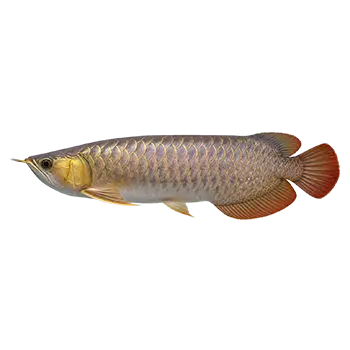

The juvenile stage is the most dramatic growth period in an arowana's life. Beginning around four to six weeks of age and extending through the first year or more, juvenile arowana can grow at a remarkable pace, often adding one to two inches per month under ideal conditions. This rapid development demands careful attention to tank size, nutrition, and water quality, as any deficiencies during this window can result in stunted growth or skeletal deformities that persist throughout the fish's life.
Physically, the juvenile arowana begins to take on the impressive proportions that make the species so prized among fishkeepers. The body elongates and deepens, the pectoral fins extend, and the barbels at the lower jaw become more prominent. Scale definition increases significantly, and the rows of large, reflective scales that characterize adult arowana begin to display their distinctive patterning. The dorsal and anal fins migrate further back along the body, contributing to the powerful, torpedo-like silhouette.
Keepers should monitor growth closely during this phase by measuring total length at regular intervals, ideally every two weeks. Consistent, steady growth is a strong indicator of good health and proper husbandry. A sudden plateau in growth despite adequate feeding and water conditions may signal underlying health issues, stress from environmental factors, or overcrowding that is suppressing the fish's development.
Skeletal development is particularly important during the juvenile period. Inadequate nutrition or poor water quality during rapid growth phases can lead to spinal curvature, gill curl, or jaw deformities. These conditions are often irreversible once they become established, making prevention through excellent husbandry the only reliable approach.