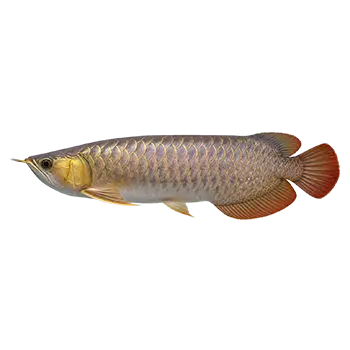

Recognizing when an arowana is approaching the end of its life requires attentive observation and an honest assessment of the fish's overall trajectory. While sudden death from acute illness or environmental catastrophe can occur at any age, the end-of-life stage in an aging arowana is more commonly a gradual process marked by progressive decline in function, appetite, and vitality. Understanding these signs helps keepers prepare emotionally and practically for what lies ahead.
One of the earliest and most consistent signs of terminal decline is a sustained loss of appetite that does not respond to changes in food type, presentation, or environmental adjustment. An arowana that has gone from enthusiastic feeding to disinterest over a period of weeks, despite stable water conditions and varied food offerings, may be experiencing organ failure or systemic illness that has progressed beyond the body's ability to compensate.
Physical signs of decline include progressive weight loss and muscle wasting, particularly along the dorsal ridge and behind the head. The fish may develop a hollow or pinched appearance that contrasts sharply with the robust body condition of its prime years. Coloration fades significantly, with scales losing their luster and taking on a dull, grayish appearance. The eyes may become cloudy or sunken, and the fins may deteriorate despite clean water conditions.
Behavioral changes in a dying arowana are often the most distressing for keepers to witness. The fish may lose its ability to maintain a normal swimming position, listing to one side, sinking to the bottom, or floating near the surface with labored gill movements. It may become unresponsive to external stimuli, no longer reacting to the keeper's approach or to food placed directly in front of it. These signs indicate that the fish's neurological and physiological systems are failing.