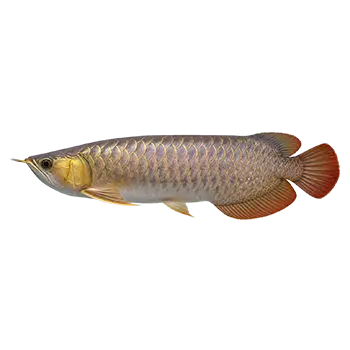

An adult arowana in its prime is a magnificent specimen that rewards years of dedicated care. Reaching full maturity typically between three and five years of age, adult arowana display their most vibrant coloration, strongest body condition, and most confident behavior during this stage. Maintaining peak health requires a consistent, disciplined approach to water quality, nutrition, and environmental management that builds on the husbandry practices established during the juvenile years.
Water quality remains the single most important factor in adult arowana health. At full size, these fish produce a substantial bioload, and filtration systems must be robust enough to handle the continuous output of waste. Weekly water changes of twenty to thirty percent are the standard recommendation, though some keepers find that more frequent smaller changes produce even better results. The key is consistency, as arowana are sensitive to fluctuations in water chemistry and respond poorly to irregular maintenance schedules.
Monitoring key water parameters should be a regular habit, not just a response to problems. Temperature should remain stable between 78 and 84 degrees Fahrenheit, pH should hold steady within the 6.5 to 7.5 range, and ammonia and nitrite must always read zero. Nitrate should be kept below 20 parts per million through regular water changes. Investing in a quality liquid test kit and testing at least weekly provides an early warning system for any drift in water conditions.
The adult arowana's tank should be a permanent, purpose-built setup. By this stage, the fish should be housed in a tank of at least 250 gallons, with 300 gallons or more being preferable for larger species. The tank should be positioned on a floor capable of supporting its weight, away from direct sunlight and drafts, and in a location where the fish can observe household activity without being startled by sudden movements.