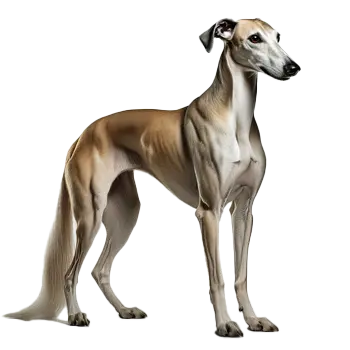

Determining when a Sloughi transitions from adulthood into the senior stage is not as straightforward as circling a date on the calendar. The breed's relatively long lifespan for a dog of its size — typically 12 to 16 years — means that the onset of senior-related changes tends to occur later than in many comparably sized breeds. Most veterinarians consider a Sloughi to be entering its senior years around age eight to ten, but individual variation is significant and some dogs show few signs of aging until well past that mark.
The earliest indicators of aging in a Sloughi are often subtle. You may notice a slight graying around the muzzle, a reduced enthusiasm for high-speed running, or a tendency to sleep more deeply and for longer periods. The dog may take a few extra moments to stand up after resting, or show a brief stiffness in its gait on cold mornings that resolves after a few minutes of movement. These are not emergencies, but they are signals that the body is beginning to change and that your care approach should evolve accordingly.
Once your veterinarian considers your Sloughi to be in the senior category, the frequency of wellness examinations should increase to twice per year. Senior blood panels, urinalysis, and other diagnostic screenings can catch the early stages of organ decline, metabolic changes, and other age-related conditions before they become symptomatic. Early detection remains the most powerful tool for extending both the length and quality of your dog's life.
It is important to resist the temptation to attribute every change to normal aging. A senior Sloughi that suddenly loses weight, drinks excessively, or becomes lethargic may be developing a treatable medical condition rather than simply getting old. Every new symptom deserves a veterinary evaluation to determine whether it is a normal part of aging or something that requires intervention.