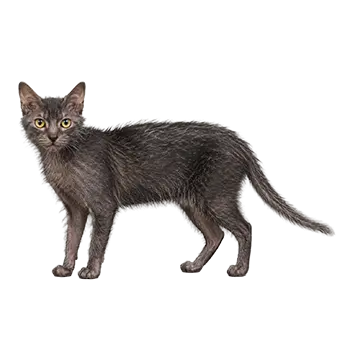

The juvenile period for a Lykoi cat spans roughly from eight weeks to twelve months of age, though some individuals continue filling out until closer to two years. During this time the kitten undergoes a dramatic transformation in size, coordination, and appearance. Growth is most rapid between two and six months, when kittens may gain noticeable weight and length week over week. By six months many Lykoi kittens have reached roughly half to two-thirds of their adult size, though the breed tends to remain on the smaller to medium end of the feline spectrum.
One of the most visually striking changes during the juvenile period is the ongoing evolution of the Lykoi coat. Young Lykoi may shed large patches of fur and regrow them in cycles, sometimes appearing nearly bald before filling back in with the breed's signature roan pattern. This molting can be dramatic and may concern new owners, but it is entirely normal for the breed. The extent of hair coverage varies between individuals and can fluctuate with seasons, hormonal shifts, and overall health.
Musculoskeletal development is significant during this stage. The kitten's frame elongates, muscle mass increases, and coordination improves rapidly. Lykoi kittens are naturally athletic and agile, and their bodies reflect this with a lean, wiry build that becomes more defined as they approach adulthood. Regular monitoring of body condition ensures the kitten is growing at an appropriate rate without becoming over- or underweight.
Dental development also progresses during the juvenile period. The deciduous teeth that erupted during the neonatal stage begin to fall out around three to four months of age, replaced by the permanent adult teeth. Teething can cause mild discomfort, and kittens may chew on objects more frequently during this transition. Providing safe chew toys and monitoring for retained baby teeth that do not shed naturally are both important during this window.