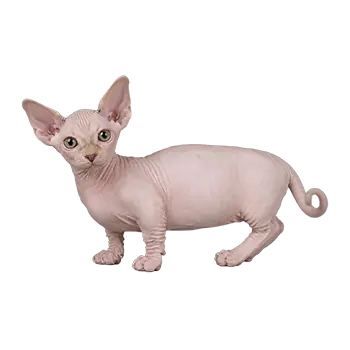

The juvenile period for a Dwelf typically spans from about eight weeks to twelve months of age, during which the kitten undergoes dramatic physical transformation. Growth in this breed is steady but modest compared to larger cat breeds, and Dwelf kittens will remain noticeably small throughout their development. By four months, the characteristic features of the breed become fully apparent: the short Munchkin-derived legs, the hairless or nearly hairless Sphynx-influenced skin, and the distinctive backward-curling ears inherited from the American Curl.
Muscle development is an important focus during this stage. Despite their short stature, Dwelf cats are surprisingly muscular and athletic, and proper nutrition combined with active play supports the development of strong, well-toned bodies. The chest should broaden proportionally, and the overall silhouette should convey a compact, sturdy build rather than a frail one. Kittens that appear excessively thin or whose ribs and spine are prominently visible may need dietary adjustments.
The skin continues to mature throughout the juvenile period. Young Dwelf cats often have more pronounced wrinkling than adults, particularly around the face, shoulders, and legs. Natural skin oils accumulate more quickly on hairless breeds, so regular bathing becomes part of the care routine during these months. Ear cartilage firms into its final curl position, typically by around sixteen weeks, and the degree of curl varies from a gentle backward sweep to a more dramatic arc.
Bone growth plates remain open throughout the juvenile stage, making this a period where injuries to the limbs should be taken seriously. The shortened long bones of the Dwelf's legs develop normally but are proportionally different from those of standard-legged cats. Regular veterinary checkups should include monitoring of skeletal development to ensure the legs, spine, and joints are growing without complications.