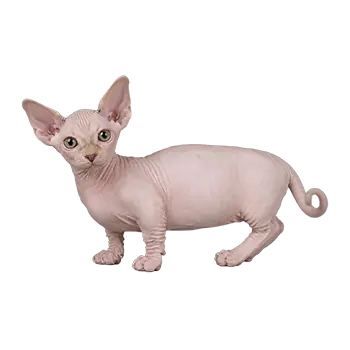

Breeding Dwelf cats is a complex undertaking that requires thorough preparation, extensive breed knowledge, and a genuine commitment to the health and welfare of every cat and kitten involved. Because the Dwelf is a triple-cross hybrid incorporating genetics from the Sphynx, Munchkin, and American Curl, breeders must have a solid understanding of the inheritance patterns associated with all three contributing breeds. Prospective breeders should connect with established Dwelf breeding mentors and study the relevant breed standards before considering a first litter.
Both the queen and the stud must undergo comprehensive health screening before any mating takes place. At minimum, this should include an echocardiogram to screen for hypertrophic cardiomyopathy, which is prevalent in Sphynx lines, along with a complete physical examination, blood work, and screening for feline leukemia virus and feline immunodeficiency virus. Any cat with a known hereditary health condition or a significant structural abnormality should be removed from a breeding program regardless of its show quality or pedigree.
Physical maturity is a prerequisite for breeding, and most Dwelf queens should not be bred before eighteen months of age at the earliest. While cats can reach sexual maturity as early as five or six months, the queen's body must be fully developed to safely carry and deliver a litter. The stud should also be physically mature, in excellent health, and current on all vaccinations. Both cats should have stable, confident temperaments, as temperament is heritable and the Dwelf's friendly disposition is a defining breed characteristic.
Prepare the breeding environment well in advance. A quiet, clean space where the queen can be introduced to the stud under controlled conditions reduces stress and increases the likelihood of a successful mating. Have your veterinarian's contact information readily available, understand the signs of a successful tie, and be prepared for the possibility that not every pairing will result in pregnancy on the first attempt.