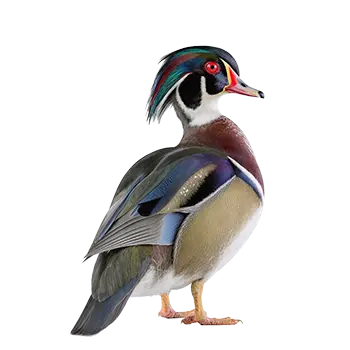

Wood Duck ducklings hatch after an incubation period of approximately 28 to 37 days, with most clutches pipping around day 30. Unlike many companion bird species that emerge helpless and naked, Wood Duck chicks are precocial, meaning they hatch covered in dense natal down, with their eyes open and legs functional within hours. A freshly hatched duckling weighs between 20 and 25 grams and is immediately alert, responding to the hen's vocalizations and the movements of its siblings in the nest cavity.
The hatching process itself can take 12 to 24 hours from the first pip mark to full emergence. Ducklings use a specialized egg tooth on the upper bill to crack through the shell in a circular pattern. Caregivers monitoring a clutch in an artificial incubator should resist the urge to assist, as premature intervention can damage blood vessels in the membrane and cause fatal hemorrhaging. Only when a duckling has made no progress for more than 18 hours after the initial pip should cautious assistance be considered, and even then only under the guidance of an experienced avian veterinarian or waterfowl breeder.
Once free of the shell, the duckling rests and dries within the nest cavity or incubator. The natal down, which appears matted and damp at first, fluffs out within a few hours into a water-resistant coat of brown and yellow markings. This down provides essential insulation and the beginnings of buoyancy that the duckling will rely on almost immediately. In a natural setting, the hen remains on the nest quietly brooding the hatched chicks while waiting for the remaining eggs to pip, keeping the clutch warm and together.
During these initial hours, the duckling absorbs the remainder of its yolk sac, which provides nourishment for roughly the first 24 to 48 hours of life. This internal nutrient reserve is critical because Wood Duck ducklings do not receive any food from the hen. Unlike altricial species where parents feed their young, precocial ducklings must find and consume their own food from the very first day they leave the nest. The yolk reserve bridges the gap between hatching and the duckling's first independent foraging.