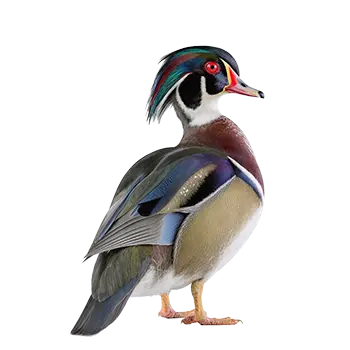

Wood Duck courtship is among the most elaborate and visually striking displays in the waterfowl world, and it begins months before the actual breeding season. Pair formation typically occurs during late autumn and winter, when drakes in their resplendent breeding plumage compete for the attention of hens through a repertoire of ritualized displays. Understanding these behaviors is essential for captive breeders, as the dynamics of courtship directly influence which pairs form, whether those pairs are compatible, and ultimately whether the breeding season will be productive.
The drake's courtship display includes several distinct components performed in sequence or combination. The burp display involves the male dipping his bill into the water and then raising his head sharply while producing a distinctive thin, rising whistle followed by a low jib note. The chin-lift display sees the drake extending his neck upward with the bill held high, showing off the white throat stripe and iridescent head to best advantage. Wing flicks, tail raises, and ritualized preening of the colorful speculum feathers on the wings are performed with exaggerated precision, each movement apparently designed to maximize the visual impact of the drake's plumage.
Hens evaluate displaying drakes from within the group, often swimming near several competing males before making their selection. The criteria hens use to choose mates are not fully understood, but plumage quality, display vigor, and possibly prior familiarity appear to play roles. Once a hen shows preference for a particular drake by swimming close to him, following him, and performing the inciting display, a ritualized head-pumping motion directed toward other males, the pair bond begins to solidify. The bonded pair spends increasing amounts of time together, feeding, swimming, and resting in close proximity.
In captive breeding situations, pair formation can be managed to some degree but cannot be entirely controlled. Wood Ducks that have been housed together since the juvenile stage may form pair bonds naturally along lines that suit the breeder's goals, but equally often, a hen chooses a drake that the breeder had not intended as her mate. Forced pairing by isolating a specific male and female together sometimes succeeds, but it can also result in prolonged aggression, refusal to breed, or infertile clutches if the pair is genuinely incompatible. Providing multiple potential mates and allowing the birds to choose produces the most reliable breeding results, even if it means accepting some pairings that are suboptimal from a genetic management perspective.