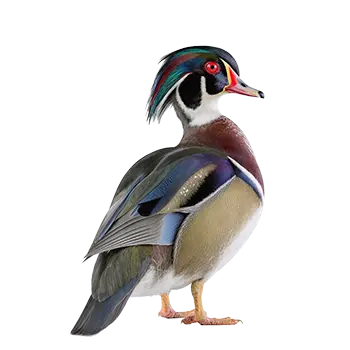
Wood Ducks are omnivorous waterfowl with dietary preferences differing significantly from domestic ducks. Understanding their natural diet is essential for maintaining healthy captive individuals. In the wild, their diet varies seasonally, with plant matter comprising roughly ninety percent of adult diet and aquatic invertebrates being more important for ducklings and during breeding season.
During fall and winter, acorns form a crucial component of the diet, providing high-energy nutrition for migration and winter survival. Wood Ducks will fly considerable distances to feed in oak forests, particularly favoring acorns from pin oak, willow oak, and swamp white oak. Other seeds consumed include those from smartweed, wild rice, duckweed, and various aquatic plants. Berries from dogwood, wild grape, and hackberry trees supplement the diet. This natural preference for tree-based foods reflects their woodland habitat specialization.
Spring and summer diets shift to include more protein-rich animal matter. Aquatic invertebrates including insects, larvae, snails, and small crustaceans become important, especially for breeding females requiring protein for egg production and for growing ducklings. Plant matter continues with consumption of duckweed, pondweed, water lilies, and emerging aquatic vegetation. Fresh green vegetation provides important nutrients during breeding season.
In captivity, replicating this varied diet requires planning. A high-quality waterfowl or gamebird pellet should form the diet foundation, comprising 50-60% of intake. These pellets provide balanced nutrition with appropriate protein, vitamins, and minerals. Supplementation with whole grains including cracked corn, wheat, and millet provides energy and foraging enrichment. Whole acorns should be offered during fall and winter when available, though they can be stored frozen and offered year-round.
Fresh greens and vegetables are essential daily additions. Chopped lettuce, kale, spinach, and water plants such as duckweed and watercress are excellent choices. Peas, corn, and chopped vegetables provide variety and nutrition. Fresh grass clippings from pesticide-free lawns can be offered. Fruits such as berries, grapes (halved), and chopped apple provide occasional treats but should be limited due to sugar content.
Protein supplementation is particularly important during breeding season and for growing ducklings. Live or dried mealworms, crickets, and earthworms are excellent protein sources that also provide behavioral enrichment through hunting. Scrambled eggs can be offered occasionally. Commercial gamebird or wild waterfowl feeds designed for high-protein needs during breeding may be beneficial.
Foods to avoid include bread and other processed human foods which provide minimal nutrition and can cause health problems. Avocado is toxic to birds. Onions, chocolate, and caffeine are harmful. Moldy or spoiled food can cause aspergillosis or botulism. Dried beans must be thoroughly cooked before offering.
Grit is essential for proper digestion. Both soluble grit (crushed oyster shell for calcium) and insoluble grit (small granite grit) should be available free-choice. This is particularly important for birds without access to natural foraging where they would naturally consume small stones. Clean, fresh water for drinking and bathing must be available at all times, separate from swimming water to maintain hygiene. With appropriate diet, captive Wood Ducks maintain excellent feather quality, good body condition, and successful breeding when properly paired.