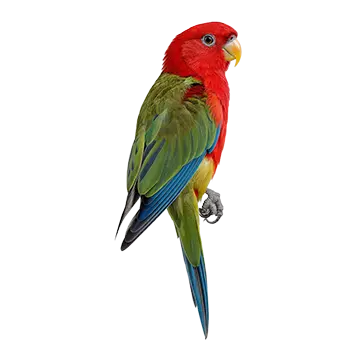

The Western Rosella reaches full physical and sexual maturity between 12 and 18 months of age, marked by the completion of the juvenile molt and the emergence of the striking adult plumage that defines the species. Adult males display a vivid red head and breast with bright yellow cheek patches, a green back with dark feather edging that creates a scalloped pattern, and a blend of blue, green, and yellow across the wings and tail. Females and some younger males may show a somewhat duller version of this coloration, with the red areas less saturated and occasionally interspersed with green feathering, particularly on the head and nape.
The prime adult years of a Western Rosella, spanning from roughly two years of age through about ten to twelve years, represent a period of relative physiological stability. The bird's skeletal structure is fully developed, its immune system is mature, its flight capabilities are at their peak, and its behavioral patterns are well established. This does not mean that the adult bird requires less attentive care than a juvenile. Rather, the focus of care shifts from supporting active growth and development to maintaining optimal health, preventing obesity and nutritional deficiencies, providing adequate mental stimulation, and monitoring for the early signs of chronic conditions that may develop over time.
Understanding the natural history of the Western Rosella informs every aspect of adult care. In the wild, Platycercus icterotis inhabits the eucalyptus woodlands, open forests, and agricultural margins of southwestern Australia. These birds spend significant portions of their day foraging on the ground for grass seeds, herbaceous plants, and fallen fruits, interspersed with flights between foraging areas, water sources, and roosting sites. Their daily activity budget is divided among foraging, flying, social interaction with pair mates or small flocks, preening, and resting. Captive care that mirrors these natural activity patterns as closely as possible produces the healthiest, most behaviorally well-adjusted adult birds.
The temperament of an adult Western Rosella is typically more reserved and independent compared to many commonly kept parrot species. While they can be affectionate and enjoy gentle interaction with their caregivers, they are not generally birds that crave constant physical contact. Respecting this natural disposition while maintaining regular positive interaction produces the best relationship between bird and caregiver. Attempting to force a level of physical affection that the bird does not naturally seek often leads to stress, avoidance behavior, and potential biting.