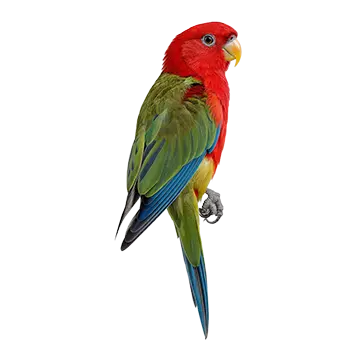

The Juvenile Transition

The juvenile stage of the Western Rosella begins around five to six weeks of age, when the chick transitions from a fully dependent newborn into an increasingly mobile and self-sufficient young bird. This period represents one of the most dynamic phases of the Western Rosella's life, encompassing fledging, weaning, the development of flight capability, and the emergence of individual personality traits. The juvenile stage extends roughly from fledging through to the completion of the first adult molt, which typically occurs between 12 and 18 months of age, though the most intensive care demands are concentrated in the first several months.

Fledging marks the point at which the young rosella first leaves the nest box or brooder and begins to navigate its environment under its own power. In parent-raised clutches, Western Rosella chicks typically fledge between 30 and 35 days of age, though individual variation exists. The fledgling will be fully feathered but clumsy, with flight skills that are rudimentary at best. Crash landings, awkward perching, and brief, uncontrolled flights are entirely normal during the first few days out of the nest. The parents continue to feed the fledgling for several weeks after it leaves the nest, gradually reducing the frequency of feedings as the young bird learns to eat independently.

For hand-raised Western Rosellas, the fledging transition requires a prepared environment. The brooder should be replaced with a small cage or flight enclosure that allows the young bird to practice perching, climbing, and short flights without risk of injury from collisions with walls, windows, or ceiling fans. Low perches positioned over soft bedding provide a safe landing zone while the bird develops coordination. Remove any objects that could trap or injure a clumsy fledgling, including narrow gaps between furniture, open water containers deep enough to pose a drowning risk, and any toxic houseplants.

The emotional and behavioral transition during this period is as significant as the physical one. Juvenile Western Rosellas become notably more curious, exploratory, and independent. They may test boundaries by nipping, vocalizing more loudly, or resisting handling. These behaviors are normal developmental expressions, not signs of aggression or poor socialization. Responding with patience and consistent, gentle handling maintains the trust built during the newborn period and helps the young bird develop into a confident, well-adjusted companion.

Weaning & Diet Transition

Weaning is the process by which a juvenile Western Rosella transitions from a diet of hand-feeding formula or parental crop feedings to independently consuming solid foods. This transition should be guided by the chick's developmental readiness rather than forced according to a rigid calendar. Premature weaning can cause nutritional deficiencies, behavioral problems, and chronic stress, while excessively delayed weaning can create overdependence on formula and delay the development of foraging skills. For most Western Rosellas, the weaning process begins around six to eight weeks of age and is completed by ten to fourteen weeks.

The first step in weaning is introducing solid foods alongside regular formula feedings, not replacing them. Offer a variety of appropriately sized foods in shallow dishes placed on the cage floor where the young bird can easily access them. Suitable first foods for juvenile Western Rosellas include finely chopped leafy greens such as spinach and kale, shredded carrot, small pieces of apple or pear, sprouted seeds, and a high-quality small-parrot pellet. Western Rosellas are naturally ground-foraging birds, so scattering some food on the cage floor alongside a dish encourages natural foraging behavior.

As the juvenile begins to consume more solid food, the volume and frequency of formula feedings can be gradually reduced. Most caregivers begin by eliminating the midday feedings first, maintaining the morning and evening formula sessions until the bird demonstrates consistent independent eating. Monitor the crop to ensure it is being filled with solid food between formula feedings. Continue daily weighing throughout the weaning period, as weight loss exceeding ten percent of the pre-weaning body weight indicates that the bird is not yet consuming enough solid food to sustain itself and may need a temporary return to more frequent formula support.

The final formula feedings to be eliminated are typically the evening and then the morning sessions. Some juvenile Western Rosellas wean cleanly and quickly, while others cycle through periods of enthusiastic independent eating followed by regression and renewed begging for formula. This pattern is normal and does not indicate a failure of the weaning process. Continue offering formula when the bird actively solicits it, and allow the bird to self-wean at its own pace. Forced weaning, where formula is abruptly discontinued before the bird is eating adequate amounts independently, creates physiological stress and can lead to behavioral issues including feather-destructive behavior.

Once weaned, the juvenile Western Rosella's diet should consist of a balanced combination of high-quality pellets formulated for small parrots, a daily offering of fresh vegetables and fruits, and a measured portion of a seed mix appropriate for rosellas. Seeds should not constitute the majority of the diet, as an all-seed diet lacks essential vitamins, minerals, and amino acids. Western Rosellas are particularly fond of grass seeds, seeding grasses, and native Australian plant foods, and incorporating these where available enhances both nutrition and behavioral enrichment.

Feather Development & First Molt

The juvenile plumage of the Western Rosella is noticeably different from the vivid adult coloration, and understanding the progression of feather development helps caregivers track the bird's maturation and identify any plumage abnormalities early. Juvenile Western Rosellas display a predominantly green plumage that is duller and less defined than the adult pattern. The characteristic red and yellow head coloring of the adult is largely absent in juveniles, replaced by a muted olive-green wash with only hints of the colors that will eventually dominate. The back and wing feathers show green with darker edging, and the underparts are a subdued yellowish-green.

The first significant molt, often called the juvenile molt, typically begins between four and six months of age and may continue gradually over several months. During this molt, the juvenile plumage is progressively replaced with feathers that begin to show the adult color pattern. The transition is not uniform across the body. Some areas may display adult coloring while others still retain juvenile feathers, giving the bird a somewhat patchy appearance during the active molting phase. This is entirely normal and not a cause for concern, provided the new feathers are growing in smoothly and the bird is otherwise healthy.

Molting places significant nutritional demands on the body, as feather production requires substantial amounts of protein, amino acids, calcium, and various micronutrients. During active molt, increase the proportion of protein-rich foods in the diet, including cooked legumes, hard-boiled egg, and sprouted seeds. A cuttlebone or mineral block should be available at all times to provide supplemental calcium. Some avian veterinarians recommend a targeted multivitamin supplement during heavy molt periods, but this should be discussed with a qualified practitioner rather than implemented independently, as over-supplementation of certain vitamins, particularly fat-soluble vitamins, can cause toxicity.

Monitor the emerging feathers for quality and symmetry. Healthy new feathers should emerge smoothly from their sheaths, lie flat against the body, and display appropriate coloring for the bird's age and stage of molt. Stress bars, which appear as horizontal lines of weakness across the feather vane, indicate periods of nutritional deficiency or physiological stress during feather growth. A few stress bars on scattered feathers may not be clinically significant, but widespread or severe stress bars warrant a dietary review and veterinary consultation. Feathers that fail to emerge from their sheaths, grow in with abnormal shapes, or fall out prematurely may indicate Psittacine Beak and Feather Disease or other health concerns that require immediate veterinary evaluation.

Flight Training & Physical Development

Flight is a fundamental capability for Western Rosellas, and the juvenile stage is when this skill is developed and refined. In the wild, fledgling rosellas practice and strengthen their flight abilities under the supervision of their parents over a period of several weeks. In captivity, caregivers must provide both the space and the guidance for this critical developmental process. Allowing a young rosella to develop strong flight skills has lasting benefits for its physical health, cardiovascular fitness, coordination, and psychological well-being. Birds that are denied the opportunity to fly during this formative period often develop weaker musculature and may exhibit behavioral problems associated with frustration and under-stimulation.

The initial flights of a newly fledged Western Rosella will be short, uncoordinated, and frequently end in crash landings. This is normal and expected. Provide a safe practice space by designating a room where the bird can fly without encountering hazards such as ceiling fans, open windows, mirrors, large glass panes, hot surfaces, or open water. Curtains or blinds should cover windows and mirrors to prevent collision injuries. Keep the room free of other pets during flight practice sessions. Low perches placed at various heights give the fledgling targets to aim for and practice landing on.

As the bird gains strength and coordination over the following weeks, extend the flight space gradually. Most juvenile Western Rosellas achieve competent flight by eight to ten weeks of age, though refinement of maneuvering skills continues for months. Encourage flight by calling the bird between two handlers positioned across a room, offering a small food reward upon landing. This practice builds both flight skill and recall behavior simultaneously. Avoid clipping the flight feathers of a juvenile rosella, as this period is critical for the development of flight muscles, coordination, and the bird's spatial awareness. Birds that are clipped before they have fully developed their flight abilities may suffer permanent deficits in these areas even if the feathers are allowed to regrow later.

Beyond flight, the juvenile period is a time of rapid overall physical development. The bird's bones are still ossifying, its muscle mass is increasing, and its coordination across all forms of movement is improving. Provide a variety of perch diameters and textures to promote healthy foot development and grip strength. Natural wood branches with bark are ideal, as they provide varying surfaces that exercise the foot muscles and help maintain nail condition naturally. Climbing structures, ladders, and swings encourage full-body physical engagement and help the juvenile rosella develop the agility and strength it will carry into adulthood.

Behavioral Development & Socialization

The juvenile period is the most influential phase for shaping a Western Rosella's behavioral repertoire and social disposition. During this stage, the young bird is actively learning about its environment, forming social attachments, establishing communication patterns, and developing the coping mechanisms it will rely on throughout its life. Western Rosellas are naturally somewhat more independent and less overtly affectionate than many larger parrot species, but a well-socialized juvenile can develop into a calm, confident companion that tolerates and even enjoys human interaction.

Consistent, positive handling should continue throughout the juvenile stage. Handle the bird daily for periods of gradually increasing duration, exposing it to gentle touch on various parts of its body including the head, back, wings, and feet. This handling builds tolerance for routine husbandry activities like nail trims, wing checks, and veterinary examinations. Use a calm, reassuring voice during handling sessions, and always end on a positive note by returning the bird to its cage with a small treat. If the bird shows signs of stress such as panting, flattened feathers, or lunging, shorten the session rather than forcing the interaction.

Expose the juvenile Western Rosella to a wide variety of environmental experiences during this socialization window. Introduce new objects, colors, textures, and sounds gradually, allowing the bird to investigate at its own pace. Take the bird to different rooms of the house. Allow it to observe household activities from a safe perch. Introduce it to different family members and, if the bird is calm enough, to trusted visitors. Each new experience that the bird processes without negative consequences builds its confidence and reduces the likelihood of phobic or fearful behavior as an adult.

Nipping and testing behavior are common during the juvenile stage and should be managed with patience rather than punishment. A juvenile rosella that nips is exploring its world with its beak, testing the reactions of its social partners, and learning about the appropriate use of beak pressure. Respond to nips by calmly saying a neutral word and briefly withdrawing attention, then resuming interaction after a short pause. Never strike, flick, or blow on a bird in response to nipping, as these responses damage trust and can create fear-based aggression. Most Western Rosellas outgrow excessive nipping as they mature, provided it is not inadvertently reinforced by dramatic reactions from the caregiver.

If the juvenile Western Rosella will share a household with other birds, careful introductions should begin during this stage. Quarantine any new bird for a minimum of 30 days before allowing visual contact, and extend this period if any health concerns arise. Once quarantine is cleared, introduce the birds through adjacent cages where they can see and hear each other without physical contact. Monitor interactions closely for signs of aggression, stress, or fear, and proceed to supervised shared space only when both birds appear calm and curious rather than threatened.

Housing & Environmental Enrichment

The housing requirements for a juvenile Western Rosella expand significantly as the bird grows from a recently fledged chick into an active, increasingly independent young bird. The small cage or flight enclosure used during the initial fledging period should be upgraded to a permanent enclosure that provides adequate space for flight, climbing, foraging, and rest. Western Rosellas are active birds that benefit from horizontal flight space, so prioritize cage width and length over height. A minimum enclosure size of 36 inches long by 24 inches wide by 24 inches tall is appropriate for a single juvenile, though larger is always better and a flight cage or aviary is ideal.

Bar spacing should be appropriate for a medium-small parakeet, generally between half an inch and five-eighths of an inch, to prevent the bird from squeezing through or trapping its head between the bars. The cage should be constructed of non-toxic, powder-coated or stainless steel materials. Avoid galvanized wire, as zinc toxicosis from ingesting zinc coating is a well-documented hazard for captive parrots. Position the cage at chest height in a room where the family spends time, providing the social interaction that the bird needs without exposing it to kitchen fumes, direct drafts, or excessive noise.

Environmental enrichment is essential for the psychological health of a juvenile Western Rosella. In the wild, young rosellas spend their days foraging across varied terrain, interacting with flock members, and navigating complex three-dimensional landscapes. Captivity dramatically reduces this stimulation, and it is the caregiver's responsibility to compensate. Provide a rotation of toys that encourage different types of interaction, including chewing toys made from bird-safe wood and vegetable-tanned leather, foraging toys that require the bird to work to access food, and manipulative toys with movable parts. Rotate toys regularly to maintain novelty, replacing items as they become worn or soiled.

Foraging enrichment deserves special emphasis for Western Rosellas, as foraging is a central behavior in their wild ecology. Rather than presenting all food in a single dish, distribute portions across multiple feeding stations, wrap food in paper, hide treats inside foraging boxes or among shredded paper, and scatter seed on a tray of clean pebbles or natural substrates. These strategies extend the time the bird spends engaged in food-seeking behavior, reduce boredom, and promote the physical activity associated with natural foraging. Introduce foraging challenges gradually, starting with simple tasks and increasing complexity as the bird develops problem-solving skills.

Outdoor exposure, when managed safely, provides valuable enrichment through natural sunlight, fresh air, and the sensory stimulation of the outdoor environment. Unfiltered sunlight enables the synthesis of vitamin D3 through the uropygial gland and subsequent preening, which plays a critical role in calcium metabolism. Supervised outdoor time in a secure, escape-proof cage or carrier allows the juvenile rosella to experience natural light cycles and environmental variety. Never leave a bird unattended outdoors, as predators, temperature extremes, and escape are all serious risks.

Health Monitoring & Common Concerns

The juvenile period introduces a new set of health considerations as the Western Rosella transitions from the highly controlled environment of the brooder to the more complex world of a cage or aviary. While the most acute risks of the newborn period have passed, the juvenile stage brings its own vulnerabilities, including the physiological stress of weaning, the nutritional demands of feather growth and skeletal maturation, and increased exposure to environmental pathogens as the bird begins to explore a wider range of surfaces and substrates.

Continue daily weight monitoring throughout the juvenile stage, particularly during the weaning transition. A juvenile that is weaning successfully should maintain a stable weight or show gradual gains as it transitions to solid food. Weight loss of more than ten percent of the pre-weaning body weight over any period suggests that the bird is not consuming sufficient solid food and may need supplemental formula feedings to be temporarily reinstated. Beyond the weaning period, weekly weigh-ins are sufficient for a healthy juvenile, but daily monitoring should be resumed at any sign of illness.

Respiratory health remains a priority during the juvenile stage. Western Rosellas, like all psittacines, are susceptible to aspergillosis, a fungal infection caused by Aspergillus species that are ubiquitous in the environment. Stress, poor ventilation, damp bedding, and immunosuppression all increase the risk. Signs of respiratory compromise include tail bobbing, labored or open-mouth breathing, nasal discharge, voice changes, and reduced activity. Any respiratory symptoms warrant urgent veterinary evaluation, as aspergillosis and bacterial respiratory infections can progress rapidly in young birds.

Gastrointestinal health should be monitored through daily observation of droppings. Normal juvenile Western Rosella droppings have a well-formed dark fecal component, a white to cream-colored urate portion, and a small volume of clear liquid urine. Changes in any of these components can provide early diagnostic clues. Loose or watery droppings may indicate enteritis, parasitic infection, or dietary imbalance. Bright green or yellow urates can suggest liver dysfunction. Undigested food in the droppings may indicate malabsorption or gastrointestinal motility problems. Keep a mental baseline of what normal droppings look like for your bird so that deviations are noticed promptly.

Schedule a comprehensive veterinary examination at approximately three months of age, timed to coincide with the conclusion of the weaning period. This visit should include a physical examination, fecal screening, and any follow-up testing recommended based on the initial neonatal health screening. Discuss vaccination protocols, if applicable in your region, and establish a schedule for routine wellness examinations going forward. A proactive approach to veterinary care during the juvenile stage sets the pattern for lifelong health management and helps detect any developmental concerns before they become entrenched problems.

Always consult a qualified professional before making any health-related decisions. This content is provided for informational reference only and should not replace professional guidance specific to your animal.