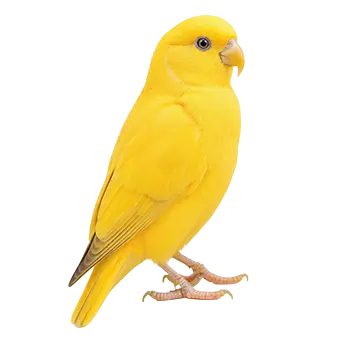

Waterslager Canary chicks hatch after an incubation period of approximately 13 to 14 days, emerging as tiny, nearly helpless creatures weighing roughly 1.5 to 2 grams. The hatchlings are altricial, born with their eyes sealed shut, covered in sparse tufts of natal down, and entirely reliant on their parents for warmth and nourishment. Unlike some larger psittacine species where hand-rearing from day one is more common, Waterslager Canary chicks are almost always parent-raised during the initial hours and days, as the hen provides an irreplaceable combination of warmth, feeding precision, and instinctive care that is extremely difficult to replicate at this scale.
During the first hours after hatching, the chick absorbs the remaining yolk sac, which provides essential nutrients and energy reserves. The hen will typically begin feeding the chick within two to four hours of hatching, offering regurgitated seed mixture that has been softened and partially digested in her crop. This first feeding is critical because it not only delivers calories but also introduces beneficial gut flora that will support the chick's digestive health going forward. If you notice the hen is not feeding a newly hatched chick after six hours, intervention may be necessary, but patience is usually rewarded as most experienced hens attend to their young promptly.
The nest environment during this period must remain undisturbed as much as possible. Excessive checking, handling, or rearranging of the nest can cause the hen to abandon the clutch or neglect a newly hatched chick. If you need to verify that a chick has hatched, do so quickly and gently while the hen is briefly off the nest for food or water. Observe from a distance whenever possible, using behavioral cues such as the hen's feeding posture and the faint begging sounds of the chick to confirm that feeding is taking place without opening the nest.
The room temperature surrounding the cage should be kept stable, ideally between 68 and 75 degrees Fahrenheit, with no drafts reaching the nest area. The hen provides direct body heat to the chicks, maintaining them at the necessary temperature through brooding. If the ambient room temperature drops significantly, the hen must expend more energy keeping the chicks warm, which can compromise her ability to feed them adequately. Supplemental heating directed at the cage area, such as a nearby ceramic heat panel set on low, can help in cooler environments without overheating the hen herself.