
Breeding Readiness and Pair Selection

Successful breeding of Silver Pheasants begins well before the first egg is laid, with thoughtful selection of breeding stock and confirmation that the birds are physically and behaviorally ready to reproduce. Silver Pheasants typically reach sexual maturity during their second year of life, although some females may lay their first eggs at approximately one year of age. Males generally require a full second season to develop the mature plumage and hormonal profile needed for successful breeding, and pairing a young male with experienced females during his first breeding season can improve outcomes while he gains confidence and refines his courtship technique.

Selecting breeding pairs should be guided by both physical quality and genetic diversity. Evaluate potential breeders for correct body conformation, robust health, good plumage condition, and appropriate subspecific characteristics. Silver Pheasants encompass approximately fifteen recognized subspecies across their extensive native range, and maintaining subspecific purity in captive breeding programs contributes to the conservation value of avicultural populations. If the subspecific identity of your birds is known, pair birds of the same subspecies to preserve distinct lineage characteristics.

Genetic diversity within a breeding program is essential for the long-term health and vigor of the offspring produced. Avoid pairing closely related individuals, as inbreeding depression in gallinaceous birds manifests as reduced hatch rates, decreased chick viability, lowered disease resistance, and diminished reproductive fitness in subsequent generations. Maintain detailed pedigree records for all breeding stock, and seek unrelated birds from other collections when the available genetic base becomes narrow. Participation in organized breeding cooperatives or studbook programs, where they exist for Lophura nycthemera, can facilitate access to genetically valuable birds.

Assess the body condition of both the male and female well in advance of the breeding season. Birds should be in good but not excessive body condition, with adequate muscle mass over the keel and a visible but not sharp keel bone. Obesity in females is associated with reduced egg production and higher rates of egg binding, while underweight birds lack the caloric reserves to sustain the energetic demands of egg production and parental care. Adjust the diet six to eight weeks before the anticipated onset of the breeding season, transitioning from maintenance feed to a higher-protein breeder ration with enhanced calcium content.

Courtship Behavior and Mating

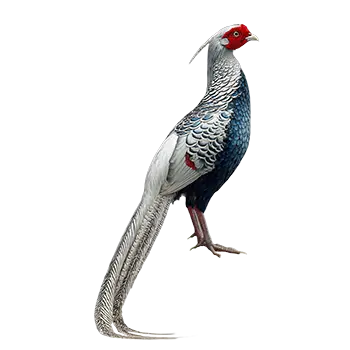
The courtship display of the male Silver Pheasant is one of the most visually spectacular performances among gallinaceous birds and serves important biological functions beyond simple mate attraction. The male's display repertoire includes lateral presentation, during which he positions himself broadside to the female with the wing nearest to her lowered and spread to reveal the striking pattern of white and black feathers across his flank and back. His crimson facial wattles engorge with blood and increase in size during display, and his crest feathers are raised to their full height, creating an impressive head profile.

The courtship sequence often begins with the male performing a ritualized food-calling behavior, picking up and dropping food items while emitting a distinctive clucking vocalization designed to attract the female's attention. This tidbitting display is common across many gallinaceous species and serves as both an honest signal of the male's foraging ability and a mechanism for drawing the female into close proximity. If the female shows interest by approaching and accepting the offered food items, the male typically transitions into the more elaborate lateral display described above.

Mating follows a successful courtship interaction and, in Silver Pheasants, is generally brief and relatively undemanding compared to some pheasant species where the male may be excessively rough with the female. The male mounts the female from behind, and copulation lasts only a few seconds. A well-bonded pair may mate multiple times per day during the peak of the breeding season, which ensures adequate sperm supply for the female's developing follicles. In a trio arrangement with one male and two females, the male will typically display to and mate with both females, though he may show a preference for one over the other.

Monitor the breeding group closely for signs of aggression, particularly during the early stages of pair formation. While Silver Pheasants are generally considered one of the more docile pheasant species, individual males can become aggressive toward females that do not respond to their courtship advances, and occasionally toward those that do. A male that relentlessly chases a female, pulls feathers from her head and neck, or prevents her from accessing food and water is causing unacceptable stress that can result in injury, suppressed reproductive function, and in extreme cases, death. If aggressive behavior persists despite providing adequate space and visual barriers, the pair may be incompatible and should be separated.

Nesting and Egg Laying

Silver Pheasant hens in captivity typically begin laying in mid to late spring as increasing day length triggers hormonal changes that stimulate follicular development and ovulation. The precise timing varies with geographic latitude, local climate, and the individual hen's hormonal cycle. In the Northern Hemisphere, egg laying most commonly commences in April or May, although hens housed in heated facilities with supplemental lighting may begin earlier. The laying season extends through June or July in most captive situations, with some hens producing eggs into early August under favorable conditions.

Providing appropriate nesting sites is essential for encouraging natural nesting behavior and reducing the incidence of eggs being laid in exposed locations where they are vulnerable to damage, contamination, or predation. Silver Pheasants are ground nesters that in the wild select concealed sites beneath dense vegetation or fallen logs. In the aviary, offer several potential nest sites constructed from natural materials. A shallow depression or low-sided box lined with dry leaves, straw, or soft hay, positioned in a sheltered corner with overhead cover and visual screening from the main aviary, replicates the concealed nest sites these birds prefer. Providing multiple options allows the hen to choose the location she finds most secure.

A typical Silver Pheasant clutch consists of 6 to 12 eggs, although first-year hens may produce smaller clutches and experienced hens in optimal condition may occasionally exceed this range. Eggs are laid at intervals of approximately one every other day, and the hen typically does not begin sustained incubation until the clutch is nearly complete. This delayed incubation start is an adaptation that synchronizes hatching across the clutch, ensuring that all chicks emerge within a narrow window and can leave the nest together.

Egg quality should be monitored throughout the laying season. Collect eggs daily if artificial incubation is planned, and evaluate each egg for shell integrity, shape, and cleanliness. Normal Silver Pheasant eggs are pale pinkish-buff to cream in color, smooth-shelled, and approximately 45 to 50 millimeters in length. Thin-shelled eggs, shell-less eggs, or eggs with irregular textures indicate calcium deficiency or oviductal problems and should prompt a review of the hen's diet and a veterinary consultation if the problem persists. Store collected eggs at a temperature of 55 to 65 degrees Fahrenheit with the pointed end slightly downward, and turn them at least once daily until they are set in the incubator. Egg viability declines after seven to ten days of storage, so setting eggs promptly produces the best hatch rates.

Incubation Methods and Management

Silver Pheasant eggs can be incubated either naturally by the hen or artificially in a mechanical incubator, and each approach has distinct advantages and limitations. The choice between natural and artificial incubation depends on the keeper's goals, available equipment, the hen's proven broodiness, and the number of eggs to be hatched. Many experienced breeders use a combination of both methods, allowing particularly broody hens to incubate and raise their own clutches while artificially incubating eggs from hens that are poor sitters or from clutches that exceed what a single hen can cover.

Natural incubation by a Silver Pheasant hen produces chicks that benefit from maternal behavioral modeling and the immunological advantages of natural brooding. However, not all Silver Pheasant hens are reliable sitters. Some hens abandon the nest during incubation due to disturbance, insufficient nest site security, or individual temperamental variation. If you choose natural incubation, minimize disturbance to the nesting hen as much as possible. Avoid unnecessary handling, reduce foot traffic near the nesting area, and ensure that food and water are positioned close enough to the nest that the hen can eat and drink during her brief daily breaks without needing to travel far from her eggs.

Artificial incubation provides precise control over the environmental variables that determine hatch success. Silver Pheasant eggs should be incubated at a temperature of 99.5 to 100 degrees Fahrenheit measured at the center of the egg in a forced-air incubator, or 101 to 102 degrees in a still-air model where temperature is measured at the top of the egg. Relative humidity should be maintained at approximately 55 to 60 percent during the first 21 days, increasing to 65 to 70 percent during the final three days of incubation, which is known as the lockdown period. Eggs should be turned a minimum of three times per day, preferably an odd number of times so that the egg rests on alternate sides each night. Automatic turning mechanisms in modern incubators simplify this task considerably.

Candling the eggs at regular intervals allows you to monitor embryonic development and identify infertile eggs or those with development failures before they contaminate the incubator environment. The first candling can be performed at seven to ten days of incubation, at which point a developing embryo is visible as a dark mass with radiating blood vessels. Clear eggs without visible development at this stage are infertile and should be removed. A second candling at 18 to 20 days confirms continued development and allows identification of late-term deaths. The incubation period for Silver Pheasant eggs is approximately 24 to 25 days under optimal conditions, though slight variations of a day in either direction are within the normal range.

During the lockdown period, stop turning the eggs, increase humidity, and avoid opening the incubator unless absolutely necessary. The developing chick is positioning itself for hatching during this phase, and disruptions can disorient the chick and interfere with the hatching process. Pipping, the initial crack in the eggshell, is usually visible 24 to 48 hours before full emergence. Resist the urge to assist a pipping chick unless more than 24 hours have passed since the first pip with no further progress, as premature intervention can cause fatal hemorrhage from blood vessels in the membrane that have not yet been fully absorbed.

Fertility Optimization and Troubleshooting

Achieving consistently high fertility rates in captive Silver Pheasant breeding programs requires attention to multiple interacting factors. When fertility rates fall below expectations, a systematic troubleshooting approach that evaluates each variable in turn is more productive than focusing on a single suspected cause. Fertility challenges are common even in well-managed programs and should be addressed methodically rather than attributed to a single failing.

Male fertility is influenced by age, nutrition, health status, social dynamics, and the male-to-female ratio within the breeding enclosure. A single male can typically service two to four females effectively, though individual variation in vigor and libido affects this number. Males in their second through fifth breeding seasons generally show the highest fertility rates, with a gradual decline in sperm quality and mating frequency as the bird ages beyond its prime reproductive years. Ensuring that the male is in good body condition, free of foot problems that might interfere with mounting, and not experiencing chronic stress from aggression or environmental disturbance supports optimal reproductive performance.

Female fertility depends on proper nutrition, particularly adequate calcium and vitamin intake, as well as physical condition and hormonal cycling. A hen that is overweight, underweight, or nutritionally deficient may produce fewer eggs, lay eggs with poor shell quality, or produce eggs with lower rates of embryonic viability. The timing of the dietary transition to breeder ration matters considerably. Switching to a higher-protein, calcium-enriched breeder feed at least six to eight weeks before the anticipated onset of laying allows the hen's body to build the nutrient reserves needed for sustained egg production.

If fertility rates are disappointing despite apparently healthy and well-conditioned breeding stock, consider whether the birds have had sufficient time to establish pair bonds and engage in successful mating. Newly assembled breeding groups may require several weeks to complete courtship, establish compatibility, and begin regular copulation. Additionally, environmental factors such as enclosure size, disturbance level, and the availability of visual barriers can influence whether mating behavior occurs frequently enough to maintain fertility. A cramped or exposed enclosure may inhibit the male's courtship displays or cause the female to spend her time avoiding the male rather than receptively responding to his advances.

Sperm viability within the female's oviduct is another variable. Pheasant hens can store viable sperm in specialized tubular glands in the oviductal wall for approximately 10 to 14 days after a single mating, though fertility rates decline progressively over this period. If a male is removed from the breeding pen or becomes temporarily unable to mate due to injury or illness, the hen may continue to produce fertile eggs for up to two weeks, after which fertility will drop sharply. Understanding this timeline helps keepers interpret fertility patterns and make decisions about when to intervene in breeding group management.

Managing the Breeding Season

The breeding season places unique demands on both the birds and the keeper, and proactive management throughout this period maximizes reproductive success while safeguarding the health and welfare of the breeding stock. The season extends from initial pair formation and conditioning through laying, incubation, hatching, and early chick care, representing several months of intensive management that requires planning, dedication, and flexibility.

Monitor the breeding group daily for signs of aggression, injury, or stress. Hormonal changes during the breeding season can transform previously compatible birds into adversaries, particularly if a second male is within visual or auditory range and stimulates competitive behavior. Feather loss on the back and head of females is common and expected from normal mating activity, but excessive feather loss, open wounds, or a female that appears frightened and reluctant to leave shelter indicates a problem that requires intervention. Hen saddles or back protectors, adapted from poultry equipment, can reduce feather damage from mating in some situations, but addressing the underlying aggression is preferable.

Nutritional demands peak during the laying season, and the breeder diet should be continuously available throughout this period. Laying hens consume significantly more calcium than non-breeding birds, and supplemental oyster shell should be provided in a dedicated dish alongside the regular feed. Fresh water consumption also increases during egg production, so ensure that waterers are sized adequately and checked frequently. Some breeders add a vitamin and electrolyte supplement to the drinking water during the laying season to support the metabolic demands of egg production, although this should not substitute for a nutritionally complete base diet.

Record keeping during the breeding season is essential for evaluating the success of pairings and making informed decisions about future breeding plans. For each hen, record the date each egg is laid, egg weight and shell quality, whether the egg was naturally incubated or collected for artificial incubation, candling results at each check point, hatch date and chick condition at hatch, and any fertility or hatchability problems observed. These detailed records, maintained consistently over multiple seasons, reveal patterns in individual performance that guide future pair selections, dietary adjustments, and management improvements.

The conclusion of the breeding season should be managed with as much care as its beginning. As day length begins to decrease in late summer, hormonal activity subsides, laying ceases, and the birds enter the pre-molt phase. Transition the diet back from breeder ration to maintenance feed gradually over two to three weeks. This is an appropriate time to separate the breeding group if the birds will not be maintained together year-round, as the reduction in hormonal tension makes separations less stressful. Post-breeding health evaluations, including body condition assessment, fecal parasite screening, and a general physical examination, help identify any health impacts of the breeding season that should be addressed before the demands of the autumn molt begin.

Breeding Ethics and Program Planning

Responsible breeding of Silver Pheasants in captivity carries obligations that extend beyond the technical aspects of pairing, incubation, and chick rearing. Every breeding decision should be guided by consideration of the welfare of the individual birds involved, the genetic health of the captive population, and the availability of suitable long-term homes for the offspring produced. Breeding without a plan creates surplus birds that may end up in inadequate care situations, and uncritical breeding can erode the genetic quality and subspecific integrity of captive populations over time.

Before initiating a breeding program, honestly assess your capacity to house, feed, and provide veterinary care for the resulting chicks through to placement or permanent housing. A single pair of Silver Pheasants in an average season can produce 10 to 20 chicks, and a breeding trio can produce considerably more. Each chick requires brooding, feeding, health monitoring, and eventually its own aviary space or a confirmed placement with a prepared recipient. Overproducing birds without secured homes leads to crowded conditions, competition for limited resources, and the ethically uncomfortable prospect of having to cull healthy birds or place them with inadequately vetted recipients.

Subspecific identification and purity deserve serious attention in any Silver Pheasant breeding program. The numerous subspecies of Lophura nycthemera differ in plumage pattern, body size, and geographic origin, and hybridization between subspecies produces birds of mixed heritage that cannot be assigned to any recognized form. While hybrid Silver Pheasants may be individually attractive, they dilute the genetic distinctiveness of the parent subspecies and reduce the conservation value of captive populations. If the subspecific identity of your birds is uncertain, make good-faith efforts to determine their lineage before breeding, and be transparent about any uncertainty when placing offspring.

Contributing to broader conservation goals should be a consideration for Silver Pheasant breeders. While the species as a whole is classified as Least Concern by the International Union for Conservation of Nature, several subspecies face habitat pressure in their native ranges, and well-managed captive populations serve as a genetic reservoir against future declines. Participating in regional or national avicultural societies, contributing data to studbook programs, and networking with other breeders to coordinate pairings that maximize genetic diversity all enhance the long-term value of your breeding efforts beyond the individual collection.

Finally, know when to retire a bird from breeding. Hens that have produced reliably for several seasons will eventually show declining fertility, reduced egg quality, or physical toll from repeated reproductive cycles. Continuing to breed a hen past her productive prime subjects her to physiological stress without proportional benefit to the program. Retired breeders deserve comfortable placement in well-maintained aviaries where they can live out their remaining years without the demands of reproduction. Similarly, males that have contributed their genetics to multiple generations within a closed population should be replaced with unrelated males to prevent the genetic narrowing that comes from overrepresentation of a single male's lineage.

Always consult a qualified professional before making any health-related decisions. This content is provided for informational reference only and should not replace professional guidance specific to your animal.