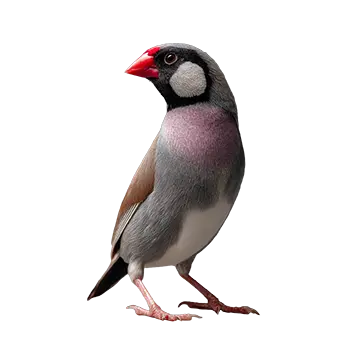

Growth & Physical Development

The juvenile stage in Java Sparrows begins at fledging, typically around three to four weeks of age, and extends through the completion of the first adult molt at roughly four to six months. During this period, the young bird undergoes a dramatic transformation from a drab, brownish-gray fledgling into the striking finch recognized for its bold black head, bright white cheeks, and prominent coral-pink beak. This transition does not happen overnight but unfolds gradually as juvenile feathers are replaced by adult plumage through the molting process.

Physical growth in terms of body size is largely complete by the time a Java Sparrow fledges, but the bird continues to fill out and gain muscle mass over the following weeks. Flight strength and coordination improve rapidly during the first few days out of the nest, and within a week or two of fledging, most juvenile Java Sparrows are reasonably confident fliers capable of navigating their enclosure with agility. Leg and foot strength also increases as the young bird spends more time perching, climbing, and exploring its surroundings.

The beak undergoes one of the most noticeable changes during the juvenile period. At fledging, it is typically a pale pinkish-gray, but it gradually deepens in color over the following months, eventually reaching the vivid reddish-coral hue characteristic of mature adults. Beak development is closely tied to nutrition, and birds that receive a well-balanced diet during this period tend to develop richer, more vibrant beak coloration than those on a deficient or monotonous diet.

Weight should be monitored periodically during the juvenile stage to ensure steady, healthy development. A healthy juvenile Java Sparrow typically weighs between 22 and 30 grams, depending on its age and individual genetics. Sudden weight loss, failure to gain weight, or a persistently underweight bird may indicate illness, parasites, or nutritional deficiency that warrants investigation.

Nutrition & Diet Transition

The weaning period is one of the most important nutritional transitions in a Java Sparrow's life. After fledging, the young bird continues to beg for and receive food from its parents for approximately two to three additional weeks, but it simultaneously begins experimenting with eating on its own. Providing easily accessible food and water dishes positioned near favored perching spots helps encourage independent feeding. Shallow dishes work best for juveniles who are still learning to hull seeds and may be clumsy with deeper containers.

A high-quality finch seed mix should form the foundation of the juvenile diet, with particular emphasis on paddy rice, which Java Sparrows are especially adapted to consume. Millet sprays can be hung in the cage to encourage foraging behavior and provide both nutrition and enrichment. Sprouted seeds are an excellent addition during this stage because they are softer and easier for a young bird to consume while also being more nutrient-dense than dry seeds.

Supplemental foods are essential during the juvenile growth period. Egg food provides concentrated protein that supports feather development and muscle growth. Finely chopped dark leafy greens such as kale, spinach, and dandelion greens supply vitamins and minerals that are often lacking in a seed-only diet. Small amounts of grated carrot, cucumber, or apple can be offered to introduce dietary variety, though Java Sparrows tend to be more seed-focused than some other finch species and may take time to accept fresh foods.

Calcium supplementation remains important through the juvenile stage, as the skeletal system continues to mature and harden. Cuttlebone should be available at all times, and a mineral block or crushed oyster shell can be provided as an additional calcium source. Grit, while debated among aviculturists, is generally considered beneficial for finches as it aids in grinding seeds within the gizzard. If offered, it should be provided in a separate small dish and kept clean and fresh.

Behavioral Development

Juvenile Java Sparrows are curious, active, and increasingly social as they emerge from the nest and begin interacting with the world beyond their parents. In the first days after fledging, the young birds tend to stay close to the nest box and their parents, but their confidence grows quickly. Within a week, most juveniles are actively exploring every corner of their enclosure, investigating toys, perches, food dishes, and anything novel in their environment with characteristic finch inquisitiveness.

Social hierarchy begins to establish itself among juvenile clutchmates during this period. Mild squabbling over preferred perching spots and food access is normal and rarely results in injury. These interactions are an important part of learning the social rules that govern flock life in Java Sparrows. Birds that are raised in isolation without siblings or other flock members may struggle with social integration later in life, which is one reason why Java Sparrows are generally best kept in pairs or small groups rather than singly.

Male juveniles typically begin practicing their song during this stage, producing quiet, disjointed phrases that gradually become more structured and melodic over time. The Java Sparrow song is a soft, musical series of clicks, chirps, and warbles that males use to establish territory and attract mates. Females do not typically sing but may produce contact calls and short vocalizations. Observing song development can be one of the earliest ways to tentatively sex young Java Sparrows, though it is not fully reliable until the birds are several months old.

Bathing behavior typically emerges strongly during the juvenile period. Java Sparrows are enthusiastic bathers, and providing a shallow bath dish or clip-on bath house encourages this natural behavior. Regular bathing helps maintain feather condition, supports the molting process, and provides excellent physical and mental enrichment. The water should be lukewarm and changed frequently, as juvenile birds may also drink from the bath dish.

Socialization & Flock Integration

If the juvenile Java Sparrows are to be integrated into an existing flock or aviary, the transition should be managed carefully to minimize stress and prevent aggression from established birds. Young Java Sparrows are generally accepted more readily into a flock than adults, but they are also more vulnerable to bullying due to their smaller size and subordinate social status. A gradual introduction, starting with visual contact through adjacent cages before allowing physical interaction, is the safest approach.

For birds intended as companion pets, the juvenile stage is the ideal window for building a strong bond with their human caretaker. Daily handling sessions, starting with just a few minutes and gradually extending as the bird becomes comfortable, help establish trust. Offering small treats such as a single millet seed from the fingertips during these sessions reinforces positive associations with human contact. Patience is essential, as Java Sparrows tend to be more reserved than some other commonly kept finch species and may take longer to warm up to handling.

Juvenile Java Sparrows that are housed with their parents will naturally begin to separate themselves as they become more independent. The parents may also start to push the young birds away, particularly if they are preparing to nest again. This is a normal part of the weaning and independence process and should not be interpreted as aggression or rejection. Once the juveniles are fully weaned and eating independently, they can be moved to their own cage or integrated into a separate flight.

Environmental enrichment becomes increasingly important as the juveniles grow more active and exploratory. A variety of perch sizes and textures, swings, ladders, and safe foraging toys help keep young Java Sparrows mentally stimulated and physically fit. Rotating enrichment items periodically prevents boredom and encourages the natural curiosity that characterizes healthy juvenile behavior.

The First Molt

The first molt is a defining event in the juvenile Java Sparrow's development, marking the transition from juvenile plumage to the distinctive adult feathering that the species is known for. This molt typically begins around two to three months of age and may take several weeks to complete. During this time, the bird gradually sheds its plain brownish-gray juvenile feathers and replaces them with the sharply contrasting adult plumage of slate-gray body feathers, a jet-black head, and bright white cheek patches.

Molting is energetically expensive and places significant demands on the bird's nutritional reserves. During the molt, the diet should be enriched with additional protein sources such as egg food, and calcium and mineral supplementation should be maintained or increased. Some keepers also add a small amount of a vitamin supplement designed for cage birds to the drinking water during molt, though this should be done judiciously and according to product directions to avoid over-supplementation.

Behavioral changes during the molt are common and generally temporary. Juvenile Java Sparrows in active molt may be less active than usual, sleep more, and appear slightly irritable or less tolerant of handling. This is a normal physiological response to the demands of feather replacement and should not be cause for alarm unless accompanied by other signs of illness such as weight loss, abnormal droppings, or respiratory distress. Reducing handling and allowing the bird extra rest during heavy molting periods is a considerate approach.

The completion of the first molt is an exciting milestone for keepers, as it reveals the bird's final adult coloration and pattern. In color mutation varieties such as white, fawn, cream, or silver Java Sparrows, the first molt confirms the bird's color genetics in a way that may not have been fully apparent in the juvenile plumage. It is also at this point that visual sex differences become somewhat easier to detect, as males tend to develop slightly larger, more brightly colored beaks and more prominent eye rings than females, though these differences can be subtle.

Health Monitoring & Vet Care

Regular health monitoring during the juvenile period helps catch potential problems early when they are most treatable. A healthy juvenile Java Sparrow is alert, active, has bright and clear eyes, smooth and gradually developing plumage, and produces well-formed droppings. The bird should be eating and drinking regularly, maintaining or gaining weight, and showing interest in its environment and flockmates.

Common health issues in juvenile Java Sparrows include air sac mites, which can cause labored breathing, tail bobbing, and clicking sounds during respiration. This parasitic infection is treatable but can be fatal if left unaddressed, particularly in young birds whose respiratory systems are still developing. Scaly face mites, which cause crusty growths around the beak and eyes, are another parasitic concern that is readily treatable when identified early. Any suspected mite infestation should be confirmed and treated by an avian veterinarian.

Intestinal parasites and bacterial infections can also affect juveniles, particularly those housed in outdoor aviaries or in close proximity to wild birds. Symptoms may include fluffed feathers, lethargy, weight loss, and changes in droppings. A fecal examination by a veterinarian can identify many common parasites, and treatment is generally straightforward when administered promptly.

A wellness examination by an avian veterinarian is recommended at some point during the juvenile stage, particularly for birds that will be used for breeding or that are being integrated into an established collection. This visit provides a baseline health assessment, allows for parasite screening, and gives the keeper an opportunity to discuss diet, housing, and any concerns about the bird's development. Establishing a veterinary relationship during the juvenile stage ensures that expert care is readily available if health issues arise later in the bird's life.

Housing & Flight Space

As juvenile Java Sparrows gain flight confidence and become increasingly active, their housing requirements expand beyond the confines of the breeding cage or nest area. Ideally, young Java Sparrows should be moved into a flight cage or small aviary that allows for extended flight, which is essential for building the strong pectoral muscles and cardiovascular fitness that support lifelong health. A minimum cage size for a pair of juvenile Java Sparrows is approximately 30 inches long by 18 inches wide by 18 inches tall, though larger is always better.

Perch placement in the juvenile enclosure should encourage flight between perches rather than short hops. Positioning perches at different heights and at opposite ends of the cage promotes longer flights and better exercise. Natural wood perches of varying diameters are preferable to uniform dowel perches, as they exercise the feet and help prevent pressure sores on the soles. Avoid sandpaper perch covers, which can abrade the delicate skin of the feet and cause discomfort or injury.

The cage or aviary should be positioned in a well-lit area that receives natural light but is not in direct, unfiltered sunlight for extended periods, which can cause overheating. A partial cover or shade cloth on one side of the cage gives the birds the option to retreat from light when they choose. The location should also be relatively quiet and free from sudden loud noises, household hazards such as cooking fumes and scented candles, and other pets that might stress or threaten the birds.

Cleanliness is particularly important in juvenile housing because young birds are more susceptible to bacterial and fungal infections than established adults. Cage bottoms should be cleaned and the substrate replaced regularly. Food and water dishes should be washed daily and positioned away from perches to minimize contamination from droppings. A thorough cage disinfection with a bird-safe cleaning product should be performed on a weekly basis, with the birds temporarily relocated during the cleaning process.

Always consult a qualified professional before making any health-related decisions. This content is provided for informational reference only and should not replace professional guidance specific to your animal.