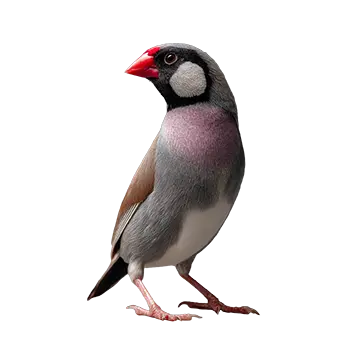

Java Sparrow chicks hatch after approximately 14 to 16 days of incubation, emerging as tiny, featherless, and completely helpless nestlings. Their eyes are sealed shut and their skin is translucent and pinkish, revealing the underlying musculature. At hatching, each chick weighs only a few grams and is entirely dependent on its parents for warmth, protection, and nutrition. The first hours are critical for establishing the parent-chick bond that will sustain the young bird through its earliest development.
During this initial period, healthy parent birds will instinctively begin feeding their hatchlings within hours of emergence. The chicks possess a feeding response that causes them to gape widely when they sense vibrations or warmth near the nest, opening their mouths to reveal brightly colored mouth markings that guide the parents during feeding. It is essential that the nesting environment remains calm and undisturbed so the parents can focus entirely on their new offspring without stress or distraction.
Breeders and keepers should resist the urge to handle or closely inspect the chicks during the first day unless there is a clear sign of distress. Excessive interference can cause parent birds to abandon the nest or neglect feeding duties. A brief visual check from a reasonable distance is usually sufficient to confirm that chicks are alive and that the parents are attentive. If a chick appears to have been pushed from the nest or is noticeably cold and unresponsive, intervention may be necessary, but this should be approached with caution and ideally guided by an avian veterinarian.
The nest box or nesting area should be secure, clean, and lined with appropriate nesting material that the parents have arranged themselves. Java Sparrows prefer enclosed nest boxes with a small entry hole, which helps retain warmth and gives the parents a sense of security. Avoid replacing or rearranging nesting material at this stage, as doing so can disorient the parents and disrupt their caregiving routine.