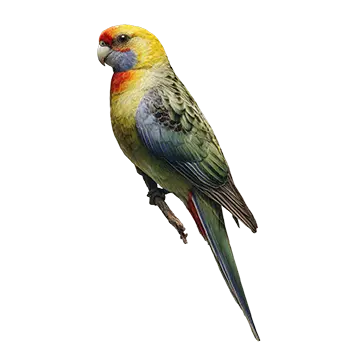

Daily Care & Routine

An adult Green Rosella thrives on predictable daily routines that provide structure, security, and engagement. As creatures of habit, rosellas quickly learn the rhythms of their household and derive comfort from knowing when meals arrive, when out-of-cage time happens, and when lights dim for the evening. Establishing and maintaining a consistent daily schedule is one of the simplest yet most effective things an owner can do to support the long-term wellbeing of an adult bird.

The day should begin with a fresh supply of food and water. Remove any uneaten fresh produce from the previous day and replace it with a new serving of pellets and a fresh selection of chopped fruits and vegetables. Check the water dish or bottle for cleanliness, as bacterial biofilms can develop rapidly in water containers, particularly in warm environments. Many experienced rosella keepers prefer open water dishes over tube-style bottles because they allow the bird to bathe and are easier to clean thoroughly, though they require more frequent changes throughout the day.

Out-of-cage time is essential for an adult Green Rosella's physical and psychological health. A minimum of two to three hours of supervised free flight or exploration outside the cage each day allows the bird to exercise its flight muscles, explore its environment, and interact with family members in a natural, unconfined context. During out-of-cage time, ensure all windows and doors are closed, ceiling fans are off, and potential hazards such as open toilet lids, hot cooking surfaces, and toxic houseplants are secured. Green Rosellas are curious and active fliers, and a bird-safe room requires more preparation than many first-time owners anticipate.

Evening routines should include a wind-down period that signals the approaching sleep cycle. Green Rosellas require ten to twelve hours of uninterrupted darkness for proper rest and hormonal regulation. A cage cover or a dedicated sleep cage in a quiet, dark room helps the bird achieve consistent, quality sleep. Chronic sleep deprivation in parrots and parakeets is associated with irritability, immune suppression, and hormonal dysregulation, making proper sleep hygiene a genuine health priority rather than a minor convenience.

Optimal Adult Nutrition

The nutritional needs of an adult Green Rosella differ from those of a growing juvenile, shifting from the high-calorie, protein-rich demands of development to a maintenance diet that supports stable body weight, feather condition, immune function, and reproductive readiness. Green Rosellas in the wild forage across a diverse landscape of eucalyptus woodland, grassland, and garden habitat, consuming a seasonally variable diet of seeds, fruits, blossoms, nectar, insects, and green plant material. A well-designed captive diet mirrors this diversity as closely as practical considerations allow.

A formulated pellet diet should remain the dietary foundation, comprising approximately 50 to 60 percent of the adult bird's daily intake. Pellets eliminate the nutritional gaps that inevitably occur when a bird selectively feeds on a seed mix, picking out high-fat favorites and leaving nutritionally important but less palatable items untouched. If the bird was transitioned to pellets during the juvenile period, maintaining this base is straightforward. For birds acquired as adults that are seed-dependent, conversion to pellets is still possible but requires patience, persistence, and careful weight monitoring to ensure the bird continues eating adequately during the transition.

Fresh produce should account for 30 to 40 percent of the diet and should vary from day to day to provide a broad spectrum of vitamins, minerals, and phytonutrients. Emphasize dark leafy greens, orange and yellow vegetables, and moderate amounts of fresh fruit. Green Rosellas in particular often enjoy native Australian plants and flowers when available, including bottlebrush blossoms and eucalyptus leaves, which can be offered if sourced from pesticide-free locations. Avoid avocado, chocolate, caffeine, alcohol, onion, garlic, and fruit seeds or pits, all of which are toxic to parrots.

Seeds and nuts can be offered sparingly as treats, training rewards, or foraging enrichment, but should not exceed 10 to 15 percent of the total diet. Sunflower seeds and peanuts are particularly high in fat and should be reserved for occasional treats rather than daily offerings. Sprouted seeds offer a nutritionally superior alternative to dry seeds, with higher protein and lower fat content. Clean, fresh water must be available at all times, and mineral supplementation through cuttlebone or mineral block should remain a permanent fixture in the cage.

Monitoring body condition is more informative than tracking weight alone in an adult bird. Learn to assess the keel bone prominence by gently palpating the bird's chest. In a bird at healthy weight, the keel should be palpable but not sharp or protruding. Excessive fat deposits around the abdomen, visible as a yellowish discoloration beneath the skin, indicate overfeeding or a diet too high in fat. Obesity in captive parrots is common and contributes to fatty liver disease, atherosclerosis, and reduced lifespan.

Enrichment & Mental Stimulation

Green Rosellas are intelligent, active birds that require consistent mental and physical stimulation to prevent the boredom-driven behavioral problems that afflict many captive psittacines. In the wild, a Green Rosella spends the majority of its waking hours engaged in purposeful activity, including foraging across large areas, maintaining social bonds, evading predators, and navigating complex three-dimensional environments. A captive bird that sits in a cage with a full food bowl and nothing to do is being deprived of the cognitive challenges its brain was built to handle.

Foraging enrichment is the most important category of mental stimulation for a captive rosella. Rather than presenting all food in an open dish, incorporate foraging opportunities that require the bird to work for its meals. Wrap treats in paper, hide pellets inside foraging toys, thread vegetables onto skewers, and scatter seeds on a tray of clean pebbles or shredded paper. These activities engage the bird's problem-solving abilities and extend the time spent eating from minutes to the hours that would be spent foraging in the wild.

Physical enrichment should include opportunities for climbing, swinging, and manipulating objects of varied textures and materials. Natural wood branches, both inside the cage and as free-standing play gyms, provide chewing and perching surfaces. Leather strips, untreated wicker, coconut shell pieces, and balsa wood blocks are all materials that Green Rosellas typically enjoy shredding and destroying. Destructible toys should be replaced regularly, and the bird's preferences noted so that the most engaging types are always available.

Social enrichment is the dimension most frequently underestimated by owners. A singly kept Green Rosella relies entirely on its human companions for social interaction, and this responsibility should not be taken lightly. Regular, quality interaction that includes training sessions, verbal communication, and shared activities like supervised exploration of different rooms provides the social engagement the bird needs. Training sessions using positive reinforcement techniques serve double duty as both mental stimulation and relationship building. Even five to ten minutes of focused training per day, working on new behaviors, refining existing ones, or simply practicing recall from different locations, provides substantial cognitive enrichment.

Rotating the bird's environment periodically prevents habituation and reignites curiosity. Rearranging perches and toys within the cage every week or two, introducing novel objects for investigation, and allowing supervised access to different areas of the home all contribute to a stimulating environment. Some owners create dedicated play areas in multiple rooms, giving the bird varied experiences during its daily out-of-cage time.

Health Maintenance & Preventive Care

Preventive health care for an adult Green Rosella centers on a combination of regular veterinary examinations, consistent at-home monitoring, and proactive management of the environmental and dietary factors that influence long-term health. As with most psittacines, Green Rosellas are adept at masking signs of illness until a condition has advanced significantly, which makes routine veterinary assessment and daily observational vigilance genuinely important rather than merely advisable.

Annual wellness examinations with an experienced avian veterinarian should be considered the minimum standard of care. A comprehensive annual visit typically includes a thorough physical examination, body weight and condition assessment, a fecal analysis for parasites and abnormal bacterial flora, and baseline blood work including a complete blood count and biochemistry panel. These baseline values are invaluable for comparison when illness does occur, as deviations from an individual bird's established normal ranges can be detected earlier and interpreted more accurately than generic reference values alone would allow.

At-home health monitoring should be a daily practice integrated into the bird's routine care. Observe the bird's droppings each morning, noting consistency, color, and volume of the fecal, urate, and urine components. Normal Green Rosella droppings consist of a formed, greenish to brownish fecal portion, a white to cream urate component, and a small amount of clear urine. Significant changes in any of these components, particularly the appearance of undigested food, blood, discoloration of the urates, or a marked increase in urine volume, warrant veterinary consultation.

Respiratory health deserves special attention in this species. Birds housed indoors are particularly susceptible to respiratory irritants including cooking fumes, aerosol sprays, scented products, tobacco smoke, and the fumes released by overheated polytetrafluoroethylene-coated cookware, which can be rapidly fatal even in trace amounts. Ensure the bird's living area has clean, filtered air circulation, and eliminate all airborne toxins from the home. Aspergillosis, a fungal respiratory infection caused by Aspergillus species, is a significant concern for captive parrots and parakeets and is best prevented through careful environmental management, proper ventilation, and avoidance of moldy food or bedding.

Feather health is both an indicator of overall wellness and a specific area of concern. Normal annual molting should produce symmetrical feather replacement with clean, well-formed new feathers. Abnormal feather loss, bald patches, stress bars across feather vanes, or feathers that appear bent, frayed, or discolored outside of normal wear may indicate nutritional deficiency, hormonal imbalance, infection, or behavioral feather destructive disorder. Distinguishing between medical and behavioral causes of abnormal feathering requires veterinary evaluation and sometimes extensive diagnostic testing.

Behavioral Management in Adulthood

Managing the behavior of an adult Green Rosella requires an understanding of the species' natural temperament combined with consistent, positive interaction strategies. Green Rosellas are often described as more independent and less clingy than many commonly kept parrot species, which can be interpreted as aloofness by owners who expect the intensely affectionate bonding style of a cockatoo or an African Grey. In reality, the Green Rosella's independence is a reflection of a species that, in the wild, spends much of its time foraging and exploring rather than engaging in prolonged mutual preening with a partner.

Hormonal behavior is a recurring challenge in adult parrots and parakeets of all species, and Green Rosellas are no exception. During breeding season, which in captive birds may occur once or twice a year depending on light exposure and environmental cues, both males and females may exhibit increased territoriality, aggression, nesting behavior, and hormonal posturing. Understanding that these behaviors are biologically driven rather than willful misbehavior helps caregivers respond with patience. Managing light exposure to ensure the bird receives no more than 10 to 12 hours of light per day, removing potential nest sites, and avoiding petting the bird along its back or under its wings, which stimulates hormonal responses, can help moderate the intensity and duration of hormonal episodes.

Biting remains a common concern for rosella owners. Adult Green Rosellas may bite for a variety of reasons including fear, territorial defense, hormonal agitation, overstimulation, or simple communication of a preference to be left alone. The key to managing biting is identifying the context and motivation behind each episode rather than applying a blanket punishment strategy. A bird that bites when its cage is reached into may be defending territory and would benefit from being asked to step up to a perch brought to the cage door rather than a hand thrust inside. A bird that bites during handling may be communicating that it has had enough interaction and needs to return to its cage.

Screaming and excessive vocalization are less commonly problematic in Green Rosellas than in some louder species, but they can still occur, particularly if the bird has learned that screaming elicits a response from its owner. The most effective approach is to ignore unwanted vocalizations entirely while reinforcing quiet or acceptable sounds with attention and treats. Yelling at a screaming bird typically escalates the behavior, as the bird interprets the human's raised voice as flock contact and responds in kind.

Common Adult Health Conditions

While Green Rosellas are generally hardy birds when properly cared for, several health conditions occur with enough frequency in captive adults to warrant awareness and monitoring. Early recognition and veterinary intervention improve outcomes substantially for most of these conditions, underscoring the importance of the daily observational habits and annual veterinary examinations discussed earlier.

Psittacine Beak and Feather Disease, caused by a circovirus, is a concern for all psittacine species including rosellas. The disease attacks feather follicles, the beak, and the immune system, producing progressive feather loss and deformity, beak abnormalities, and immunosuppression that leaves the bird vulnerable to secondary infections. There is no cure, and the disease is contagious, making it critically important to test birds before introducing them to a household with existing psittacines. Birds that test positive should be isolated and managed with guidance from an avian veterinarian.

Fatty liver disease, or hepatic lipidosis, is one of the most common metabolic disorders in captive parrots and parakeets and is strongly associated with diets high in fat, particularly seed-heavy diets rich in sunflower seeds and peanuts. Symptoms may include obesity, lethargy, abnormally colored droppings, overgrown beak, and feather changes. Diagnosis is typically made through blood work showing elevated bile acids and liver enzymes, sometimes supplemented by imaging. Treatment involves dietary correction, supportive care, and sometimes hepatoprotective medications, but prevention through a balanced, low-fat diet is far more effective than treating established disease.

Psittacosis, caused by the intracellular bacterium Chlamydia psittaci, is a zoonotic disease, meaning it can be transmitted from birds to humans. In birds, symptoms range from mild respiratory signs and conjunctivitis to severe systemic illness with nasal discharge, lethargy, and lime-green droppings. Diagnosis requires specific testing, and treatment involves a prolonged course of doxycycline. Because of the public health implications, any bird showing compatible symptoms should be tested promptly, and appropriate hygiene measures should be implemented to protect human household members.

Internal and external parasites, while less common in exclusively indoor-housed birds, can affect Green Rosellas that have outdoor aviary access, contact with wild birds, or exposure to fresh-cut branches and vegetation. Internal parasites such as roundworms, capillaria, and coccidia are diagnosed through fecal examination. External parasites including feather mites, red mites, and scaly face mites can be identified through physical examination and skin scrapings. Regular fecal screening and vigilant observation for scratching, feather damage, or crusty lesions around the beak and cere help catch parasitic infestations early.

Building a Lifelong Bond

The relationship between a Green Rosella and its owner is built incrementally through years of consistent, respectful interaction. Unlike some parrot species that bond intensely and almost immediately, Green Rosellas often develop their deepest attachments gradually, rewarding patient owners with a loyalty and affection that is all the more meaningful for having been earned over time. Understanding and respecting the species' pace of bonding is essential for building a relationship that is satisfying for both bird and human.

Daily interaction that is positive and non-coercive forms the bedrock of the bond. Spend time near the bird even when not directly interacting with it, reading, working, or watching television in the same room. This ambient companionship allows the bird to feel included in the flock's activities without the pressure of forced interaction. When you do engage directly, let the bird set the tone. Some days it may be eager for head scratches and handling. Other days it may prefer to sit on your shoulder and observe. Respecting these fluctuations in the bird's desire for contact builds trust and communicates that the relationship is based on mutual consent.

Shared activities create positive associations and deepen the connection. Many Green Rosella owners find that mealtime is a natural bonding opportunity, with the bird joining the family at the table to share bird-safe portions of whatever is being eaten. Training sessions, even brief ones, provide structured positive interaction that challenges the bird's intellect and rewards cooperation. Some owners develop elaborate trick routines or target training exercises that become a daily highlight for both parties.

Recognizing and responding to the bird's communication signals strengthens the relationship over time. Green Rosellas communicate their emotional states through body language, vocalizations, feather position, eye pinning, and physical orientation. A bird that fans its tail and lowers its head is inviting interaction. A bird that leans away, tightens its feathers against its body, or raises a foot in warning is signaling that it wants space. Learning to read and respect these signals creates a dialogue that transcends the limitations of interspecies communication and forms the basis of a genuinely reciprocal relationship.

Prepare for the long term. A well-cared-for Green Rosella can live 20 to 30 years in captivity, and some individuals exceed this range. This is a commitment that spans decades and must be planned for accordingly. Consider provisions for the bird's care in the event of your incapacity or death, identify backup caregivers who are familiar with the bird, and maintain the bird's relationship with more than one trusted person so that it is not entirely dependent on a single individual for its social and emotional needs.

Always consult a qualified professional before making any health-related decisions. This content is provided for informational reference only and should not replace professional guidance specific to your animal.