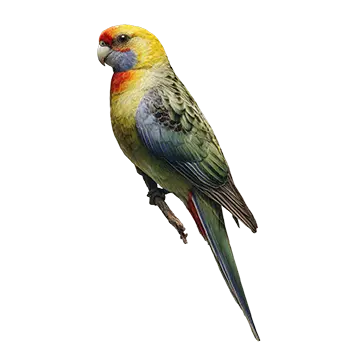

Successful Green Rosella breeding begins long before any eggs are laid, with the careful selection and pairing of genetically unrelated, healthy, and behaviorally compatible birds. Green Rosellas, like all Platycercus species, can be aggressive during the breeding season, and mismatched pairs may fight rather than bond, resulting in injury or even death to one of the birds. Taking the time to select an appropriate pair and introduce them properly is the most important step a breeder can take to ensure a safe and productive breeding season.
Both members of the breeding pair should be in peak physical condition before breeding is attempted. A comprehensive veterinary examination, including blood work and disease screening for Psittacine Beak and Feather Disease, Polyomavirus, and Chlamydia psittaci, should be performed on both birds well in advance of the breeding season. Any bird that tests positive for a transmissible disease must not be bred, as vertical transmission to chicks and horizontal transmission to the partner are both significant risks. Both birds should be at a healthy weight, with excellent feather condition and no history of chronic health problems.
Sexual maturity in Green Rosellas typically occurs between 12 and 18 months of age, but most experienced breeders recommend waiting until the birds are at least two years old before allowing them to breed. Younger birds, particularly hens, are more prone to egg-binding, poor parenting behavior, and incomplete physical development that can be exacerbated by the metabolic demands of egg production. Males that breed too young may be insufficiently attentive to the hen and chicks, leading to nest abandonment or aggression.
Green Rosellas are sexually dimorphic to a modest degree, with males typically being slightly larger overall and having brighter, more extensively colored plumage than females. However, visual sexing is not reliable in this species, and DNA sexing through a blood or feather sample is strongly recommended to confirm the sex of both birds before pairing. Surgical sexing via endoscopy, while more invasive, provides the added benefit of allowing visual assessment of the reproductive organs for maturity and health.
Introduce potential pairs gradually and under close supervision. Housing the birds in adjacent cages where they can see, hear, and interact through the barrier without physical contact allows them to become familiar with each other before being placed together. Signs of compatibility include mutual preening through the cage bars, coordinated vocalizations, and relaxed body language in each other's presence. Signs of incompatibility, such as persistent aggression, fearful avoidance, or stress behaviors, indicate that the pairing should be reconsidered.