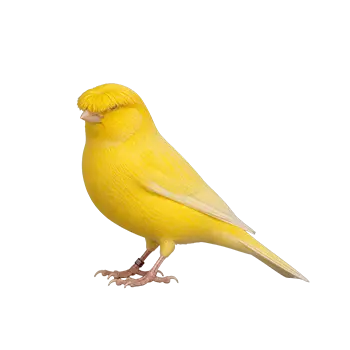

The Juvenile Transition

The juvenile stage of a Gloster Canary begins when the chick fledges from the nest, typically between fourteen and eighteen days of age, and extends through the completion of its first full molt at roughly three to four months old. This is a period of extraordinary change. The clumsy fledgling that tumbles from the nest rim on unsteady wings will, over the course of just a few weeks, become an independent bird capable of feeding itself, navigating its environment with confidence, and beginning to develop the vocal repertoire that defines the species. Understanding the phases within this transition helps keepers provide the right support at each step.

Immediately after fledging, the young Gloster is still being fed by one or both parent birds, even though it is no longer in the nest. The cock bird typically takes over the majority of feeding duties at this point, allowing the hen to begin preparing for a potential second clutch. The fledgling will follow the cock around the cage, begging with fluttering wings and open gape, and the father bird will oblige with regurgitated seed and egg food. This overlap period, where the young bird is out of the nest but not yet self-sufficient, usually lasts between ten and fourteen days.

During the first days out of the nest, fledglings are poor fliers and frequently end up on the cage floor. This is normal and not cause for alarm, provided the cage floor is clean and free of hazards. Place low perches or small branches near the floor to give fledglings easy stepping stones back up to higher perches. Water dishes should be shallow enough that a fledgling that lands in one cannot drown. Some breeders place a thin layer of seed directly on the cage floor during this period to encourage the fledgling to begin exploring food on its own.

The psychological shift that occurs during the juvenile transition is as significant as the physical one. The bird moves from a world defined entirely by the nest and its parents to one of independent exploration and decision-making. Young Glosters that are allowed to fledge in a calm, well-managed environment develop confidence more quickly than those subjected to sudden cage changes, loud disturbances, or aggressive cagemates. Patience during this awkward phase pays dividends in the form of a well-adjusted adult bird.

Weaning & Dietary Independence

Weaning is the process by which a juvenile Gloster Canary transitions from being fed by its parents to eating independently, and it typically occurs between twenty-eight and thirty-five days of age. Unlike the abrupt weaning that some breeders practice with parrot species, canary weaning is a gradual and largely self-directed process. The young bird begins sampling seeds and soft foods on its own while still receiving supplemental feeds from the parent, and over the course of a week or so, the parental feedings taper off naturally as the juvenile becomes proficient at hulling seed.

The diet offered to weaning Glosters should be diverse and easy to access. Small, soft seeds such as canary grass seed and niger seed are the easiest for young birds to crack. Soaked seed remains particularly valuable during this period because the softened hulls require less mandibular strength to open. Continue offering fresh egg food daily, as the high protein content supports the juvenile's rapid growth and the impending demands of its first molt. Finely chopped greens, grated carrot, and small pieces of apple provide additional nutrients and encourage foraging behavior.

Watch carefully for the moment when each juvenile is reliably self-feeding before separating it from the parent birds. A common error among novice breeders is removing young birds too early, before they have fully mastered independent feeding. A juvenile that appears to peck at seed may actually be playing with it rather than consuming it. Confirm self-feeding by observing the bird actively cracking and eating seeds, checking that its crop is full at multiple points throughout the day without parental feeding, and monitoring weight stability over several consecutive days.

Once weaning is confirmed, the young birds can be moved to a separate juvenile cage or flight. House them with other juveniles of similar age and size if possible, as this provides social interaction without the competitive pressure of being placed with fully mature adults. Ensure that food and water stations are positioned at heights the juveniles can easily reach, and consider using multiple feeding points to reduce competition. The transition from the breeding cage to independent housing is a significant event for a young Gloster, and minimizing stress during this move helps the bird settle quickly into its new environment.

The First Molt

The juvenile molt is one of the most significant physiological events in a young Gloster Canary's life. Beginning at roughly six to eight weeks of age and continuing for several weeks, this molt replaces the bird's juvenile plumage with its first set of adult contour feathers. The outcome of this molt has lasting implications for the bird's appearance, particularly for Corona variety Glosters, whose crest shape and density are established during this feather replacement cycle. Breeders and keepers who understand the process can provide optimal support during this demanding period.

The molt is metabolically expensive. Growing new feathers requires substantial protein, fat, amino acids, and minerals, and a juvenile Gloster that is nutritionally deficient during its molt will produce poor-quality plumage that may include fault bars, thin shafts, or dull coloration. Increase the protein content of the diet during active molting by offering egg food more frequently and adding a small amount of conditioning seed mix that includes hemp, linseed, and perilla. A specialized molting supplement containing methionine and other sulfur-containing amino acids can also support feather quality, though it should not replace a well-rounded diet.

During the molt, the young bird may appear ragged and unkempt as old feathers are shed and new pin feathers emerge. This is entirely normal and not a sign of illness. The bird may also be quieter than usual, less active, and somewhat irritable, as the process of pushing new feathers through the skin is physically uncomfortable. Avoid handling juvenile Glosters more than necessary during active molting, as disturbing emerging pin feathers can cause pain and, in severe cases, bleeding. Baths or light misting with lukewarm water help soothe the skin and encourage preening, which aids in the removal of feather sheaths from newly emerged feathers.

The first molt also provides the first reliable opportunity to assess the quality of a Corona Gloster's crest. As the adult crest feathers grow in, their length, density, direction of growth, and overall shape become apparent. A well-formed crest should be neat, symmetrical, and evenly distributed around the crown without gaps or thin patches. Consort juveniles, meanwhile, should develop a smooth, tight head cap of feathers with no hint of crest feathering. Any bird whose variety was uncertain at hatching can usually be definitively classified as Corona or Consort by the conclusion of the juvenile molt.

Early Song Development

Song development in juvenile male Gloster Canaries is one of the most fascinating aspects of this life stage. Male canaries do not hatch knowing their song. Instead, they acquire it through a combination of innate predisposition and learned imitation during a sensitive period that roughly coincides with the juvenile and early adolescent months. Young males begin producing their first vocalizations, known as subsong, at approximately four to six weeks of age. Subsong is quiet, rambling, and unstructured, bearing little resemblance to the polished phrases of an adult singer, but it represents the essential first step in vocal learning.

The acoustic environment during this developmental window profoundly influences the song a male Gloster will ultimately produce. Young males housed within earshot of experienced adult singers will absorb and practice elements of those adults' songs, gradually refining their own repertoire through repetition. Breeders who are serious about song quality carefully manage which adult males serve as vocal tutors, selecting birds with desirable song characteristics and removing those with harsh notes or unpleasant elements from auditory range of the juveniles.

Female Gloster Canaries do not typically develop a full song, though they may produce short, simple call notes and occasional brief warbles. Sexing juvenile Glosters by vocalization alone can be unreliable before the subsong phase is well underway, as both sexes produce similar begging and contact calls in the weeks immediately following fledging. By roughly eight to ten weeks of age, males that are actively practicing subsong can usually be distinguished from females, though some late-developing males may not begin singing until twelve weeks or later.

Provide young males with a calm environment conducive to vocal practice. Excessive noise, frequent disturbances, and overcrowded housing can inhibit song development and lead to fragmented or poorly structured adult songs. Some breeders house promising young males individually or in small groups in a quiet area of the bird room to encourage focused practice. While isolation from all sound is neither necessary nor desirable, a balance between social stimulation and peaceful practice time yields the best vocal results. The juvenile song-learning period is finite, and the foundational phrases acquired during these months will form the core of the bird's adult song for the rest of its life.

Cage Setup & Environment

The housing requirements for a juvenile Gloster Canary differ in several important ways from those of a nestling or a settled adult. Once weaned and separated from the parent birds, juveniles benefit from a cage or flight that offers enough space for flight practice and physical development without being so large that the bird becomes disoriented or stressed. A cage measuring at least twenty-four inches long, twelve inches deep, and sixteen inches high provides adequate space for one or two juvenile Glosters. Larger flights are appropriate for groups of juveniles and encourage the development of flight muscles and coordination.

Perch placement is particularly important for young birds still refining their motor skills. Use perches of varying diameters, ideally between a quarter inch and half an inch, to promote healthy foot development. Natural branch perches are excellent because their irregular surfaces exercise the feet and prevent the pressure sores that can develop on uniform dowel perches. Place perches at different heights to encourage the bird to fly between them, but avoid positioning perches directly above food or water dishes where droppings will contaminate them.

Juvenile Glosters are curious and benefit from modest environmental enrichment. Small swings, mirrors, and leafy greens clipped to the cage bars provide mental stimulation and encourage natural behaviors such as foraging and exploration. Avoid overcrowding the cage with accessories, however, as clutter reduces flight space and can cause injuries in a bird that is still mastering its aerial agility. Rotate enrichment items periodically to maintain the bird's interest without overwhelming its environment.

Lighting and photoperiod play an underappreciated role in juvenile development. Young canaries require a consistent light cycle to support healthy circadian rhythms, hormonal regulation, and molt progression. A photoperiod of twelve to fourteen hours of light followed by ten to twelve hours of darkness is appropriate for juveniles during the summer and early autumn months. If the birds are housed in a room without natural light, a full-spectrum avian lamp on a timer replicates the beneficial wavelengths of sunlight and supports vitamin D synthesis and calcium metabolism. Ensure that the dark period is genuinely dark and uninterrupted, as fragmented sleep patterns can stress developing birds and delay the molt.

Socialization & Temperament

The juvenile period is the most important socialization window in a Gloster Canary's life. Behavioral patterns established during these weeks tend to persist into adulthood, making this the optimal time to shape the bird's comfort level with handling, cage maintenance activities, and the general sensory landscape of a domestic environment. A well-socialized juvenile Gloster is a pleasure to keep, showing calm curiosity rather than blind panic when its keeper approaches the cage, changes food dishes, or introduces novel objects.

Continue the gentle handling practices established during the nestling phase, gradually increasing the duration and variety of interactions. A juvenile Gloster can be gently cupped in the hand, allowed to perch on a finger, or held lightly while you inspect its feathering and overall condition. Keep sessions brief, no more than a few minutes, and end each one on a positive note by returning the bird to its cage near its food dish or a favorite perch. Over time, the bird will come to regard handling as a routine event rather than a threatening one.

Social dynamics among juvenile Glosters in a shared cage or flight deserve monitoring. Young canaries generally coexist well, but occasional squabbles over perch positions and food access do occur. Persistent aggression from one individual, identifiable by repeated chasing, feather plucking of cagemates, or monopolizing food stations, should be addressed by separating the aggressive bird. Chronic stress from bullying during the juvenile period can produce birds that are fearful, poorly feathered, and reluctant to sing.

Expose juvenile Glosters to the sounds and sights of a typical household gradually. Playing a radio at low volume, allowing the birds to observe foot traffic from a safe distance, and positioning the cage in a room where normal daily activities occur all contribute to sensory desensitization. Avoid placing the cage in direct line with a television or in a high-traffic hallway where the bird is startled from multiple directions. The ideal location offers the bird a view of household activity from one or two sides while providing a solid wall or visual barrier on the remaining sides, creating a sense of security while still allowing environmental engagement.

Health Monitoring & Common Juvenile Issues

Juvenile Gloster Canaries face a distinct set of health challenges that differ from both the neonatal and adult stages. The metabolic demands of rapid growth, feather development, and the first molt place significant strain on the young bird's body, making this a period of elevated vulnerability to nutritional deficiencies, infectious diseases, and stress-related conditions. A proactive monitoring regimen during the juvenile months helps ensure that problems are caught and addressed before they become critical.

Weight tracking remains one of the most reliable health indicators during the juvenile stage. Regular weighing, ideally at the same time each morning, provides an objective measure of the bird's condition that visual assessment alone cannot match. A healthy juvenile Gloster should show a steady upward weight trend during the weeks following weaning, plateauing once it reaches its adult weight range. Any sustained weight loss or failure to gain weight warrants investigation, as these patterns frequently precede visible signs of illness by several days.

Coccidiosis is a parasitic infection that disproportionately affects juvenile canaries, particularly those housed in crowded conditions or on soiled cage floors. The microscopic parasites attack the intestinal lining, causing bloody or mucoid droppings, lethargy, fluffed feathering, and weight loss. Fecal screening by an avian veterinarian can confirm the diagnosis, and treatment with appropriate antiparasitic medication is generally effective if initiated promptly. Prevention centers on rigorous hygiene, avoiding overcrowding, and minimizing exposure to contaminated surfaces.

Feather cysts, while more commonly discussed in the context of certain other canary breeds, can occur in Glosters and tend to first appear during the juvenile molt. A feather cyst develops when a growing feather curls back on itself beneath the skin instead of erupting through the follicle normally, forming a lump that progressively enlarges. Small cysts may resolve on their own, but larger ones often require veterinary intervention to drain or surgically remove. Monitor your juvenile Glosters closely during the molt for any unusual lumps or swellings, particularly along the wings and back where feather cysts are most common.

Air sac mites remain a threat throughout the juvenile period and can be particularly insidious because symptoms develop gradually. A juvenile Gloster with air sac mites may initially show nothing more than a slightly changed voice or an occasional soft click during breathing. As the mite population grows, symptoms progress to labored breathing, tail bobbing, open-mouth breathing, and loss of song. Routine preventive treatment with an avian-veterinarian-prescribed antiparasitic product is practiced by many breeders as a standard part of juvenile management, particularly in collections where air sac mites have been previously identified.

Always consult a qualified professional before making any health-related decisions. This content is provided for informational reference only and should not replace professional guidance specific to your animal.