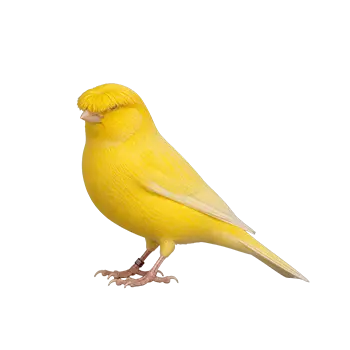

Gloster Canaries typically begin showing signs of aging around six to seven years of age, though individual variation is considerable. Some birds remain vigorous well into their eighth or ninth year, while others begin to slow noticeably by age five or six, particularly those with a history of intensive breeding or chronic health conditions. There is no single moment when a Gloster transitions from adult to senior. Instead, aging is a gradual accumulation of subtle changes that, taken together, signal the bird's shift into a new phase of life requiring adjusted care.
One of the earliest signs of aging in a male Gloster is a decline in singing frequency and vigor. A bird that once sang throughout the morning may begin limiting its vocalizations to brief phrases or confining its singing to a shorter portion of the day. The song itself may become less complex, with dropped phrases or simplified passages replacing the full repertoire the bird maintained during its prime. While reduced singing can also indicate illness, in an otherwise healthy bird that is simply aging, the gradual nature of the decline distinguishes it from the abrupt cessation that typically accompanies disease.
Physical changes become progressively apparent as the bird ages. Feather quality may decline, with molts producing plumage that is slightly duller, thinner, or less tightly structured than in younger years. The bird's posture may shift subtly, with a tendency to sit lower on the perch and carry its body with less of the upright, alert carriage that characterizes a bird in its prime. Muscle mass, particularly along the keel bone, may decrease even if the bird continues to eat normally, reflecting the age-related sarcopenia that affects most vertebrate species.
Activity levels generally decrease in senior Glosters. The bird may spend longer periods resting between bouts of movement, fly less frequently between perches, and show less interest in enrichment items that previously engaged it. Sleeping patterns may shift, with the bird retiring earlier in the evening and waking later in the morning. None of these changes in isolation is alarming, but together they paint a picture of a bird that is conserving energy as its metabolic efficiency declines. Recognizing these patterns allows the keeper to begin making the environmental and dietary adjustments that support comfort and health during the senior years.