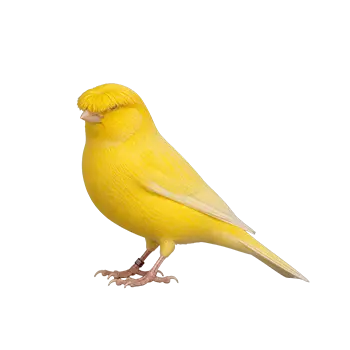

Breeding Readiness & Pair Selection

Successful Gloster Canary breeding begins long before any pair is introduced. Both the cock and the hen must be in full breeding condition, which is a state of physiological readiness driven by hormonal cycles, photoperiod, nutrition, and overall health. Attempting to breed birds that are not properly conditioned leads to infertile eggs, abandoned nests, poor chick survival, and unnecessary stress on the breeding pair. The responsible breeder invests weeks of preparation to ensure that when pairing day arrives, both birds are primed for the demands of reproduction.

Age is the first consideration. Gloster Canaries should not be bred before they are at least ten to twelve months old. Hens bred too young may produce poorly calcified eggs, suffer from egg binding, or prove to be inadequate parents. Cocks younger than ten months may not be fully fertile. At the other end of the age spectrum, breeding productivity typically declines after age five or six for hens and seven or eight for cocks, though individual variation exists. Retired breeding birds should be transitioned to a non-breeding diet and housing arrangement.

Selecting a breeding pair involves evaluating both birds for physical health, breed type conformity, and temperament. Both partners should be free of visible illness, parasites, and physical defects. Evaluate body condition by gently palpating the keel bone; a bird in good breeding condition will have firm breast muscles on either side of the keel with a slight covering of fat, without the keel being either buried under excess fat or protruding sharply. Feather quality, eye brightness, vent cleanliness, and overall alertness are additional indicators of a bird that is physiologically ready for the rigors of breeding.

Temperament matters more than many novice breeders realize. A hen that is excessively nervous or aggressive may damage eggs, neglect chicks, or injure a cock bird during introduction. A cock that is overly aggressive may harass the hen relentlessly, preventing her from settling on the nest. Observe prospective breeders' behavior over time, and select birds that display calm, confident demeanors. Pair compatibility is not guaranteed, and even apparently well-matched birds may fail to bond. Be prepared to separate an incompatible pair and try alternative pairings rather than persisting with a combination that is not working.

The Corona-Consort Pairing Rule

The single most important genetic consideration in Gloster Canary breeding is the crest gene and the lethal consequences of pairing two Corona birds together. This rule is non-negotiable and must be understood by every person who breeds Glosters. The Corona feathering that gives the breed its signature appearance is caused by a semi-dominant mutation. A bird with one copy of the crest allele displays the Corona phenotype, while a bird with no copies of the mutation is a Consort with a smooth, uncrested head. A bird that inherits two copies of the crest allele, one from each parent, receives a homozygous lethal combination that results in embryonic death or chick mortality shortly after hatching.

In practical terms, this means that a Corona-to-Corona pairing will produce a statistical outcome where approximately twenty-five percent of the fertilized eggs never hatch or produce chicks that die within the first days of life. These are not chicks that can be saved with better incubation or more attentive care. The double dose of the crest gene causes developmental abnormalities, often including a bald patch on the skull and malformed feather follicles, that are incompatible with life. The remaining seventy-five percent of chicks from such a pairing will be a mix of Coronas and Consorts, but the twenty-five percent mortality rate makes this cross ethically unacceptable.

The proper pairing strategy is always Corona to Consort. This combination produces chicks that are approximately fifty percent Corona and fifty percent Consort, with no lethal homozygous offspring. Both Corona and Consort chicks from a well-planned pairing carry valuable genetics for future breeding and exhibition. Consort birds are not lesser birds. They are essential partners in the Gloster breeding program, and the best Consorts are bred and exhibited with the same care and pride as the best Coronas.

Occasionally, a breeder may encounter a bird whose variety classification is ambiguous. Some Glosters carry minimal or asymmetrical crest feathering that makes it difficult to determine whether the bird is a heavily feathered Consort or a sparsely crested Corona. In such cases, err on the side of caution and treat the bird as a Corona for pairing purposes. Pairing an uncertain bird with a definite Consort eliminates any risk of a double-Corona cross. Experienced breeders and judges can often help with variety determination, and genetic testing, while not widely available for the crest mutation, is becoming an option in some regions.

Conditioning & Pre-Breeding Preparation

Conditioning is the process of bringing breeding birds into peak reproductive readiness through a combination of dietary enrichment, photoperiod manipulation, and environmental management. The conditioning period typically begins six to eight weeks before the intended pairing date and simulates the natural environmental cues that trigger breeding behavior in wild canaries. Done correctly, conditioning results in a cock in full song with fertile sperm production and a hen with a developed reproductive tract ready to produce and lay healthy eggs.

Photoperiod is the primary environmental trigger for breeding readiness. Beginning in late winter, gradually increase the day length in the bird room by fifteen to thirty minutes per week using artificial lighting on a timer. The target photoperiod for breeding condition is approximately fourteen to fifteen hours of light. This gradual increase mimics the lengthening days of spring and stimulates the hormonal cascade, particularly the rise in luteinizing hormone and follicle-stimulating hormone, that brings both sexes into reproductive condition. Abrupt changes in light duration can cause hormonal disruption and should be avoided.

Dietary conditioning complements the photoperiod changes. Four to six weeks before pairing, begin increasing the protein and fat content of the diet by offering egg food three to four times per week, adding soaked seed daily, and supplementing with conditioning seeds such as hemp, linseed, and niger. Fresh greens should be offered daily, with particular emphasis on nutrient-dense options like dandelion, kale, and sprouted seeds. Calcium supplementation for the hen is critical during this period, as she must build the reserves that will form the eggshells. Provide cuttlebone, crushed oyster shell, and a liquid calcium supplement in the water.

As the conditioning period progresses, watch for behavioral signs of readiness. The cock will sing with increasing frequency and intensity, often directing his song toward nearby hens. He may display by puffing his feathers, bobbing, and feeding imaginary items through the cage bars to a hen in an adjacent cage. The hen, when approaching breeding condition, will begin carrying nesting material in her beak, crouching and quivering her wings in solicitation posture, and investigating the nest pan if one has been placed in her cage. When both birds display these behavioral indicators simultaneously and consistently, they are ready to be paired.

Nesting, Egg Laying & Incubation

Once a conditioned pair is introduced and compatibility is established, the hen will typically begin serious nest building within a few days to two weeks. Provide a standard canary nest pan, either a plastic or wicker open cup that fits securely against the cage wall or in a holder. Supply nesting material in generous quantity, including commercially available nesting felt, clean burlap fibers, or shredded unbleached paper. Avoid cotton wool and synthetic fibers, which can entangle toes and cause constriction injuries. The hen will construct the nest herself, shaping it with her breast into a tight, deep cup.

Egg laying follows nest completion, with the hen producing one egg per day, usually in the early morning. A typical Gloster Canary clutch consists of three to five eggs, with four being the most common number. Many breeders practice egg management by replacing each real egg with a dummy egg as it is laid and storing the real eggs in a cool location on a bed of soft material, rotating them gently once daily. When the clutch is complete, the real eggs are returned to the nest simultaneously so that all embryos begin development at the same time and hatch within a narrow window. This prevents the size disparity that develops when incubation begins with the first egg, giving the earliest chick a significant growth advantage over its youngest sibling.

Incubation begins in earnest when the hen settles tightly on the completed clutch, typically after the last or second-to-last egg is laid. The incubation period for Gloster Canaries is approximately thirteen to fourteen days. During this time, the hen will leave the nest only briefly to feed, drink, and defecate. The cock bird should have access to the nesting cage and will typically feed the hen on or near the nest, supplementing her brief foraging breaks. Ensure that fresh egg food, soaked seed, and greens are available at all times so the hen can refuel quickly during her short breaks.

Candle the eggs at seven to eight days of incubation to assess fertility. Viable eggs will show a network of blood vessels radiating from a dark central embryo when held against a small, bright light source in a darkened room. Clear eggs with no visible development are infertile and can be removed to allow the hen to concentrate her warmth on the viable eggs. Eggs that show a dark ring or smeared internal appearance without clear vascular development are dead in shell and should also be removed, as they can harbor bacteria and contaminate the remaining viable eggs.

Chick Rearing & Fledging Support

The hatching of Gloster Canary chicks is a moment of culmination that rewards weeks of preparation and patience. Chicks typically begin pipping the shell, making the first small crack with their egg tooth, twelve to twenty-four hours before they fully emerge. Resist the temptation to assist a hatching chick unless it is clearly trapped and has made no progress for many hours. Premature intervention can rupture blood vessels in the membrane and cause fatal hemorrhaging. A healthy chick will complete the hatching process on its own, using its egg tooth and the strength of its hatching muscles to work its way out of the shell.

The hen's feeding instinct is triggered by the chicks' begging behavior. Within hours of hatching, the hen will begin offering regurgitated food to the gaping chicks. The quality and availability of rearing food at this point is critical. Fresh egg food should be replenished multiple times daily, as it is the primary protein source the hen draws upon to feed her brood. Soaked seed, sprouted seed, and finely chopped greens complement the egg food and provide the nutritional variety that supports healthy chick development. The cock bird often assists with feeding, particularly as the chicks grow and their caloric demands increase.

Monitor the chicks daily with minimal disturbance. A brief inspection each morning to confirm that crops are being filled, that all chicks appear warm and vigorous, and that the nest is clean is sufficient during the first week. Weigh the chicks if possible, using a gram scale, as weight gain is the most reliable indicator of adequate parental feeding. Chicks should gain steadily from day to day. Any chick that fails to gain weight or shows a declining trend over two consecutive weighings needs attention. Supplemental feeding with a thin formula via syringe may be necessary for runts or chicks that are being overlooked by the parents.

Fledging typically occurs between fourteen and eighteen days of age. As fledging approaches, the chicks become increasingly restless, standing on the nest rim, stretching their wings, and making short hops. The first flights out of the nest are clumsy and often end with the chick on the cage floor. Place low perches near the floor to help fledglings regain elevation, and ensure water dishes are shallow to prevent drowning. The cock bird usually assumes primary feeding responsibility for fledged chicks, allowing the hen to rest and potentially prepare for a second clutch if the breeder chooses to double-clutch. Most breeders limit their Glosters to two clutches per season to protect the hen's long-term health.

Common Breeding Complications

Even experienced breeders encounter complications during the breeding season. Understanding the most common problems and their solutions helps minimize losses and reduce the stress that complications place on both the birds and the breeder. Preparedness is the best defense against the inevitable challenges that arise when breeding living creatures.

Egg binding is one of the most serious acute emergencies in canary breeding. It occurs when a hen is unable to pass a fully formed egg through her reproductive tract. Causes include calcium deficiency, obesity, oversized eggs, reproductive tract infection, and cold temperatures. A hen that is egg-bound will sit fluffed on the cage floor, strain visibly, and may show labored breathing and a distended abdomen. This is a veterinary emergency. While warmth and humidity may help a mildly egg-bound hen pass the egg, severe cases require veterinary intervention including calcium injection, oxytocin administration, or manual egg manipulation. Prevention through proper calcium supplementation, conditioning, and breeding only hens in good physical condition is far preferable to treatment.

Infertile clutches are frustrating but common, particularly with first-time breeders or older birds. If an entire clutch proves infertile at candling, evaluate the possible causes before re-pairing. The cock may not have mated successfully, which can occur if the hen is not fully receptive or if the cock's technique is poor. Obesity in either bird can physically prevent successful copulation. Some cocks are infertile due to age, illness, or genetic factors. Try re-pairing the hen with a different proven cock before concluding that she is the source of the problem.

Nest abandonment occurs when a hen leaves her eggs or chicks before they are able to survive independently. Causes range from disturbance and stress to illness in the hen to the hormonal drive to begin a new clutch before the current one is finished. Fostering eggs or chicks under another sitting hen is the most effective solution if a suitable foster is available. Many breeders maintain a pair of reliable foster parents specifically for this purpose. If no foster is available and the chicks are old enough to thermoregulate, hand-rearing may be attempted, though the survival rate for hand-reared canary chicks under seven days of age is lower than for parent-reared birds.

Parental aggression, where one or both parents pluck or injure chicks, is an uncommon but distressing complication. Cocks are more frequently the aggressors, particularly if they are coming into condition for a new breeding cycle while chicks from the current round are still in the nest. Removing the cock from the breeding cage when the chicks are approximately ten days old, allowing the hen to complete rearing independently, can prevent this problem. If the hen is the aggressor, fostering the chicks is the safest option.

Post-Breeding Recovery & Season's End

The breeding season places enormous physiological demands on both cock and hen Gloster Canaries, and a thoughtful recovery period is essential for restoring the birds to full health before the annual molt begins. The end of the breeding season should be a deliberate decision by the breeder, not a gradual petering out. When the last clutch has been raised and weaned, or when the decision is made not to attempt additional clutches, actively transition the breeding birds out of reproductive condition.

Begin the recovery phase by reducing the photoperiod gradually, decreasing artificial light by fifteen to thirty minutes per week until the birds are on a natural or slightly shortened day length of ten to twelve hours of light. This declining photoperiod signals the endocrine system to wind down reproductive hormone production, allowing the birds' bodies to shift resources from reproduction to feather maintenance and general recovery. Continuing long day lengths after breeding has ended keeps the birds in a state of hormonal readiness that delays the molt and prolongs physiological stress.

Dietary adjustments during recovery focus on replenishing the reserves that breeding has depleted. Continue offering egg food and soaked seed three to four times per week, but gradually taper the conditioning seeds and high-fat supplements. Increase the proportion of greens and vegetables to support liver function and provide antioxidants. Calcium supplementation should continue for hens, as their skeletal calcium reserves may be significantly drawn down after producing multiple clutches. A varied, nutrient-dense diet during the recovery period sets the stage for a clean, thorough annual molt.

Separate the breeding pairs once recovery has begun. Cocks and hens should be housed individually or in same-sex groups to prevent out-of-season mating attempts and to allow each bird to rest without the social pressure of a cage partner. This separation period also gives the breeder an opportunity to assess each bird's post-breeding condition, noting any birds that appear thin, poorly feathered, or otherwise stressed. Birds that emerge from the breeding season in poor condition may benefit from an extended recovery period and should be flagged for lighter breeding duties or retirement in subsequent seasons.

The transition from breeding season to molt is a critical handoff. If recovery is managed well, the birds will enter the molt in strong body condition with adequate nutritional reserves to produce a full set of high-quality replacement feathers. A bird that enters the molt depleted from breeding will produce substandard plumage, may experience a protracted or incomplete molt, and will carry the consequences in its appearance and health until the following year's molt provides another opportunity for renewal.

Always consult a qualified professional before making any health-related decisions. This content is provided for informational reference only and should not replace professional guidance specific to your animal.