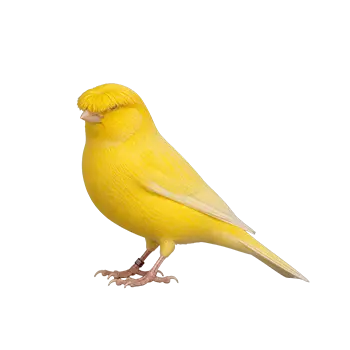

Understanding the Final Stage

The end-of-life stage for a Gloster Canary may arrive gradually through the slow accumulation of age-related decline, or it may present suddenly through an acute illness or organ failure. Regardless of the path, recognizing that a bird has entered its final phase is both an emotional and a practical turning point for its keeper. This is the moment when the focus of care shifts from treatment and recovery to comfort, dignity, and quality of whatever time remains. Accepting this shift is not giving up on the bird. It is a profound act of respect for the bird's experience.

Gloster Canaries have a natural lifespan of approximately seven to twelve years, with most individuals living eight to ten years under good husbandry conditions. A bird approaching or exceeding these ages that shows progressive, irreversible decline in condition has likely entered the terminal phase of its life. The distinction between reversible senior decline and irreversible terminal decline can be difficult to draw, and this is where partnership with an avian veterinarian is invaluable. A veterinarian can help determine whether a bird's symptoms are treatable or whether they represent the natural closing chapter of a life well lived.

The signs that distinguish terminal decline from manageable senior aging include a sustained inability to maintain body weight despite adequate food access, progressive loss of muscle mass along the keel, repeated or continuous respiratory difficulty not responsive to treatment, inability to perch or maintain balance, cessation of all grooming and preening, and prolonged periods of motionless sitting with eyes closed. A bird displaying several of these signs simultaneously, particularly when they have progressed despite veterinary care, is communicating through its body that its systems are failing.

Approaching this stage with clear-eyed honesty is the greatest gift a keeper can give. The temptation to pursue increasingly aggressive treatments, to convince oneself that the bird is improving when it is not, or to delay difficult decisions because of personal grief are all deeply human responses. But the bird's welfare must remain the central concern. A Gloster Canary cannot advocate for itself, cannot request relief from suffering, and cannot communicate its wishes in words. The keeper's willingness to see clearly, act compassionately, and prioritize the bird's comfort over personal emotion is the final and most important act of stewardship.

Comfort Care & Pain Management

Once a Gloster Canary has entered the end-of-life stage, the philosophy of care transitions from curative to palliative. The goal is no longer to fix what is wrong but to ensure that the bird is as comfortable and free from distress as possible for however long it continues to live. Palliative care for a small bird is a delicate balance of environmental support, nutritional management, and, where appropriate, pharmacological pain relief.

Pain assessment in birds is challenging because avian species are evolutionarily programmed to suppress outward signs of pain. Nevertheless, certain behavioral indicators suggest discomfort. A bird in pain may adopt a rigid, hunched posture, guard a specific body part, vocalize sharply when handled or repositioned, or show reluctance to move. Partially closed eyes, a fluffed and still body, and grinding of the beak are all potential pain indicators that should be discussed with your veterinarian. If pain is suspected, nonsteroidal anti-inflammatory medication or other analgesics may be prescribed at carefully calibrated doses appropriate for the bird's tiny body weight.

Warmth is one of the most immediately impactful comfort measures for a dying canary. A bird in decline loses thermoregulatory capacity rapidly, and maintaining a warm environment reduces the metabolic burden on its failing systems. Position a ceramic heat emitter or a low-wattage heating pad outside one end of the cage to create a thermal gradient. The bird should be able to move toward or away from the warmth as its comfort dictates. An ambient temperature of 80 to 85 degrees Fahrenheit at the warm end of the cage is a reasonable target.

Minimize all sources of stress and disturbance. Keep the bird in a quiet room with soft lighting, away from other birds that might compete for food or perch space. Handle the bird only when necessary, and do so with extreme gentleness. Speak softly around the bird, and maintain familiar routines to the extent that they do not require the bird to exert itself. Familiar sounds, such as a keeper's voice, quiet music the bird has heard throughout its life, or the ambient sounds of its usual environment, can provide a sense of normalcy and security during an otherwise disorienting time.

Environmental Adjustments for Hospice

The cage environment for a Gloster Canary in hospice should be simplified and adapted to accommodate the bird's diminished physical capabilities. The objective is to create a space that meets all of the bird's basic needs within the smallest comfortable footprint, reducing the distance and effort required to access food, water, and a resting spot.

Lower all perches to within a few inches of the cage floor so that a fall from the perch does not result in injury. A bird that has lost the strength or coordination to perch securely should be provided with a flat, padded surface at the cage bottom. A small, folded towel or a piece of non-slip shelf liner placed on the cage floor gives the bird a comfortable resting area with enough traction to maintain its position. If the bird can still perch, a wide, flat-topped perch positioned just above floor level provides a compromise between natural perching behavior and fall safety.

Place food and water within immediate reach of the bird's resting position. A small, shallow dish of seed placed directly on the cage floor beside the bird, along with a low-profile water dish, ensures that the bird does not need to fly or climb to access sustenance. Soaked seed and moistened egg food are easier for a debilitated bird to eat than dry seed that requires cracking. Some keepers offer a thin slurry of blended seeds and warm water via syringe to birds that have stopped eating independently, though this should be done gently and never forced.

Lighting during hospice should be soft and consistent. Harsh overhead lights or fluctuating light levels can agitate an already weakened bird. A gentle, diffused light source that simulates the soft illumination of dawn and dusk is calming and easier on the bird's potentially compromised vision. Maintain a normal day-night cycle unless the veterinarian advises otherwise. Darkness and quiet during the night hours allow the bird to rest as deeply as its condition permits, which supports whatever regenerative capacity its body still possesses.

Keep the hospice area scrupulously clean but minimize the disturbance required to do so. A thin layer of paper toweling on the cage floor, changed gently once or twice daily, allows for hygiene management without the upheaval of a full cage cleaning. Soiled feathers around the vent can be gently cleaned with a warm, damp cotton swab if the bird tolerates it. The goal is to maintain the bird's dignity and cleanliness without subjecting it to stressful handling that does more harm than good.

Nutritional Support in the Final Days

Appetite loss is a common and expected feature of the end-of-life stage in Gloster Canaries. As organ systems decline, the bird's metabolic processes slow, and the drive to eat diminishes. While it is important to ensure that food remains accessible and appealing, it is equally important to recognize that a dying bird may simply not eat, and forcing nutrition at this point can cause more distress than benefit.

Offer the bird its favorite foods in small, fresh portions. Many keepers find that their canary, even in its final days, will show interest in a particular treat food that it has always enjoyed. A small piece of ripe apple, a sprig of fresh chickweed, a few grains of millet spray, or a pinch of egg food may tempt a bird that has otherwise stopped eating. The caloric value of these small offerings is less important than the comfort and normalcy they provide. If the bird eats, that is a positive sign. If it does not, accept the refusal without anxiety.

Hydration becomes increasingly critical as food intake declines. Dehydration accelerates organ failure and causes discomfort. Ensure that fresh water is always within reach, and consider offering water with a small amount of honey or electrolyte supplement dissolved in it to encourage drinking and provide trace energy. A few drops of water can be offered from a fingertip or the tip of a small syringe held near the bird's beak. If the bird laps at the water voluntarily, continue to offer it at regular intervals. Do not force water into the bird's beak, as aspiration into the airway is a serious risk in a weakened bird.

The decision to continue offering food and water versus allowing the bird to decline naturally is a personal one that should be guided by the bird's response and the veterinarian's counsel. A bird that turns its head away from food, refuses to open its beak, or becomes agitated when feeding is attempted is communicating clearly that the intervention is unwelcome. Respecting this communication is an important part of hospice care. The goal is never to prolong the dying process but to ensure that whatever life remains is as comfortable and stress-free as possible.

The Euthanasia Decision

Deciding when to euthanize a beloved Gloster Canary is one of the most difficult decisions a keeper will ever face. There is no universally right moment, and the decision is necessarily shaped by the individual bird's condition, the available treatment options, the keeper's observations, and the veterinarian's clinical assessment. What makes the decision so painful is also what makes it so important: it is the keeper's final act of care, and it carries the weight of responsibility for another creature's suffering or relief.

Several guiding principles can help frame the decision. Ask whether the bird is experiencing more discomfort than comfort on a daily basis. Consider whether the bird can still perform the basic functions that constitute a meaningful life for a canary: eating, drinking, resting comfortably, and responding to its environment with some degree of awareness. Evaluate whether treatment options exist that could restore quality of life without causing additional suffering through their administration. If the honest answers to these questions point consistently toward a bird that is suffering without prospect of improvement, euthanasia is a compassionate choice.

The procedure itself, when performed by a qualified avian veterinarian, is quick and painless. The veterinarian will typically administer a sedative to relax the bird and eliminate any awareness before administering the euthanasia agent, which causes immediate cessation of heart and brain function. The bird does not experience pain during this process. Many veterinarians will allow the keeper to be present and to hold the bird during the procedure if desired. Some keepers find comfort in being present; others prefer to say their goodbye beforehand. Neither choice is wrong.

Guilt is a common emotional response following euthanasia, and it is important to recognize it for what it is: a reflection of the depth of care you felt for the bird, not an indication that you made the wrong decision. If you chose euthanasia, you did so because the bird's suffering had reached a point where continued life was no longer in its interest. If you allowed the bird to pass naturally, you did so because its decline was peaceful and intervention was not necessary. Both paths can be appropriate, and the fact that you agonized over the decision is evidence that you took your responsibility seriously.

Discuss the logistics of euthanasia with your veterinarian in advance if possible. Knowing what the process involves, what options exist for the bird's remains, and what the associated costs are removes some of the uncertainty from an already emotional moment. Having a plan in place allows you to focus on the bird's comfort and your own emotional preparation rather than making administrative decisions under acute distress.

After Loss: Coping & Companion Birds

The death of a Gloster Canary, whether through natural causes or euthanasia, leaves a gap in the keeper's daily life that can feel disproportionately large for a creature of such small physical stature. The routines of feeding, cage maintenance, and morning song that structured each day are suddenly gone, and the silence where the bird's voice once filled the room can be profound. Grief for a small bird is just as valid as grief for any other companion animal, and allowing yourself to experience that grief fully is an important part of healing.

The impact on surviving companion birds deserves consideration as well. If the deceased Gloster was housed within sight or sound of other canaries, those birds may show behavioral changes following the loss. Reduced singing, increased calling, changes in eating patterns, and restless behavior have all been observed in birds that lose a long-term companion or flockmate. These responses typically resolve within a few days to a few weeks as the surviving birds adjust. Providing extra attention, stable routines, and perhaps rearranging the bird room so that remaining birds have closer visual contact with each other can help ease the transition.

Deciding whether and when to acquire a new Gloster Canary after a loss is a deeply personal decision. Some keepers find comfort in welcoming a new bird relatively quickly, while others need extended time before they are ready. There is no correct timeline, and no new bird will replace the one that was lost. Each bird is an individual with its own personality, quirks, and relationship with its keeper. When you are ready, a new bird offers the opportunity to apply everything you learned from caring for your previous Gloster, giving another bird the benefit of your experience and devotion.

Consider documenting your bird's life through photographs, written memories, or a simple journal entry. Many keepers find that the act of recording what made their bird special, its favorite foods, its distinctive song phrases, the way it tilted its head or fluttered at bath time, helps preserve the positive memories and provides comfort during the grieving process. The bond between a keeper and a canary may not be understood by everyone, but for those who have experienced it, the relationship is genuine, meaningful, and worth remembering.

Honoring the Bond

The relationship between a keeper and a Gloster Canary unfolds quietly over years of daily care, morning songs, and shared routine. It lacks the demonstrative physicality of a bond with a dog or the conversational give-and-take possible with a parrot, but it is no less real for its subtlety. The keeper who refilled the seed dish every morning, who noticed the first soft notes of subsong in a young male, who adjusted perch heights as aging joints stiffened, who sat in the quiet room and simply listened to the bird sing has built a relationship rooted in attentiveness, responsibility, and genuine affection.

Honoring that bond after the bird's passing can take many forms. Some keepers plant a small memorial in their garden, choosing a flowering plant that will return each year as a living reminder. Others frame a favorite photograph or keep a feather in a place of significance. For breeders, the legacy of a beloved bird may live on through its offspring, carrying forward the genetic and temperamental qualities that made the bird special. These gestures of remembrance are not sentimental excess. They are acknowledgments that a small life mattered and that its presence enriched the life of its keeper.

The practical matters following a bird's death, while less emotionally resonant, should not be neglected. Thoroughly clean and disinfect the cage and all accessories before using them for another bird. If the bird died of an infectious disease, consult your veterinarian about appropriate disinfection protocols and whether a quarantine period should be observed before introducing new birds to the space. Dispose of remaining medications safely and update any breeding or flock records to reflect the bird's passing.

Finally, consider sharing what you have learned. The canary keeping community benefits enormously from the accumulated experience of long-term keepers. Whether through a local bird club, an online forum, or simply a conversation with a newer keeper, the knowledge you gained through years of caring for your Gloster Canary has value beyond your own experience. Teaching someone else how to provide excellent care, how to read the subtle signs of health and illness, how to manage a molt or support a breeding pair, extends the positive impact of your bird's life into the future. In this way, the bond you shared continues to contribute to the wellbeing of Gloster Canaries long after your own bird's song has fallen silent.

Always consult a qualified professional before making any health-related decisions. This content is provided for informational reference only and should not replace professional guidance specific to your animal.