
Daily Husbandry Routine

A well-structured daily routine is the backbone of successful Fantail Pigeon keeping during the adult years. Pigeons are creatures of habit that thrive on predictability, and establishing a consistent schedule for feeding, watering, cleaning, and observation keeps the birds healthy and allows the keeper to detect problems at their earliest stages. While the specifics vary depending on loft size, flock numbers, and local climate, the core elements of a sound daily routine remain constant.

The morning begins with a visual assessment of the flock. Before disturbing the birds with cleaning or feeding activity, stand quietly at the loft entrance and observe. Healthy adult Fantails should be alert, perched upright with their tails displayed naturally, and showing interest in your arrival. Note any bird that appears fluffed, hunched, isolated from the flock, or reluctant to move from its perch. These subtle behavioral changes are often the first indication of illness, injury, or stress, and catching them early can make the difference between a simple intervention and a serious health crisis.

Feeding should occur at consistent times, ideally twice daily, morning and evening. Measure the feed allotment based on flock size, providing roughly one ounce of grain mix per bird per feeding. Scatter the feed across a clean feeding surface or into shallow troughs rather than piling it in a single location, which encourages competition and allows dominant birds to monopolize the food supply. After twenty to thirty minutes, remove any uneaten feed to prevent spoilage and to discourage rodent activity.

Water management requires daily attention. Pigeons drink frequently and are particular about water cleanliness. Replace all drinking water at least once daily, and more frequently in warm weather when bacterial growth accelerates. Scrub water containers thoroughly at each change, paying special attention to any biofilm buildup on the container walls. Many experienced keepers use nipple drinkers or enclosed bell-style drinkers rather than open pans, as these designs prevent contamination from droppings and bathing activity.

Loft cleaning rounds out the daily routine. Remove soiled bedding from perching areas and nest boxes, replenish fresh bedding as needed, and scrape any accumulated droppings from perch surfaces. A deep clean of the entire loft floor, with complete bedding replacement and disinfection, should occur on a weekly or biweekly basis depending on flock density and bedding type. The daily maintenance between deep cleans prevents ammonia buildup and keeps pathogen levels manageable.

Nutrition for the Adult Fantail

Adult Fantail Pigeon nutrition centers on a balanced grain mix that provides adequate protein, carbohydrates, and fat without promoting obesity. Unlike juvenile birds that need higher protein for growth, adult Fantails in a non-breeding maintenance period do well on a mix containing approximately 13 to 15 percent protein. A standard maintenance mix might include corn, wheat, milo, safflower, field peas, and small amounts of oilseeds like flaxseed or hemp. The exact composition can be adjusted seasonally, with slightly higher protein during the molt and breeding periods and a leaner formulation during the off-season.

Obesity is a genuine concern in adult Fantail Pigeons. Their limited flight ability means they expend less energy than free-flying breeds, and the breed's calm, sedentary temperament compounds the issue. An overweight Fantail develops fat deposits along the keel bone and abdomen that can impair respiratory function, reduce fertility, and place strain on the joints and heart. The keel bone of a bird in ideal condition should be palpable beneath a thin layer of breast muscle, neither protruding sharply nor buried under fat. Regular body condition checks during handling help keep weight on track.

Grit and mineral supplementation continue to be essential throughout the adult years. Maintain a constantly available dish of mixed flint grit and crusite oyster shell in the loft. Calcium demand fluctuates through the year, increasing significantly during breeding season when hens are producing eggs, and adequate mineral availability ensures that egg production does not deplete the hen's own skeletal calcium reserves. A mineral block or pickstone mounted in the loft provides additional trace minerals and satisfies the pigeon's instinct to peck and forage.

Vitamins should be supplemented strategically rather than continuously. Most keepers provide a water-soluble avian multivitamin two to three times per week, increasing frequency during periods of higher physiological demand such as the molt, breeding, and post-show recovery. Vitamin D3 deserves particular attention for loft-kept Fantails that have limited exposure to direct sunlight, as this vitamin is essential for calcium metabolism and cannot be adequately synthesized without ultraviolet light exposure. Birds with access to natural sunlight for even a few hours per week generally maintain adequate D3 levels without supplementation.

Fresh produce offers variety and nutritional enrichment. Small portions of chopped dark leafy greens, shredded carrot, or diced apple can be offered several times weekly. These foods provide vitamins, phytonutrients, and hydration that a dry grain diet alone does not supply. However, fresh items should be treated as supplements rather than staples, kept to modest portions, and removed within a few hours if not consumed to prevent spoilage.

Plumage Care & the Annual Molt

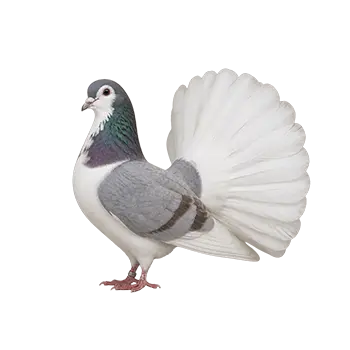
The adult Fantail Pigeon's plumage is its crowning feature and requires ongoing management to remain in peak condition. The breed's enormous tail fan, composed of 30 to 40 or more rectrices arranged in a broad, upright semicircle, is both a thing of beauty and a maintenance challenge. Proper plumage care encompasses daily environmental management, regular bathing, strategic nutrition during the molt, and physical handling practices that minimize feather damage.

The annual molt is the most significant plumage event of the adult Fantail's year. It typically begins in late summer or early autumn, triggered by shortening day length and hormonal shifts. The molt proceeds over several weeks, with body feathers replaced first, followed by flight feathers and finally the tail feathers. Because the Fantail carries so many rectrices, the tail molt is a protracted process that may stretch over two months or more. During this period, the tail fan may appear uneven, sparse, or disheveled as old feathers drop and new ones grow in sequentially.

Nutritional support during the molt directly influences the quality of the incoming plumage. Increase dietary protein to 16 to 18 percent by adding extra legumes or a higher-protein grain mix during the active molt. Supplement with sulfur-containing amino acids, either through a dedicated molt supplement or through foods naturally rich in methionine and cystine. Adequate fat intake supports the production of preen oil, which the bird distributes across its feathers during preening to maintain water resistance and sheen. A small increase in oilseed content, perhaps adding an extra portion of flaxseed or rape seed, supports this need without promoting excessive weight gain.

Bathing is an important component of plumage care throughout the year, not only during the molt. Provide a shallow bath pan at least three times per week, more frequently in warm weather. Most Fantails enjoy bathing and will enter the water eagerly, dipping and splashing to saturate their feathers before retreating to preen and dry. Bathing removes accumulated dust, loosens old feather sheaths during the molt, and stimulates the preen gland at the base of the tail. Allow the bath pan to remain available for an hour or two, then remove it to prevent the loft from becoming excessively damp.

Physical handling practices have a direct impact on plumage condition. When picking up a Fantail, always support the tail from below rather than grasping it from above. Lifting or restraining a Fantail by its tail feathers can bend or break rectrices, damaging the fan's symmetry. In the loft, perch design, spatial allowances, and flock density all influence plumage condition. Overcrowded conditions lead to soiled, damaged feathers as birds jockey for space, while adequate room allows each bird to display, preen, and move without constantly contacting its neighbors.

Exercise & Enrichment

Fantail Pigeons are not strong fliers. Their elaborate tail structure, with its increased drag and altered center of gravity, limits sustained flight capability compared to racing or high-flying breeds. However, this does not mean that adult Fantails should be kept in conditions that offer no opportunity for physical activity. Regular exercise and environmental enrichment support cardiovascular health, maintain muscle tone, prevent obesity, and provide the mental stimulation that contributes to overall well-being.

An enclosed flight pen or aviary attached to the loft provides the ideal exercise environment for Fantails. The flight space should be long enough to allow at least short bursts of flight or extended wing-flapping exercise, with a minimum length of eight to ten feet for a small flock. Perches at varying heights within the flight pen encourage climbing and jumping, which strengthen the legs and promote balance. Some keepers design their flight pens with a series of ascending platforms or ramps that encourage the birds to move vertically as well as horizontally.

Outdoor access offers significant enrichment benefits, including exposure to natural sunlight, fresh air, and a wider range of visual and auditory stimuli. However, Fantail Pigeons should never be left unsupervised in an unenclosed outdoor space. Their limited flight ability makes them exceptionally vulnerable to predators, including hawks, cats, and raccoons. An enclosed aviary or a secure exercise yard with overhead netting provides the benefits of outdoor exposure while eliminating predation risk. Even within a secured area, supervise the birds during outdoor time and ensure they can return to the shelter of the loft if startled or if weather conditions change.

Environmental enrichment within the loft prevents boredom and associated behavioral problems. Scatter a small amount of feed on the floor among clean bedding to encourage natural foraging behavior. Rotate novel objects, such as a shallow pan of sand for dust-bathing or a small mirror, into the loft periodically. Rearranging perch positions occasionally, though not so frequently as to cause stress, stimulates the birds' spatial awareness and encourages exploration. Even simple changes like varying the location of the bath pan or introducing a fresh branch for perching provide novelty.

Monitor each bird's activity level as part of your daily health observations. An adult Fantail that suddenly becomes significantly less active, spending extended periods sitting motionless on a perch when it would normally be moving about the loft, may be signaling the early stages of illness. Conversely, a bird that is unusually restless, pacing or fluttering constantly without settling, may be experiencing stress, pain, or hormonal agitation. Knowing each bird's baseline activity pattern makes it possible to recognize deviations promptly.

Exhibition & Show Conditioning

For Fantail Pigeon enthusiasts involved in exhibition, the adult years represent the bird's competitive prime. Show conditioning is a holistic process that encompasses nutrition, grooming, training, and health management, all aimed at presenting the bird in peak physical condition before the judge. The most successful exhibitors understand that show conditioning is not a last-minute effort but the culmination of consistent, year-round care.

Physical condition is the foundation of show readiness. A show-quality adult Fantail should be at its ideal weight, neither too thin nor carrying excess fat. The breast muscle should feel firm and full, the keel bone should be palpable but not prominent, and the bird should feel solid and substantial in the hand. Condition is built through proper nutrition and maintained through regular exercise, not through crash-dieting or overfeeding in the weeks before a show.

Grooming for exhibition focuses on presenting the plumage in its best possible state. Bathing the bird two to three days before a show allows the feathers to dry completely and regain their natural sheen. Some exhibitors lightly mist the tail feathers with a fine spray of clean water and gently fan them apart to encourage the full spread of the fan during drying. The feet, beak, and cere should be clean and free of any accumulated debris. A very light application of baby oil or mineral oil to the feet and legs can improve their appearance without leaving a greasy residue, though this should be done sparingly.

Tail presentation is the centerpiece of Fantail judging. The tail should be carried high, spread evenly in a broad semicircle, with the individual rectrices overlapping smoothly without gaps or crossed feathers. The cushion, the mound of soft body feathers that supports the tail from behind, should be full and contribute to the impression of a smoothly graduated fan rising from the body. While tail carriage is largely genetic, the bird's confidence and calm demeanor in the show cage influence how well it displays. A nervous bird may drop or partially fold its tail, obscuring its true quality.

Transportation to and from shows is a practical concern with welfare implications. Ship Fantails in clean, well-ventilated carrying boxes lined with soft material that protects the tail feathers from crushing. Each bird should have its own compartment, as placing multiple Fantails together in a single carrier risks tail damage from contact. Upon arrival at the show venue, give the birds time to settle in their show cages before the judging begins. A calm, well-trained Fantail that has been exposed to the bustle and noise of show environments during its juvenile training will take the experience in stride, displaying its best form for the judges.

Ongoing Health Management

Maintaining the health of adult Fantail Pigeons requires a systematic approach that combines preventive medicine, regular observation, and timely veterinary intervention when problems arise. The adult years are generally the healthiest period of a pigeon's life, but complacency during this time can allow subclinical conditions to take hold and create vulnerabilities that manifest later as more serious disease.

Preventive health measures form the first line of defense. Annual or biannual wellness examinations by an avian veterinarian provide a professional assessment of each bird's condition and an opportunity to update vaccinations, particularly against paramyxovirus. Routine fecal screening for internal parasites, performed at least twice yearly, allows targeted treatment with appropriate anthelminthics when parasites are detected rather than relying on calendar-based deworming that promotes resistance. External parasite control through regular loft treatment and individual bird inspection keeps ectoparasites in check.

Canker remains a persistent threat throughout the adult pigeon's life. Trichomonas gallinae can persist as a low-grade, subclinical infection in carrier birds that show no obvious symptoms but shed the organism in their crop secretions, potentially infecting flock mates and offspring during feeding. Periodic crop swabs submitted for microscopic examination help identify carriers. Treatment with anti-protozoal medications is effective, but reinfection is common in lofts where the organism is endemic, making management strategy as important as individual treatment.

Respiratory health deserves ongoing vigilance. Adult Fantails in well-maintained lofts with good ventilation and low dust levels generally enjoy sound respiratory function. However, stress events, overcrowding, the introduction of new birds without quarantine, or seasonal changes that trap moisture in the loft can trigger outbreaks of respiratory disease. Listen to each bird's breathing during daily handling. Quiet, effortless respiration with the beak closed is normal. Any audible sounds, open-mouth breathing, or tail-bobbing require investigation.

Injury prevention is an often-overlooked aspect of adult Fantail health management. The breed's limited maneuverability in flight makes it prone to collisions with loft fixtures, walls, and other birds. Sharp edges, protruding wire, and narrow gaps where a bird's foot or wing could become trapped should be eliminated from the loft environment. Fantails kept in mixed-breed lofts are sometimes injured by more aggressive or territorial breeds, and separating them into their own section of the loft is the most effective prevention. Any wound, no matter how minor it appears, should be cleaned, treated with an appropriate topical antiseptic, and monitored for signs of infection.

Behavioral Patterns & Bond Formation

Adult Fantail Pigeons display a rich behavioral repertoire that deepens the keeper's enjoyment and provides important information about the flock's social dynamics, reproductive status, and individual well-being. Understanding normal behavior patterns makes it possible to recognize abnormalities that may signal health or welfare concerns, and it fosters a more rewarding relationship between keeper and bird.

Pair bonding is one of the most prominent social behaviors in adult pigeons, and Fantails are no exception. Pigeons are monogamous by inclination, and a bonded pair will typically remain together for life unless separated by death, prolonged isolation, or the keeper's deliberate intervention. Bonded pairs engage in mutual preening, share a nest site, and spend much of their time in close proximity. The courtship display of the cock includes bowing, cooing, and turning in circles before the hen, often with the tail fan spread to its fullest extent, creating a particularly striking visual display in this breed.

Vocalizations serve multiple functions in the Fantail's social life. The deep, rolling coo of the cock is a territorial and courtship signal, while shorter, softer coos accompany mutual preening and nest-related activities. Alarm calls, which are sharp, clipped vocalizations, alert the flock to perceived threats. Keepers who spend time listening to their flock develop an ear for the emotional texture of these sounds and can often gauge the loft's mood, whether calm and contented or anxious and alert, from the vocal backdrop alone.

Territorial behavior, while generally mild in the docile Fantail, becomes more pronounced during the breeding season. Cocks defend a small territory around their chosen nest site, driving away other males with wing slaps and pecking. Hens may also become more assertive in defending the nest box once eggs are laid. These behaviors are normal and typically resolve without intervention, but in crowded lofts, territorial disputes can escalate and cause feather damage or minor injuries. Providing ample nest sites, ideally one and a half to two boxes per pair, reduces competition and minimizes aggressive encounters.

The keeper-bird relationship deepens over the adult years as the birds learn to associate their caretaker with food, safety, and positive interaction. Many adult Fantails become remarkably tame, voluntarily approaching the keeper, perching on hands and shoulders, and displaying calm trust during handling. This bond is built through consistent, gentle interaction and is one of the most rewarding aspects of keeping this breed. Changes in a bird's behavior toward its keeper, such as a previously friendly bird becoming withdrawn or aggressive, can signal health issues or stress and should not be dismissed as mere moodiness.

Always consult a qualified professional before making any health-related decisions. This content is provided for informational reference only and should not replace professional guidance specific to your animal.