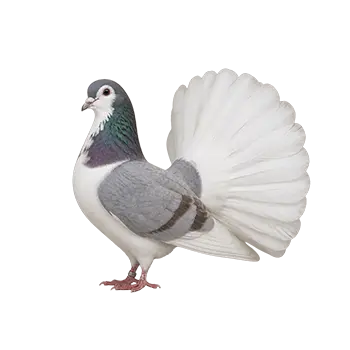

Weaning is one of the most consequential transitions in a young Fantail Pigeon's life, marking the shift from dependence on parental crop milk and regurgitated seed to self-sufficient feeding. In Fantail Pigeons, the weaning process typically begins around three to four weeks of age and is largely complete by five to six weeks, though the exact timeline varies depending on individual development, clutch size, and the attentiveness of the parent birds. Understanding this process helps keepers support the young bird through what can be a nutritionally precarious period.
The parents initiate weaning gradually. Over the course of several days, they reduce the frequency of feedings and increasingly deliver intact seeds and grains rather than pre-digested slurry. The young Fantail begins to peck experimentally at seeds scattered on the loft floor or placed in shallow dishes near the nest. These early attempts are clumsy and inefficient, with the bird often picking up and dropping seeds repeatedly before successfully shelling and swallowing them. Providing small, easy-to-handle seeds like millet alongside the regular pigeon mix encourages successful self-feeding during this learning phase.
For hand-reared Fantails, the weaning process requires more active management. Begin introducing small, shallow dishes of seed into the brooder or weaning cage around three weeks of age, even while continuing formula feedings. Reduce the number of daily formula feedings gradually, dropping from four to three, then to two, and finally to one as the bird demonstrates consistent independent feeding. Never abruptly stop formula feedings. A sudden cutoff can cause dangerous weight loss and stress in a young bird that has not yet mastered self-feeding.
Water introduction accompanies the weaning process. Until now, the squab has received all its hydration through crop milk or formula. As it begins eating dry seed, access to clean, fresh water becomes essential. Young pigeons may not instinctively know how to drink, so gently dipping the beak into a shallow water dish a few times can help the bird learn. Once the juvenile has been observed drinking independently on multiple occasions, it can be considered water-competent. Continue monitoring hydration by observing droppings and overall skin condition during the transition.
Weight monitoring becomes even more critical during weaning than it was during the newborn period. A modest weight plateau or even a slight temporary dip during the transition is normal as the bird adjusts to less calorically dense nutrition. However, sustained weight loss exceeding five percent of body weight, or a bird that appears thin, lethargic, or hunched with fluffed feathers after several days of attempted weaning, may not be ready for the transition and may need continued supplemental feeding.