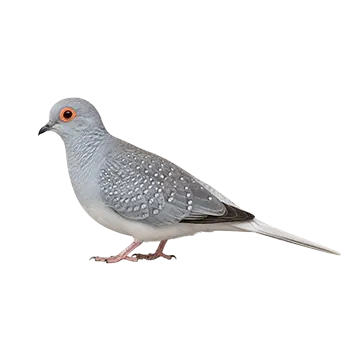

The First 24 Hours

Diamond Dove chicks hatch after approximately 13 to 14 days of incubation, emerging as tiny, nearly featherless hatchlings with closed eyes. They weigh only a few grams at birth and are entirely dependent on their parents for warmth and nourishment. The hatching process itself can take several hours, and it is important not to assist the chick in breaking free from the shell unless there is a clear medical emergency, as the effort of hatching helps strengthen the chick and absorb the remaining yolk sac.

During the first 24 hours, the parents will begin feeding the chick crop milk, a nutrient-rich secretion produced by the lining of both the mother's and father's crop. This substance is critical for the chick's survival and provides essential proteins, fats, and immune factors that cannot be replicated by any commercial formula. Both parents share feeding duties, and you should observe from a distance to confirm that the chick's crop appears full, indicated by a slightly rounded area visible through the thin skin on the neck.

Keep the environment around the nest calm and free from disturbance during this critical period. Sudden noises, vibrations, or handling can cause the parents to abandon the nest. Maintain the ambient temperature in the room at a stable and comfortable level, as hatchlings cannot regulate their own body temperature and rely entirely on the warmth of the brooding parent. Resist the urge to inspect the chick frequently, and instead observe from a respectful distance to minimize stress on the family unit.

Feeding & Nutrition

For the first several days of life, Diamond Dove chicks rely exclusively on crop milk provided by both parents. This secretion gradually transitions to include regurgitated seeds and softened food matter as the chick grows. By the end of the first week, the parents begin incorporating small, partially digested seeds into feedings, which helps the chick's digestive system adjust to solid food over time.

If a chick is orphaned or rejected by the parents, hand-feeding becomes necessary but is extremely challenging with Diamond Doves due to their small size. A specialized avian hand-feeding formula designed for doves or pigeons should be used, administered with a small syringe or pipette at carefully controlled temperatures. Feedings must be frequent, typically every two to three hours during the day in the earliest days, and the formula must be warmed to the appropriate temperature to prevent crop burn or digestive issues. Consult an avian veterinarian immediately if hand-rearing becomes necessary.

During the parental feeding period, ensure the adult doves have access to a high-quality seed mix supplemented with egg food or a protein-rich supplement to support crop milk production. Fresh water should always be available, and a mineral block or cuttlebone should be provided so the parents can pass along essential calcium and trace minerals to the growing chick. Avoid introducing any new or unfamiliar foods to the parents during this sensitive period, as digestive upset in the adults can directly affect the quality of nutrition delivered to the hatchling.

As the chick approaches two weeks of age, you may notice the parents spending less time on the nest and feeding less frequently. This is a natural part of the weaning process and signals that the chick is beginning to develop the ability to pick at seeds independently. Place small, shallow dishes of fine seed near the nest area so the chick can begin experimenting with self-feeding as its coordination improves.

Developmental Milestones

Diamond Dove chicks develop remarkably fast compared to many other bird species. Within the first two to three days, a light covering of pin feathers begins to emerge along the wings and back. By day five or six, the eyes begin to open, and the chick becomes more responsive to sounds and movement in its environment. This rapid development is an evolutionary adaptation, as Diamond Doves in the wild face significant predation pressure and benefit from reaching independence quickly.

By the end of the first week, the chick's feather tracts are clearly visible and the pin feathers are beginning to unfurl. The chick will start to become more active in the nest, stretching its wings and legs and shifting position. Around days 10 to 12, the chick's feathers have developed enough to begin providing some insulation, and the parents will spend less continuous time brooding. The chick may begin perching on the edge of the nest or nearby surfaces.

Fledging typically occurs between 12 and 16 days of age, which is notably early compared to many pet bird species. The first flights are clumsy and short, and the chick may spend time on the floor of the enclosure before mastering flight. Ensure the environment is safe during this period by removing any hazards such as open water containers deep enough for drowning, sticky surfaces, or gaps where a fledgling could become trapped. The parents will continue to feed the fledgling for several days after it leaves the nest while it perfects its flying and foraging skills.

Keep a simple log of developmental milestones including the date of hatching, when the eyes open, when pin feathers emerge, and the fledging date. This record can be valuable for your avian veterinarian and helps establish a baseline for any future clutches.

Temperature & Environment

Newly hatched Diamond Doves are poikilothermic in their earliest days, meaning they cannot maintain their own body temperature and depend entirely on the brooding parent for warmth. The ambient room temperature should be kept steady, ideally in the range that is comfortable for the adult birds, as the parent sitting on the nest provides the direct heat the chick needs. Avoid placing the enclosure near drafty windows, air conditioning vents, or in direct sunlight, as temperature fluctuations can be dangerous for both the brooding parent and the vulnerable chick.

The nest itself should be a simple, stable platform or shallow dish lined with soft nesting material. Diamond Doves are notoriously casual nest builders and will often lay eggs on minimal substrate, so providing a commercially available dove nest cup or a small wicker basket with a felt or paper liner can improve the security of the eggs and hatchlings. Ensure the nest is positioned in a sheltered area of the enclosure where the parents feel secure and are unlikely to be startled.

If hand-rearing is required, maintaining proper temperature becomes your direct responsibility. A brooder set to the appropriate temperature for the chick's age is essential, with gradual reductions as the chick feathers out and develops its own thermoregulation. Humidity levels should also be monitored, as excessively dry air can cause dehydration and impede feather development. Consult an avian veterinarian or experienced dove breeder for specific brooder settings and protocols.

Keep the enclosure clean but avoid deep-cleaning the nest area during the first two weeks unless absolutely necessary due to hygiene concerns. Excessive disturbance of the nest can cause parental abandonment. Spot-clean droppings around the nest and change the cage liner in areas away from the nesting site to maintain general hygiene without disrupting the family.

Early Socialization

Diamond Doves are naturally gentle and somewhat timid birds, and early socialization sets the foundation for a well-adjusted adult. During the nestling phase, socialization should be minimal and indirect. Simply being present in the room, speaking softly, and going about normal household activities helps the chick acclimate to human sounds and movement without the stress of direct handling.

Once the chick has fledged and is beginning to move around the enclosure independently, you can begin more intentional socialization. Offer your hand near the chick without grabbing or chasing, allowing the young bird to become accustomed to your presence at its own pace. Diamond Doves are not typically cuddly or eager to be handled like parrots, but they can become quite tame and comfortable perching on a hand or shoulder with patient, gentle interaction over time.

Avoid exposing the young chick to other household pets, loud music, or chaotic environments during the first few weeks after fledging. The goal is to build trust gradually. Short, calm interactions several times a day are far more effective than prolonged handling sessions that may overwhelm the bird. If you have other birds in the household, keep them separated until the young Diamond Dove is fully feathered, confident in flight, and eating independently.

Socialization with other Diamond Doves is also important if you plan to keep the bird in a flock or pair setting. Young doves that are raised in isolation from their own species may have difficulty integrating with conspecifics later in life. If possible, allow the fledgling to remain with or near its parents and any compatible flock mates during the socialization period to develop appropriate avian social behaviors.

Health Screening & Vet Visits

Schedule an initial wellness check with an avian veterinarian within the first few weeks of the chick's life, particularly if you notice any signs of slow development, failure to gain weight, or abnormal droppings. Diamond Dove chicks are small and fragile, and health issues can escalate rapidly in such a tiny bird. An experienced avian vet can assess the chick's overall condition, check for congenital abnormalities, and provide guidance on nutrition and husbandry specific to your setup.

Common health concerns in newborn Diamond Doves include crop stasis, where the crop fails to empty properly, and yolk sac infections, which can occur if the navel area does not close cleanly after hatching. Watch for a distended or discolored crop, lethargy, failure to beg for food, or an inflamed area around the navel. Any of these signs warrants immediate veterinary attention, as delays in treatment can be fatal in such small birds.

Parasites such as air sac mites and coccidia can also affect young doves, particularly in aviary settings where multiple birds are housed together. Your veterinarian may recommend fecal testing and prophylactic treatments depending on your specific circumstances. Maintain excellent hygiene in the enclosure and quarantine any new birds before introducing them to the environment where chicks are being raised.

Keep a health journal for each chick that records daily weight, crop fullness, dropping consistency, and any behavioral observations. This information is invaluable for your veterinarian and can help detect subtle changes that might otherwise go unnoticed until they become serious problems.

When to Worry

Despite their hardy reputation as adults, Diamond Dove chicks are delicate and can deteriorate quickly when something goes wrong. One of the most critical warning signs is a chick that stops begging for food or appears limp and unresponsive. In a healthy nest, chicks should be active during feeding times, lifting their heads and gaping when a parent approaches. A chick that remains flat and still while its siblings are feeding needs immediate evaluation.

Monitor the chick's crop after feedings. A healthy crop should feel soft and full, gradually emptying over the course of a few hours. If the crop remains distended, feels hard or doughy, or develops a sour smell, the chick may be experiencing crop stasis or a bacterial or fungal infection. Do not attempt to massage or manually empty the crop without veterinary guidance, as improper technique can cause aspiration and death.

Abnormal droppings are another important indicator of trouble. While newborn droppings will differ from adult droppings in size and consistency, watch for droppings that are excessively watery, contain blood, or have an unusual color such as bright green or black. Pasting of droppings around the vent area can also indicate digestive distress and should be gently cleaned to prevent blockage.

If a chick falls from the nest before it is ready to fledge, carefully return it to the nest and observe whether the parents resume care. Chicks that are repeatedly pushed from the nest by the parents may have a health issue that the adults have detected, and these chicks often require veterinary assessment and possible hand-rearing. Sudden parental abandonment of an entire clutch can also occur due to environmental stress, and in such cases you must be prepared to step in with hand-feeding protocols or seek help from an experienced avian rehabilitator.

Always consult a qualified professional before making any health-related decisions. This content is provided for informational reference only and should not replace professional guidance specific to your animal.