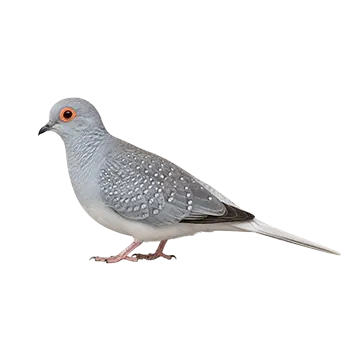

Growth & Physical Development

The juvenile stage in Diamond Doves begins shortly after fledging, typically around two to three weeks of age, and extends until the bird reaches sexual maturity at approximately four to six months. During this period, the young dove undergoes a dramatic transformation from a somewhat scruffy, incompletely feathered fledgling into a sleek and fully plumaged young adult. Growth is rapid in the early weeks, and you should notice the bird gaining coordination, strength, and confidence in flight on a near-daily basis.

One of the most visible changes during this period is the juvenile molt, during which the bird gradually replaces its initial set of feathers with adult plumage. The characteristic orange-red eye ring that distinguishes adult Diamond Doves is absent or very faint in juveniles and will develop progressively as the bird matures. The overall body coloring may appear slightly duller than that of a fully mature adult, and the barring pattern on the wings becomes more defined as adult feathers grow in.

Weight gain should be steady but not excessive during the juvenile phase. While Diamond Doves are naturally small and lightweight birds, monitoring weight with a gram scale designed for birds can help detect early signs of illness or nutritional deficiency. A healthy juvenile Diamond Dove will be active, alert, and increasingly independent in its feeding and movement. Any sudden weight loss, prolonged fluffing of feathers, or reluctance to fly should prompt a veterinary evaluation.

Nutrition & Diet Transition

As the juvenile Diamond Dove transitions away from parental feeding, establishing a well-balanced independent diet is essential for healthy growth. The foundation of the diet should be a high-quality small seed mix formulated for doves or finches, typically including varieties such as white millet, canary seed, and small amounts of other fine seeds. Avoid seed mixes designed for larger parrots or pigeons, as the seed sizes are too large for Diamond Doves to consume comfortably.

Supplementation is important during the growth period to ensure the developing bird receives all necessary vitamins and minerals. A cuttlebone or mineral block should be available at all times to provide calcium, which is critical for proper bone development. Finely grated egg food or a commercial egg supplement can be offered several times a week to boost protein intake during the growth phase. Some keepers also offer finely chopped leafy greens, though Diamond Doves are primarily granivorous and may show limited interest in fresh vegetables.

Fresh, clean water must be available at all times. Diamond Doves drink by immersing their beaks and sucking water upward, unlike many other birds that scoop and tilt. Use a shallow water dish that the young bird can access easily without risk of falling in and becoming chilled or waterlogged. Change the water at least once daily, and more frequently if it becomes soiled with droppings or seed husks.

Grit is a debated topic among avian keepers, but many experienced dove breeders provide a small amount of fine grit or mineralized grit to aid in digestion. Diamond Doves, like other doves and pigeons, swallow seeds whole and rely on the gizzard to grind food, and grit can assist in this process. If you choose to offer grit, provide it in a separate small dish rather than mixing it into the seed, and consult your avian veterinarian for specific recommendations.

Behavioral Changes

Juvenile Diamond Doves undergo significant behavioral development as they transition from dependent chicks to independent young birds. In the weeks immediately following fledging, the young dove will still follow its parents and beg for food, but this behavior diminishes steadily as the bird learns to forage on its own. By approximately four weeks of age, most juvenile Diamond Doves are fully weaned and self-feeding, though some may continue to solicit occasional feedings from tolerant parents.

As the juvenile matures, you will begin to notice the emergence of species-typical behaviors such as cooing, bowing displays, and tail fanning. Young males often begin practicing their courtship calls well before reaching sexual maturity, producing quieter and less polished versions of the adult coo. These early vocalizations are a normal and healthy part of development and do not indicate that the bird is ready for breeding. Females tend to be quieter overall, though both sexes will vocalize to some degree.

Juvenile Diamond Doves can be somewhat flighty and nervous compared to well-socialized adults. Sudden movements, unfamiliar objects, and new environments may provoke alarm reactions including rapid flight and crouching. Patience and consistency in daily interactions will help the young bird build confidence over time. Avoid chasing or grabbing the bird, as negative handling experiences during this formative period can result in a permanently skittish adult.

If housed with other doves, watch for signs of bullying or aggression from older, established birds. While Diamond Doves are generally peaceful, dominant individuals may chase or peck at juveniles, particularly around food and preferred perching spots. Providing multiple feeding stations and perches at various heights can help reduce competition and ensure the young bird has access to resources without conflict.

Training & Taming

Diamond Doves are not traditionally trained in the same way as parrots, but they can become remarkably tame with patient, consistent handling. The juvenile period is the ideal window for building trust and establishing a positive relationship with your bird. Begin by spending time near the enclosure, talking softly and moving slowly, so the young dove associates your presence with calm and safety.

Once the bird appears comfortable with your proximity, you can begin offering small treats such as a favorite seed held between your fingers near the cage opening. Allow the dove to approach on its own terms and never force interaction. Over time, many juvenile Diamond Doves will begin stepping onto an offered hand or finger, particularly if this surface is associated with food rewards. Keep sessions short, no more than a few minutes at a time, and always end on a positive note.

Flight recall is not a realistic goal with Diamond Doves as it might be with parrots, but you can condition the bird to be comfortable with free flight time in a safe, enclosed room. Ensure all windows and mirrors are covered or marked to prevent collision injuries, close doors, and remove any hazards such as ceiling fans, open water, or toxic plants. Supervised out-of-cage time allows the young dove to exercise and explore, which supports both physical and psychological development.

Consistency is the most important factor in taming a juvenile Diamond Dove. Daily interaction, even if brief, is far more effective than occasional lengthy sessions. Birds that are handled regularly during the juvenile period tend to remain tame into adulthood, while those that are neglected during this formative stage may revert to wild-type wariness that is much more difficult to overcome later.

Exercise & Flight Development

Flight is the primary form of exercise for Diamond Doves, and the juvenile period is when the bird refines its flying abilities from awkward first attempts to confident, agile flight. Providing adequate space for flight practice is essential. The enclosure should be long enough to allow short flights between perches, and ideally the bird should have regular access to a larger flight cage or safe room for extended exercise.

Perches should be placed at varying heights and distances to encourage the young dove to fly rather than simply hop from one to the next. Natural wood perches of varying diameters are preferable to smooth dowel rods, as they promote healthy foot development and provide a more secure grip. Avoid placing perches directly above food or water dishes, as droppings will contaminate these resources.

Juvenile Diamond Doves are enthusiastic but sometimes clumsy flyers, and minor crash landings are common during the first few weeks after fledging. Most of these incidents are harmless, but inspect the bird afterward for any signs of injury such as a drooping wing, bleeding, or reluctance to bear weight on a leg. Night frights, where a startled bird thrashes in the dark, are also a concern during this age and can result in broken feathers or more serious injuries. A dim nightlight near the enclosure can help reduce the frequency of night frights by allowing the bird to orient itself if startled.

As the juvenile grows stronger, you may notice an increase in overall activity level and a desire for more space. This is a natural reflection of improving fitness and confidence. If your enclosure is on the smaller side, compensate by offering more frequent out-of-cage flight time in a safe environment to ensure the bird's physical development is not restricted.

Sexing & Maturity Indicators

Determining the sex of a juvenile Diamond Dove can be challenging, as the physical differences between males and females are subtle and become more apparent only as the bird approaches sexual maturity. In general, males tend to have a slightly larger and more prominent orange-red eye ring compared to females, though this distinction is unreliable in very young birds. Some experienced breeders can make educated guesses based on head shape and body proportions, but definitive sexing often requires observation of mature behavior or DNA testing.

Behavioral cues become the most reliable indicators of sex as the juvenile approaches four to six months of age. Males will begin performing courtship displays, including the characteristic bowing and cooing display where the bird repeatedly dips its head while fanning the tail and producing a rhythmic coo. Females generally do not perform this display, though they may vocalize in response to a male's courtship. If a bird lays an egg, that provides definitive confirmation of female sex.

DNA sexing through a blood or feather sample is available through avian veterinary clinics and specialized laboratories. This is the only method that provides a conclusive answer in young birds before behavioral indicators emerge. If sex determination is important for your management plan, such as for pairing or housing decisions, DNA testing is a worthwhile investment that eliminates guesswork.

As the juvenile approaches sexual maturity, be mindful of housing arrangements. Young birds housed in mixed-sex groups may begin pair-bonding and attempting to breed before they are physically ready, which can lead to health complications, particularly for small or underweight females. Separating males and females before maturity is reached can prevent premature breeding and allows you to make deliberate pairing decisions when the time is appropriate.

Socialization & Flock Integration

Diamond Doves are social birds that generally thrive in the company of their own species, and the juvenile period is the optimal time to establish social bonds with other doves. If the young bird is being raised as part of an existing flock, it has the advantage of learning appropriate social behaviors from older, experienced birds. Observe interactions carefully to ensure that the juvenile is not being excluded from food resources or subjected to persistent aggression from dominant flock members.

If introducing a juvenile Diamond Dove to an established pair or group, do so gradually. Begin by housing the newcomer in a separate cage placed adjacent to the existing enclosure so the birds can see and hear each other without physical contact. After several days of calm coexistence through the barrier, a supervised introduction in neutral territory, such as a shared flight area that neither group considers its own territory, can help reduce territorial aggression.

Juvenile Diamond Doves that are hand-raised in isolation from other doves may develop overly strong bonds with their human caretaker and show difficulty integrating with conspecifics later. While a close human bond is rewarding, it is beneficial for the bird's long-term welfare to also have positive relationships with other Diamond Doves. If you are raising a single hand-reared chick, consider acquiring a second dove as a companion once the juvenile is fully independent and healthy.

Watch for signs of successful social integration, which include mutual preening, sitting in close proximity on the same perch, and relaxed body posture in each other's presence. Signs of poor integration include persistent chasing, feather plucking, one bird being consistently displaced from food or perches, and a bird that remains isolated and fluffed in a corner. If integration is not going smoothly, separate the birds and consult an avian behaviorist or experienced breeder for guidance on alternative introduction strategies.

Always consult a qualified professional before making any health-related decisions. This content is provided for informational reference only and should not replace professional guidance specific to your animal.