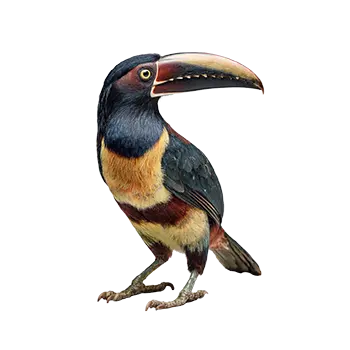

Recognizing the Senior Stage

The Collared Aracari enters its senior years at approximately ten to twelve years of age, though the onset of age-related changes varies significantly among individual birds depending on genetics, lifelong dietary management, and the cumulative effects of environmental and health history. Unlike some bird species that show dramatic physical aging markers such as plumage fading or bill deterioration, the Collared Aracari's transition into senescence tends to be subtle and gradual. The caregiver who knows the bird well will notice changes in activity level, stamina, and behavioral patterns before any visible physical signs appear.

The first indication that a Collared Aracari is entering its senior years is typically a reduction in overall activity. The bird may fly less frequently within its enclosure, spend longer periods perching quietly, and show less interest in vigorous play behavior. Morning activity, which in prime adults is usually immediate and energetic, may start later and with less intensity. Afternoon rest periods that were once brief may extend noticeably. These changes do not happen overnight. They accumulate over months, and a caregiver tracking the bird's behavior through a health log will see the trend emerge well before it becomes obvious on any single day.

Physically, the senior aracari may show subtle changes in body condition. The pectoral muscles along the keel bone may begin to lose mass, even if the bird's weight remains stable, indicating a shift in body composition from muscle toward fat. The feet may show early signs of wear, with the skin on the plantar surface becoming thinner or drier. The bill, which in a healthy adult is smooth and firmly structured, may develop slight surface irregularities or lose some of its sheen. None of these changes in isolation constitutes a clinical problem, but together they form the profile of a bird whose physiological reserves are beginning to diminish.

The senior stage demands an adjustment in the caregiver's approach. The management practices that maintained the bird during its prime years remain foundational, but they must be supplemented with increased monitoring, more frequent veterinary evaluation, and a willingness to modify the environment to accommodate the bird's changing capabilities. The goal shifts from maintaining peak performance to sustaining quality of life, comfort, and dignity as the bird ages.

Age-Related Health Concerns

The health landscape for a senior Collared Aracari is dominated by the cumulative effects of conditions that were managed preventively during the adult years. Iron storage disease, the defining health concern of all ramphastid species, becomes increasingly consequential as the bird ages simply because more years of iron exposure have occurred. Even birds maintained on scrupulously controlled low-iron diets throughout their lives may show elevated iron and ferritin levels in their senior years, reflecting the inexorable accumulation that is part of the species' genetic heritage.

Clinical hemochromatosis, the symptomatic manifestation of iron overload, may present in the senior bird as lethargy, weight loss, labored breathing, abdominal distension from liver enlargement, and in advanced cases, ascites. Liver function markers on blood chemistry panels may become abnormal. The avian veterinarian managing the bird's care should increase the frequency of iron panel testing from annual to semi-annual once the bird enters its senior years, comparing each result against the longitudinal trend established during the bird's adult life. Early intervention, including dietary modification, increased tannin supplementation, and in some cases phlebotomy or chelation therapy, can slow progression and extend quality of life significantly.

Renal function may decline with age. Senior aracaris may produce more dilute urine, drink more frequently, or show subtle changes in urate consistency. Blood chemistry panels that include uric acid, phosphorus, and calcium levels help monitor kidney health. Chronic low-grade dehydration is a risk for senior birds, particularly in dry environments, and providing multiple fresh water sources within easy reach of the bird's preferred perching areas helps maintain adequate fluid intake.

Musculoskeletal changes affect many senior birds. Arthritis in the feet and leg joints can develop gradually, manifesting as reluctance to perch on narrower branches, shifting weight from one foot to the other more frequently, or preferring flat surfaces to rounded perches. The bird may fly less not because of disinterest but because takeoff and landing have become physically uncomfortable. These changes should be addressed through environmental modification rather than accepted as inevitable decline.

Cardiovascular and respiratory health deserve heightened attention in the senior bird. Listen for any changes in resting breathing rate or quality. Heart disease in birds is difficult to detect without specialized diagnostics, but changes in exercise tolerance, persistent lethargy, or episodes of weakness can be suggestive. An avian veterinarian with access to radiography and echocardiography can evaluate cardiac function if clinical signs suggest compromise.

Diet Adjustments for Senior Birds

Dietary management for the senior Collared Aracari builds on the low-iron foundation established during the bird's earlier years while accommodating the physiological changes that accompany aging. The senior bird's metabolism slows, its caloric needs decrease, and its digestive efficiency may decline. Adjustments should be made gradually and guided by the bird's body condition, blood work results, and appetite patterns rather than by a rigid formula.

Caloric intake should be monitored to prevent obesity, which places additional stress on the liver, heart, and joints of the aging bird. As the senior aracari's activity level naturally declines, its energy expenditure drops as well. If the bird continues to consume the same quantity of food it ate during its prime years while moving less, weight gain is inevitable. Reduce portion sizes gradually if weight begins to trend upward, or replace higher-calorie fruits such as banana and grapes with lower-calorie options such as melon and papaya while maintaining the same total volume.

The pellet component of the diet should continue to be a low-iron ramphastid-specific formulation. If the bird's semi-annual iron panel shows rising ferritin levels, the veterinarian may recommend further reducing pellet intake in favor of fruit, which generally delivers less iron per serving. Some practitioners also recommend adding a small amount of black tea to the diet or offering tea-soaked pellets, as the tannins in tea bind dietary iron and reduce absorption. This is a targeted intervention that should be implemented under veterinary guidance rather than as a general-purpose supplement.

Protein supplementation may need adjustment depending on the bird's muscle condition and kidney function. If blood work shows declining renal function, the veterinarian may recommend reducing protein intake to lessen the metabolic burden on the kidneys. Conversely, if the bird is losing muscle mass along the keel, modest increases in easily digestible protein sources such as cooked egg may help slow the decline. The balance between maintaining muscle and protecting kidney function is one that the veterinarian and the caregiver must navigate together based on the individual bird's clinical picture.

Food presentation may need to change as the senior bird's bill strength or coordination diminishes. Cutting fruit into smaller pieces, offering softer fruits that require less manipulation, and presenting food in shallow, stable dishes placed close to the bird's preferred perching spot reduce the effort required to eat. A bird that has to fly to a distant food dish or struggle with hard-to-manipulate items may eat less simply because the process has become physically taxing. Making meals easy and accessible supports consistent caloric intake as the bird ages.

Environmental Modifications

The enclosure that served the Collared Aracari well during its active prime years may need thoughtful modification as the bird enters its senior stage. The goal is not to restrict the bird's environment but to adapt it so that the bird can continue to use its full living space safely and comfortably despite any reduction in mobility, coordination, or stamina. Every modification should preserve the bird's ability to choose where it goes within its enclosure while reducing the physical consequences of misjudging a flight or losing grip on a perch.

Perch placement is the first area to evaluate. Lower the primary perches if the bird is showing signs of difficulty with high launches or hard landings. Position perches closer together so that the bird can move between them with shorter flights or by stepping and hopping rather than sustained flight. Add wider, flat-topped perches or platform perches that provide a more stable footing surface for a bird whose grip strength may be declining. Rope perches with some give can be easier on arthritic feet than rigid wood, though they should be monitored for fraying that could entangle toes.

The roosting box should remain in the enclosure but may need to be repositioned if the senior bird is having difficulty reaching it at its original height. Lowering the box and providing a ramp or graduated perch ladder leading to the entrance allows the bird to reach its sleeping quarters without the demanding upward flight that may become increasingly difficult. Ensure the interior of the box is padded with extra bedding material to cushion the bird during sleep and provide additional insulation against overnight temperature drops, as senior birds are less efficient at thermoregulation.

Floor safety becomes more important as the bird ages. A senior aracari that misjudges a flight or loses its grip is more likely to end up on the enclosure floor than a bird in its prime. Cover hard flooring with soft, non-slip material such as rubber matting topped with paper towels. Ensure that food and water dishes at floor level are shallow and stable so a grounded bird can eat and drink while it recovers its bearings. Remove any enclosure furniture at floor level that could trap or injure a bird that has fallen.

Temperature management takes on greater importance for senior birds. The aging aracari's thermoregulatory capacity diminishes, making it more susceptible to chilling during cool nights and overheating during warm days. Provide a consistently warm zone within the enclosure, using a ceramic heat emitter if necessary, while ensuring the bird can also move to a cooler area if it becomes too warm. A digital thermometer with a high-low memory function placed at perch level allows the caregiver to verify that temperatures have remained within the safe range overnight.

Mobility & Exercise Support

Maintaining whatever level of mobility and physical activity the senior Collared Aracari can sustain comfortably is essential to the bird's quality of life. Movement supports cardiovascular health, prevents muscle wasting, promotes digestive function, and provides the mental stimulation that comes from interacting with the physical environment. The objective is not to push the aging bird to maintain its youthful activity level but to create conditions that encourage voluntary movement within the bird's current capabilities.

Modified flight opportunities should continue as long as the bird is able to fly safely. Supervised out-of-cage time in a bird-safe room, with landing surfaces at multiple heights and distances, allows the bird to fly at its own pace and for whatever duration it chooses. Reduce the distances between landing options compared to what the bird navigated in its prime. A senior aracari that can still fly short distances will continue to do so if the environment makes short flights achievable. The same bird, faced with a room where the only landing options require a long sustained flight, may simply stop trying.

Perching exercise within the enclosure can be encouraged through strategic food placement. Rather than concentrating all food in one dish, distribute fruit pieces at several perching stations within the enclosure so the bird has reason to move from one location to another throughout the day. This is a form of passive exercise that does not require the caregiver's active involvement and naturally integrates movement into the bird's daily routine. The food stations should be reachable via short flights or perch-to-perch stepping to match the bird's current mobility level.

Foot health directly affects mobility and comfort. Examine the bird's feet regularly for signs of pressure sores, peeling skin, swelling, or restricted range of motion in the toes. Bumblefoot, a condition in which pressure points on the plantar surface develop sores that can become infected, is more common in senior birds that spend extended time perching on hard, uniform surfaces. Varied perch textures and diameters, including soft rope perches and padded platforms, distribute pressure across different points on the foot and reduce the risk.

Gentle handling that includes passive range-of-motion exercise for the wings and legs can be beneficial for senior birds with developing arthritis or stiffness, but this should only be done under the guidance of an avian veterinarian or avian physical therapist. Incorrect manipulation can cause more harm than benefit. If the veterinarian prescribes anti-inflammatory medication for arthritis management, administer it consistently and monitor the bird's response, noting any improvement in mobility or activity level that correlates with the treatment.

Veterinary Care for the Aging Bird

Veterinary care for the senior Collared Aracari should increase in both frequency and scope compared to the annual wellness visits that sufficed during the prime years. Semi-annual examinations are the minimum recommended frequency once the bird enters its senior stage, and more frequent visits may be warranted if the bird has an active health condition being managed. The avian veterinarian's role transitions from preventive screening to active monitoring and, in many cases, ongoing management of chronic conditions.

The iron panel remains the cornerstone of ramphastid health monitoring and becomes even more critical in the senior bird. Ferritin levels that have been trending upward over the bird's lifetime may begin to approach or enter the clinical range during the senior years. The veterinarian should evaluate not only the absolute values but the rate of change. A rapid acceleration in iron accumulation may indicate that the liver's capacity to sequester iron is being overwhelmed and that intervention is needed. Treatment options include dietary modification, chelation therapy with deferoxamine, and in some cases, phlebotomy to reduce total body iron stores. Each approach has risks and benefits that the veterinarian will weigh based on the individual bird's clinical status.

Comprehensive blood chemistry and complete blood count panels provide a broad picture of the senior bird's organ function. Liver enzymes, bile acids, uric acid, calcium, phosphorus, total protein, and glucose levels all contribute to the clinical assessment. Trends over time are more informative than single-point values. The longitudinal health record that the caregiver has maintained since the bird's juvenile years becomes an indispensable clinical tool at this stage, allowing the veterinarian to distinguish between a value that is abnormal for this individual bird versus one that falls outside the published reference range but is consistent with this bird's historical pattern.

Radiography may be recommended periodically to evaluate liver size, air sac clarity, and skeletal integrity. An enlarged liver on radiograph, in combination with elevated iron markers, supports a diagnosis of advancing hemochromatosis even before clinical symptoms appear. Air sac thickening or opacity may indicate early aspergillosis or other respiratory compromise. Skeletal imaging can reveal arthritic changes in the joints that explain mobility decline the caregiver has observed.

Pain management becomes a consideration for many senior birds. Avian pain is notoriously difficult to detect because birds instinctively mask signs of weakness and discomfort. A bird that sits quietly on a perch with slightly fluffed feathers may be comfortable and resting, or it may be in chronic pain. Behavioral indicators such as reluctance to perch, reduced food intake, increased sleeping, decreased vocalization, and resistance to handling that the bird previously tolerated are worth discussing with the veterinarian. Appropriate analgesic medications, when indicated, can significantly improve the quality of life for a senior bird dealing with arthritis, organ discomfort, or other chronic pain sources.

Quality of Life Assessment

Assessing quality of life in a senior Collared Aracari is an ongoing process that requires the caregiver to balance objective observations with an honest evaluation of the bird's daily experience. There is no single test or metric that determines whether an aging bird's quality of life is adequate. Instead, the assessment involves tracking multiple dimensions of the bird's physical, behavioral, and emotional well-being over time and being willing to make difficult decisions when the trajectory indicates that the bird's suffering outweighs its comfort.

Physical indicators of quality of life include the bird's ability to eat and drink independently, maintain its position on a perch without difficulty, move within its enclosure to access food, water, and the roosting box, and keep itself clean through preening. A bird that can no longer perform these basic self-care functions independently is experiencing a significant quality-of-life deficit that may not be remediable through environmental modification alone. The caregiver should note when assistance becomes necessary for activities the bird previously managed on its own, as this trend is more informative than any single observation.

Behavioral indicators provide insight into the bird's subjective experience in ways that physical measures alone cannot capture. A senior aracari that still responds to its caregiver's voice, shows interest in food items or enrichment objects, vocalizes during the active parts of the day, and seeks out social interaction is demonstrating engagement with its world. A bird that becomes progressively withdrawn, unresponsive to stimuli it previously enjoyed, and passive during the hours when it would normally be active may be signaling that its experience has become dominated by discomfort or exhaustion.

The balance between good days and bad days is a practical framework for quality-of-life evaluation. Track the bird's daily condition using a simple scale: good days when the bird eats well, interacts normally, and appears comfortable; moderate days when the bird is quieter than usual but still engaged; and difficult days when the bird appears uncomfortable, refuses food, or is markedly inactive. When difficult days begin to outnumber good days consistently over a period of weeks, the caregiver should initiate an honest conversation with the avian veterinarian about the bird's prognosis and the available options.

The caregiver's emotional attachment to the bird is a real factor in quality-of-life assessment and should be acknowledged rather than denied. After a decade or more of daily companionship, the prospect of losing the bird is deeply painful. That pain can lead to a natural tendency to overestimate the bird's comfort and underestimate its suffering because the alternative is too difficult to confront. Seeking the veterinarian's objective clinical assessment, and being willing to hear it, is an act of love for the bird, not a failure of loyalty. The senior Collared Aracari deserves the same quality-of-care standard it received during its prime years, and sometimes that standard requires accepting that the kindest decision is also the hardest one.

Always consult a qualified professional before making any health-related decisions. This content is provided for informational reference only and should not replace professional guidance specific to your animal.