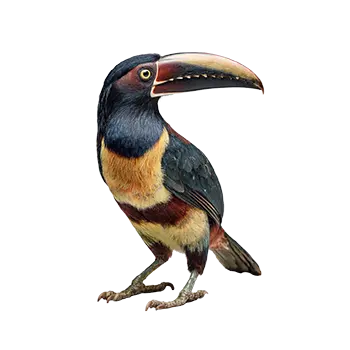

Collared Aracaris reach sexual maturity between two and three years of age, though the specific timing varies among individuals and is influenced by nutrition, social environment, and overall health. Sexual maturity alone does not indicate breeding readiness. A bird should be in peak physical condition, maintained on a proper low-iron diet with documented healthy iron panel results, and housed in an environment that can accommodate the demands of nesting and chick-rearing before any breeding attempt is considered.
Pair formation in Collared Aracaris is generally less fraught than in many parrot species. Aracaris are gregarious birds that form pair bonds within the context of their social group rather than through the intense one-on-one courtship rituals characteristic of cockatoos or macaws. In captivity, a compatible pair typically establishes itself through mutual preening, bill fencing play, food sharing, and the development of roosting proximity. Two birds that consistently choose to perch near each other, preen each other, and roost together in the same box are demonstrating the behavioral precursors to a breeding pair bond.
Sexual dimorphism in Collared Aracaris is minimal, making visual sex determination unreliable. Females tend to have slightly shorter bills and may be marginally smaller overall, but these differences are not consistent enough for definitive identification. DNA sexing through a blood sample or feather follicle analysis is the reliable method for confirming the sex of potential breeding birds. Attempting to breed without confirmed sexing wastes time at best and can result in aggression between same-sex birds housed together with breeding expectations.
Before committing to a breeding program, the keeper should evaluate their capacity to manage the full breeding cycle including the possibility of hand-rearing chicks, finding appropriate homes for offspring, and providing the increased nutritional and environmental support that breeding birds require. Breeding ramphastids is a specialized endeavor that produces chicks with specific dietary and husbandry needs that not all avian keepers are equipped to meet. Responsible breeding means ensuring that every chick produced has a committed, knowledgeable home waiting for it.